
Jonathan Flora: The WNBA has a courage problem and it’s not Sophie Cunningham
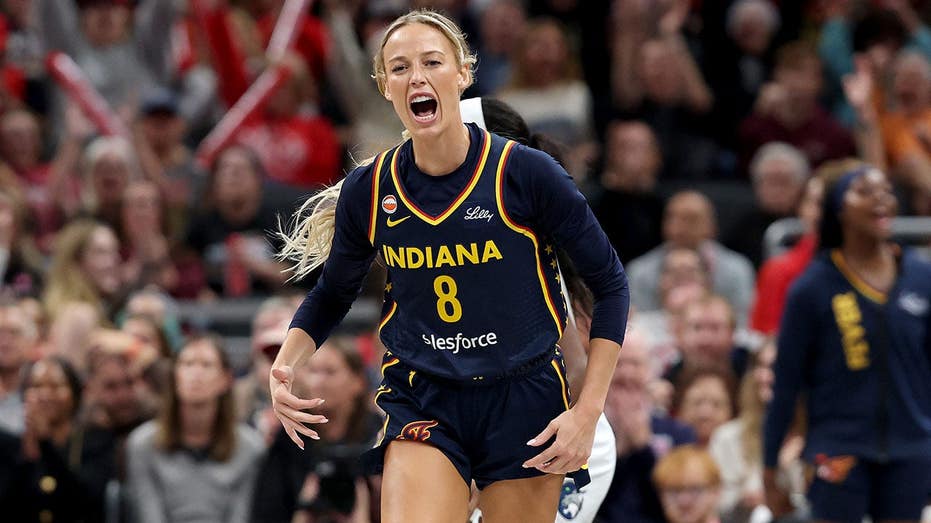
Do you ever notice ... how the WNBA has a courage problem?
And it's not Sophie Cunningham.
The WNBA doesn't need another statement. It needs a definition.
The league says outside forces are trying to hijack women's basketball.
They won’t name who or what that is.
But there is a remarkably simple way to stop them.
Clearly define who is eligible to play in the Women’s National Basketball Association.
THE WOMEN'S NATIONAL BASKETBALL ASSOCIATION CAN'T DEFINE A 'WOMAN,' AND IT'S BEYOND SHAMEFUL
Funny how quickly a hypothetical becomes real when somebody finally has to write the rule.
Last week, I wrote that the WNBA had backed itself into a corner.
Turns out somebody at league headquarters finally noticed the walls.
WNBA Commissioner Cathy Engelbert has now told teams that the league is discussing transgender-player eligibility and expects those conversations to continue.
Good.
It's about time.
Because the WNBA doesn't need another statement.
It needs a definition.
The league's collective bargaining agreement says:
"Only players who are women are eligible to play in the WNBA."
Seems pretty straightforward.
Except it doesn't define what a woman is.
That might have been an amusing legal omission when the question was theoretical.
It isn't anymore.
THE CRAIG CARTON SHOW–UNFILTERED, UNAPOLOGETIC AND UNMISSABLE. DOWNLOAD HIS DAILY PODCAST NOW!
Former NBA players Enes Kanter Freedom and Royce White say they want to enter the WNBA Draft.
They're making a point.
French transgender basketball player Julie Tétart, who is biologically male, is already playing professional women's basketball overseas.
Suddenly the question isn't something being shouted across cable-news panels.
It's an eligibility question.
For a professional sports league.
The WNBA has a courage problem and it’s not Sophie Cunningham
And the answer can't be: We'll get back to you.
So what’s the standard?
Biological sex?
Gender identity?
Hormone levels?
Medical transition?
Pick one.
Write it down.
Apply it equally.
Because you can't have a professional women's league whose rule says only women may play
while refusing to define who qualifies.
That's not a rule.
That's a future lawsuit with a basketball.
And while league officials figure this out, we're getting a pretty good demonstration of why this
subject has become so difficult for the WNBA to address honestly.
Just look at what's happening in Indiana.
DiJonai Carrington came up behind Sophie Cunningham on a fast break and clobbered her in the
head, sending her crashing to the floor and bloodying her mouth.
Carrington was assessed a Flagrant 2 and ejected.
Right call.
It wasn’t even close to a basketball move.
Afterward, Fever coach Stephanie White defended Carrington's competitiveness and said she
didn't believe Carrington was trying to hurt Cunningham.
As White spoke, Makayla Timpson looked down.
Caitlin Clark buried her head in her hands.
Interesting reaction.
White has since said she hadn't seen the foul when she made those comments.
There's a problem.
Video appears to show White looking directly toward the play as it happens.
Locked in.
The WNBA has a courage problem and it’s not Sophie Cunningham
Now, looking isn't necessarily seeing.
Maybe she missed the contact.
Watch the video.
Decide for yourself.
Then came another press conference.
This time White talked about unity, love, grace and integrity while blasting the outside forces she
says are trying to divide the Fever and "hijack" the WNBA.
Right before she said, "Everybody else can go to hell."
Hmm.
But she’s right about one thing.
Too many people are trying to turn every WNBA game into something other than basketball.
But here's the problem.
Most of those forces aren't coming from outside.
The WNBA invited them in.
For years the league has embraced political and cultural causes far beyond basketball.
Players have been celebrated for speaking out.
Coaches have spoken out.
The league has spoken out.
Broadcasters have spoken out.
Fine.
Not really.
Somewhere in there is a basketball game.
But you don't get to invite politics and cultural activism onto the court when you agree with the
message and then complain that outsiders are hijacking basketball when the questions become
uncomfortable.
That's not how this works.
Which is why I've been impressed with Caitlin Clark and Sophie Cunningham.
They've backed their coach.
They should.
That's what professionals do.
The WNBA has a courage problem and it’s not Sophie Cunningham
Cunningham doesn't need to attack her coach every time someone sticks a microphone in her
face to prove what she believes.
Her position is clear.
She believes boys shouldn't compete in girls' sports.
She said it.
She stood by it.
And she’s standing by her coach and teammates.
That’s courage.
And courage isn't screaming the loudest.
Sometimes it's standing your ground without burning down the locker room around you.
Clark doesn't need another national controversy attached to her name either.
These women have something else to do.
Play basketball.
They have teammates depending on them.
Games to win.
A championship to chase.
Maybe the adults running the league could help them out.
CLICK HERE FOR MORE OUTKICK SPORTS COVERAGE
Start by answering the question.
And while we're at it, perhaps the people covering the WNBA could ask it.
Not another question about inclusion.
Not another question about the political climate.
Not another invitation for a prepared statement.
Ask the basketball question.
What objective standard determines who is eligible to play in the Women's National Basketball
Association?
Ask Cathy Engelbert.
Then follow up.
Would Enes Kanter Freedom qualify?
Would Royce White?
Would Julie Tétart?
The WNBA has a courage problem and it’s not Sophie Cunningham
If the answers are different, why?
This is what sports journalists are supposed to do.
Ask questions.
Especially uncomfortable ones.
The tragedy is that the WNBA is sitting on an extraordinary opportunity.
Caitlin Clark brought millions of new eyeballs to women's basketball.
Audiences grew.
New fans arrived.
The league finally had what every professional sports organization spends decades trying to build: Momentum.
And somehow the conversation keeps becoming about everything except the basketball.
Race.
Politics.
Gender.
Protests.
Officiating controversies.
Culture wars.
Eventually fans get tired.
They didn't buy a ticket to attend a sociology seminar.
They came to watch basketball.
And that's why Engelbert's eligibility discussions matter.
The league has an opportunity to remove at least one enormous source of ambiguity.
Define the women's category.
Clearly.
Fairly.
Objectively.
Then enforce it.
This debate does not have to be about inclusion.
Transgender people should be treated with dignity and respect.
The WNBA has a courage problem and it’s not Sophie Cunningham
It’s about protection and fair competition.
Women deserve their own athletic category.
And yes, there are people who vehemently disagree with that.
Activists do.
Some members of the media do.
Some WNBA players and coaches do.
Fine.
Then have the courage to have the debate.
But first, the league has to have the courage to define its own rules.
The WNBA keeps saying outside forces are trying to hijack women's basketball.
Fine.
Then take the issue away from them.
Write the rule.
Define eligibility.
Tell the players.
Tell the coaches.
Tell the broadcasters.
Tell the fans.
Tell Enes Kanter Freedom.
Tell Royce White.
Tell Julie Tétart.
Tell everybody exactly what the W stands for.
And then do something increasingly novel for the Women's National Basketball Association.
Go play basketball.

