Johannesburg infrastructure under-spending puts service delivery under pressure - IOL
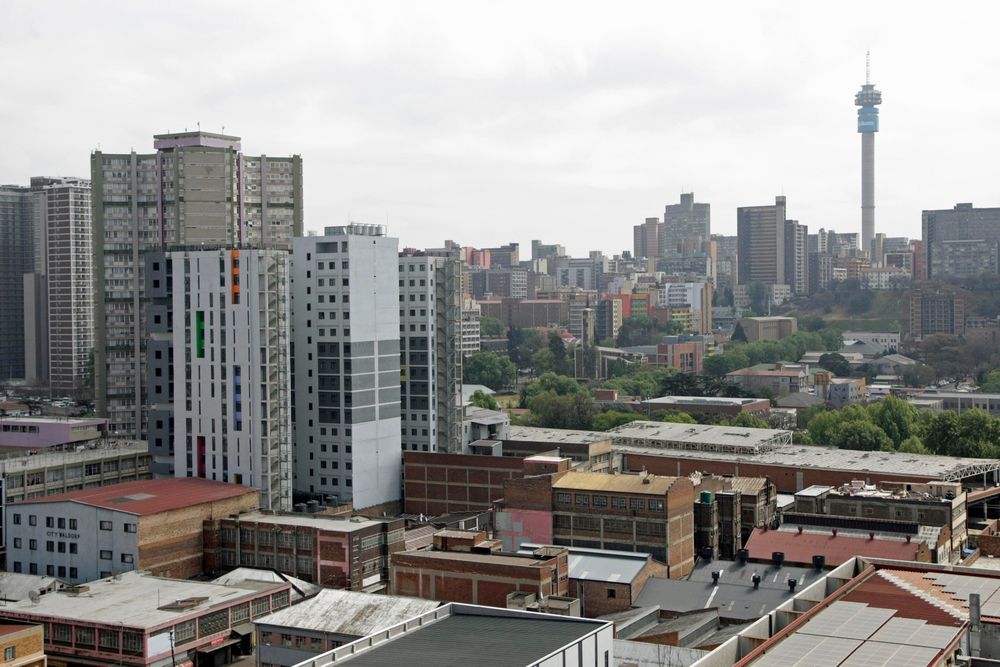
Auditor-General findings and stakeholder accounts point to worsening infrastructure, weak maintenance, poor by-law enforcement, and growing financial pressure in Johannesburg.
The City of Johannesburg’s failure to invest in its infrastructure, enforce by-laws and maintain basic services is deepening pressure on businesses and residents, with stakeholders warning that the city’s deteriorating finances are increasingly being felt on the ground.
The concerns come as the auditor-general’s findings in the consolidated report on local government audit outcomes for the 2024/25 financial year highlighted declining infrastructure investment, weak maintenance, and mounting financial pressures within the metro and its municipal entities.
The report noted that the City of Johannesburg, including the municipal entities’ financial statements, received unqualified audit opinions. However, the separate financial statements of the City of Johannesburg regressed to a qualified audit opinion.
The city achieved only 36% of its planned targets for infrastructure development and refurbishment and spent less than 10% of its R83.1 billion budget on capital investment.
The report said that while the metro implemented financial stabilisation and recovery initiatives and engaged the National Treasury for support, these actions have not yet resulted in notable improvement.
Richard Ntjana, CEO of the Randburg Chamber of Commerce and Industry, said the impact was being felt by businesses and residents regarding the lack of by-law enforcement in commercial areas.
“There is no by-law enforcement, especially in our core commercial areas. Anyone does anything anywhere without any consequences,” Ntjana said.
He said informal traders were operating on pavements outside shops, selling products similar to those sold by retailers.
“Retailers there ask why they have to pay rent when anyone can just set up and sell similar products in front of their stores.”
Ntjana said the city’s entities were also struggling to provide basic services.
“Pikitup has had multiple strikes and, as a result, refuse is not collected. Joburg Water has had many challenges; you find that we have clean water running down the streets for months because of the ever-increasing leaks.
“We log queries but those are hardly resolved. When we enquire, we are told there are challenges with money and service providers have not been paid for months.”
The auditor-general’s findings on Joburg Water appeared to reinforce these concerns, with the report finding that the entity had failed to proactively maintain its water infrastructure, contributing to frequent pipe bursts and deteriorating network reliability.
“The absence of proactive and preventative maintenance led to an increase in unplanned and emergency repairs. As a result, repair costs escalated significantly, placing pressure on the entity’s financial position and increasing the risk of a material financial loss,” the report said.
The auditor-general attributed the failures to inadequate maintenance planning, poor execution of planned maintenance, and insufficient oversight.
Former City of Johannesburg director of economic development and economic development specialist, Lael Bethlehem, said the city’s financial position was being worsened by a shift away from infrastructure investment towards operating expenditure.
“One of the underlying problems with Johannesburg’s financial position is that it has shifted money from capital to operating expenditure,” Bethlehem said.
Speaking to The Star's sister paper, The National, this week, Bethlehem said the city ended the financial year in June 2026 with about 96% of its expenditure going towards operations and only 4% towards capital expenditure.
“When a city doesn’t spend hardly any of its money on infrastructure and spends almost all of its money on operating expenditure, then you know that it is living from hand to mouth,” she said.
“The lack of investment in infrastructure is really what is causing the leaks and the problems with the transformers and the water treatment plants.”
Bethlehem also raised concerns about City Power, which she said had recorded losses for three consecutive years.
“City Power should really not be making a loss. It’s running at a loss partly because of inefficiency, and I think largely because of corruption.”
The auditor-general’s report found that over a four-year period, City Power contributed R11.82bn to irregular expenditure, while unauthorised expenditure under the administration amounted to R6.81bn accumulated over four years.
The city also overspent by R2.38bn despite adopting an unfunded budget, with the auditor-general attributing the overspending mainly to higher-than-planned employee costs and finance costs from short-term borrowing.
Bethlehem said the city’s financial position had reached a critical point, pointing to about R25bn owed to creditors.
“It’s now well established that Johannesburg is well and truly bankrupt. It’s bankrupt in the sense that it cannot meet its obligations, its financial obligations,” she said.
Ntjana said the financial problems were also being reflected in the city’s billing system.
“The billing crisis has not stopped. Residents have come to us about escalations of their bills, and while they try to resolve that, the municipality rushes in to cut services.”
He said repeated interventions had failed to produce lasting improvements.
“There are weekly operations with these entities where the city comes and addresses these concerns, yet as soon as they leave, it’s back to square one,” Ntjana said.
Bethlehem said the city needed a fundamental change in how it managed its finances and core services.
“It’s going to require a substantially new financial plan, but it’s also going to require honest leadership, rooting out of corruption and organised crime, and a completely new approach in particular to water and electricity provision,” she said.
Councillor Yongama Zigebe, from the United Democratic Movement (UDM), said the city had undertaken real interventions to deal with the service delivery issues.
He said this included Joburg Water replacing more than 20 kilometres of water pipes, Pikitup clearing illegal-dumping hot spots, City Power expanding connections and protecting high-risk infrastructure, and the Johannesburg Roads Agency carrying out road resurfacing and upgrades.
He said the city has further adopted a remedial plan to strengthen revenue collection, investigate unauthorised, irregular, fruitless, and wasteful expenditure, fill critical vacancies, improve asset controls, and have audit action plans reviewed monthly through Internal Audit, the Audit Committee, Municipal Public Accounts Committee (MPAC), and council.
“But these interventions are not yet producing results at the scale residents deserve. The city achieved only 32 of its 55 service-delivery performance indicators; it resolved only 45% of AGSA findings, while the number of findings rose to 527,” he said.
“Its closing fruitless and wasteful expenditure balance stood at R317 million. An unqualified audit is important, but it cannot become a shield against legitimate public concern. Council must now strengthen oversight, insist on time-bound implementation of MPAC recommendations, ensure recovery where losses occurred, and demand visible improvement in the daily lives of Johannesburg residents.”
In a response, the City of Johannesburg (See comprehensive response below) acknowledged that significant challenges remained in financial management, infrastructure, by-law enforcement, and basic service delivery.
“However, these challenges are being addressed through a range of operational, financial, infrastructure, governance and oversight interventions,” the city said.
It said it was strengthening by-law enforcement, investing in infrastructure maintenance and refurbishment, improving Johannesburg Water’s response capacity and addressing water losses.
Johannesburg Water has appointed 13 specialist contractors to support complex repairs and introduced First-Line Response Teams to rapidly isolate reported water bursts.
The city said cash-flow constraints had affected Johannesburg Water’s capital expenditure, with delayed payments resulting in some contractors suspending work and delaying infrastructure projects.
It said payment arrangements had since been reached with affected service providers, with construction resuming at some sites.
The city also acknowledged the auditor-general’s concerns about infrastructure development and refurbishment targets, saying addressing infrastructure backlogs remained a priority.
It said targeted cleaning and enforcement operations were also continuing in areas affected by illegal dumping and informal trading.
1. Enforcement of by-laws and informal trading
The city resumed the issuing of informal trading permits in November 2024 and, to date, more than 2,200 permits have been issued.
The process involves the verification of traders against established criteria, with the allocation of trading spaces informed by the availability of trading markets and designated areas. The size and location of trading stalls are determined in accordance with the city’s Informal Trading By-law and related policies.
The city also collaborates with the Department of Home Affairs as part of the verification process to ensure that qualifying and deserving individuals are considered for the allocation of trading spaces.
The city’s enforcement approach is aimed at ensuring that traders operate within designated and allocated areas and comply with applicable requirements, including fire safety and food-handling regulations.
Where individuals trade in areas that are not designated or allocated for trading, or operate without the required permits, enforcement action may include the impoundment of goods, the issuing of fines and, where legally applicable, arrest.
The Johannesburg Metropolitan Police Department (JMPD) continues to enforce street-trading and other municipal by-laws across the inner city, including through deployments in restricted and non-restricted areas and around key public transport nodes, such as taxi ranks and train stations.
The clearing and management of sidewalks remains a priority. This assists in maintaining pedestrian access and addressing activities that can contribute to safety and security risks, including pavement and business robberies in the inner city.
The city recognises that illegal informal trading remains an ongoing challenge, particularly where traders operate in front of businesses, at intersections, and in other areas where pedestrian movement is obstructed. JMPD continues to conduct enforcement operations, including the impoundment of goods where there is non-compliance with applicable by-laws.
2. Problematic and poorly maintained buildings
The city recognises the impact that problematic and poorly maintained buildings can have on communities, public safety, and the broader urban environment.
Addressing such buildings requires a coordinated intervention involving the relevant city departments and operational teams, depending on the nature and circumstances of each case. Interventions may include inspections, by-law enforcement, health and safety measures, housing-related interventions, and engagement with other relevant stakeholders.
The city continues to strengthen the coordination of these interventions to ensure that matters relating to problematic buildings are addressed within the respective mandates of the responsible departments and operational structures.
In relation to the city's housing stock, the city met its repairs and maintenance target for the 2025/26 financial year. Continued investment in the maintenance of housing stock remains important to ensuring that municipal housing assets are maintained and that residents receive appropriate services.
3. Johannesburg Water – infrastructure investment and service delivery
Johannesburg Water acknowledges concerns regarding service delivery, including the impact of capital expenditure constraints and the time taken to address certain water leaks.
Johannesburg Water’s capital expenditure performance has been affected by cash-flow constraints experienced by the city, which have consequently impacted the entity’s performance. In some instances, delayed payments resulted in contractors suspending construction activities in accordance with contractual provisions, contributing to delays in achieving certain infrastructure and basic service delivery targets.
Johannesburg Water has engaged affected service providers and agreed on payment arrangements to address outstanding amounts, with construction activities having resumed at some sites.
The entity continues to implement its capital infrastructure programme to address infrastructure backlogs and improve the reliability of water and sanitation services. Key interventions include water and sewer pipe replacements, pressure management, reservoir refurbishment and upgrades, as well as pump station and wastewater infrastructure upgrades. These projects are at various stages of procurement and construction across the city.
4. Improving response times to water leaks
Johannesburg Water has dedicated operational teams across its depots, including day and night shifts, to respond to reported service-delivery failures. Response times are monitored against applicable service delivery standards.
To strengthen its response capacity, Johannesburg Water has appointed 13 specialist contractors to support its internal technical teams in undertaking complex repairs across the water network. Additional specialist support is also provided through a service-level agreement with Rand Water.
Johannesburg Water has introduced First-Line Response Teams, which are rapidly deployed to isolate reported bursts. This helps reduce physical water losses, limit potential damage to property and surrounding infrastructure, and enable the appropriate repair teams to undertake the required remedial work.
The entity is also strengthening its internal operational capacity through staff development, improved availability of spares and materials, enabling framework contracts and the procurement of operational equipment, including water tankers, TLBs, and jetting trucks.
Johannesburg Water is implementing a range of interventions through its Water Conservation and Water Demand Management programme to reduce Non-Revenue Water and improve network reliability.
These interventions include reservoir repairs, pipe and valve replacement, pressure management, proactive leak detection, metering, by-law enforcement, and public education and awareness programmes.
Johannesburg Water has identified 42 leaking reservoirs in Phase 1, of which 23 have been prioritised for refurbishment. The entity is also implementing advanced pressure-management technology and proactive leak-detection interventions to identify and address water losses more effectively.
These operational and capital interventions form part of a phased programme aimed at improving service delivery, reducing water losses, strengthening infrastructure reliability and supporting the long-term financial sustainability of Johannesburg Water.
6. Cleanliness and the performance of city entities
The city acknowledges that the performance of its entities is central to residents’ experience of service delivery.
The city continues to monitor the performance of its entities and operational departments, with a particular focus on core services such as waste management, water provision, infrastructure maintenance, and the management of public spaces.
In respect of cleanliness, the city continues to undertake targeted cleaning and enforcement operations, particularly in areas affected by illegal dumping, informal trading and other activities that impact on the cleanliness and accessibility of public spaces.
The city recognises that service delivery challenges remain in certain areas and is continuing to strengthen operational coordination, performance monitoring, and accountability to improve responsiveness to residents.
7. Infrastructure development and refurbishment
The city acknowledges the auditor-general’s observations regarding the achievement of planned targets for infrastructure development and refurbishment.
Infrastructure development and refurbishment remain important priorities for the city, particularly given the need to address infrastructure backlogs and improve the reliability of basic services.
The city continues to implement infrastructure programmes across its departments and entities, including water and sanitation infrastructure, housing maintenance, pipe replacement, reservoir refurbishment, pump station upgrades, and other capital projects.
The city is also focused on strengthening the alignment between available financial resources, project planning, procurement, and implementation capacity to improve the delivery of approved infrastructure programmes.
8. Unauthorised, Irregular, Fruitless and Wasteful Expenditure and MPAC oversight
The Municipal Public Accounts Committee (MPAC) takes its oversight responsibility seriously and continues to address the city’s Unauthorised, Irregular, Fruitless and Wasteful Expenditure (UIFWE), including the historical backlog.
During the previous financial year, MPAC held more than 50 meetings focused on oversight and UIFWE processing.
Over the past three financial years, significant progress has been made in processing UIFWE matters through council, including recommendations relating to regularisation and recovery, subject to the applicable legislative and governance processes.
A significant portion of the historical backlog relates to transactions dating back to 2009. The processing of some of these matters has been complicated by unavailable supporting documentation and the fact that officials associated with certain transactions have since left the city.
MPAC has engaged National Treasury on these matters, including in relation to updated guidance under MFMA Circular 68, effective from April 1, 2026, regarding the treatment of historical UIFWE where supporting documentation is unavailable.
MPAC continues to work with the Executive and relevant departments to address outstanding UIFWE matters, strengthen accountability and improve systems and controls to prevent and address UIFWE going forward.
The existence of UIFWE should be distinguished from the effectiveness of the oversight process. The historical backlog requires sustained council oversight, and MPAC remains committed to fulfilling this responsibility through evidence-based consideration of matters, engagement with departments and officials, and recommendations to council in accordance with the applicable legislative framework.
9. Financial position and unfunded budget
The city acknowledges the financial pressures highlighted in the auditor-general’s report.
The city’s financial position needs to be understood in the context of ongoing pressures on municipal finances, including cash-flow and liquidity management, revenue collection, expenditure pressures and obligations to service providers.
An unfunded budget is a serious financial management matter and requires corrective action.
The city continues to focus on strengthening financial sustainability, improving revenue collection, managing expenditure, and ensuring that financial commitments are aligned with available resources.
The cash-flow constraints experienced by the city have also had operational consequences in certain areas, including the temporary suspension of some construction activities by contractors to Johannesburg Water.
The city and Johannesburg Water have subsequently engaged affected service providers and agreed on payment arrangements, with work having resumed at some sites.
The city remains focused on improving its financial position while protecting core service delivery and meeting its statutory obligations.
10. In-year financial reporting and internal audit recommendations
The city acknowledges the auditor-general’s observations regarding the reliability of in-year financial reporting.
Measures are being implemented to strengthen financial reporting, internal controls and accountability across the organisation.
Management continues to address audit findings and internal-audit recommendations through established monitoring and reporting mechanisms.
The objective is to ensure that corrective actions are identified, implemented and sustained, thereby strengthening the city’s overall control environment and improving the quality and reliability of financial and performance information.
11. Council oversight and accountability
Council oversight remains an important component of the city's governance framework.
MPAC and other council structures play a critical role in scrutinising financial management, expenditure, performance and the implementation of corrective measures.
The city acknowledges that oversight must continuously be strengthened and that historical challenges require sustained attention.
The city remains committed to improving the effectiveness of oversight, strengthening accountability and consequence management where warranted, and ensuring that recommendations arising from oversight processes are appropriately considered and acted upon.
The City of Johannesburg acknowledges that significant challenges remain across financial management, infrastructure, by-law enforcement and the delivery of basic services.
However, these challenges are being addressed through a range of operational, financial, infrastructure, governance, and oversight interventions.
The city is addressing historical UIFWE matters through sustained council oversight; strengthening by-law enforcement and the management of informal trading; investing in the maintenance and refurbishment of infrastructure; improving Johannesburg Water’s response capacity; addressing water losses; and strengthening the financial and control environment.
The city recognises that residents ultimately measure government through the quality and reliability of the services they receive. It therefore remains focused on translating these interventions into measurable improvements in service delivery, while strengthening the systems, controls and accountability mechanisms required to sustain those improvements.