Joburg’s R111 billion growth plan faces a reality check - IOL
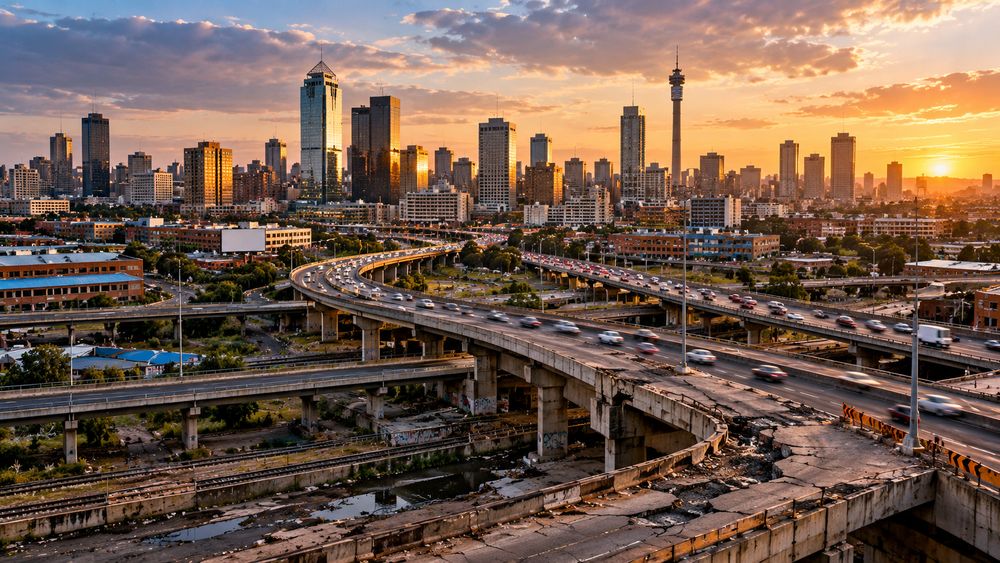
Johannesburg’s plan to spend R111.47 billion on almost 30 economic development projects over five years is unrealistic given the city’s financial and administrative constraints, the Centre for Development and Enterprise (CDE) says.
In its latest Johannesburg Matters report, Joburg Needs Faster Growth, the think tank argues that the city should prioritise restoring basic services, rebuilding municipal institutions and stabilising its finances rather than pursuing an ambitious programme of new projects.
The City’s Economic Growth Strategy, approved in September 2026, proposes projects including a R1.5 billion international convention centre in Lanseria, a R2.14 billion film and clothing cluster and a R546 million biodiesel production plant.
The City expects private investors and donors to provide 98% of the funding.
But CDE questions whether the municipality has the capacity to plan, coordinate and oversee projects on this scale. It notes that the strategy itself acknowledges that successful implementation would require substantially more resources and administrative capacity than Johannesburg currently has.
In a statement published by Infrastructure News on 6 October, the City says its Economic Growth Strategy acknowledges infrastructure backlogs, unreliable services, transport constraints and weak project preparation as barriers to growth. The statement predates the CDE report and does not respond to its findings.
Speaking during a Council debate on the strategy, Economic Development MMC Nomoya Mnisi says “economic growth and infrastructure development are not competing priorities”. The strategy’s adoption is an important milestone, she says, but its impact will be measured through implementation and tangible outcomes.
The report says the city needs substantially more private investment to create jobs and restore economic growth. However, it argues that the current approach relies on grand plans and expensive projects rather than first creating the conditions businesses need to invest and expand.
“Until Johannesburg restores its basic functions, municipal failure will continue to constrain investment, business expansion and job creation,” the report says.
CDE points to the city’s economic performance.
The City’s Economic Growth Strategy, approved in September 2026, proposes projects including a R1.5 billion international convention centre in Lanseria.
Johannesburg’s economy grew by only about 1% a year over the past 11 years. Its real per capita gross domestic product fell by 4.1% between 2013 and 2023, from R99 858 to R95 737.
The city’s official unemployment rate reached 35.9% in the second quarter of 2026, the highest of any metro and above the national rate of 33.6%. Johannesburg lost about 90 000 jobs in the year to June, while Cape Town added 57 000.
“Joburg is South Africa’s most important economic centre. Yet over the past decade, the city’s decline has increasingly undermined its economic potential. Failures in municipal government have made Johannesburg a difficult place in which to do business, invest, find employment and build a secure family life,” says CDE executive director Ann Bernstein.
According to the report, Dickon Hall Foods closed its Johannesburg factory in Southdale and moved production to the Western Cape after repeated water outages contributed to a R17 million shortfall in expected profits.
In Selby, furniture manufacturer Calgan Recliners, which employs between 700 and 800 people, spent more than R2 million on water storage to retain its insurance cover.
CDE says these failures make it harder for companies to operate, invest and employ people. Smaller businesses are particularly exposed, it argues, because they have fewer resources to compensate for unreliable electricity, water and infrastructure.
“The focus on fixing what is broken is the right priority for Johannesburg’s next government. But this challenging process ought to be accompanied by serious thinking about the city’s future and how to build a more dynamic economy that is an essential prerequisite for faster and more inclusive growth,” Bernstein says.
The organisation recommends that the next mayor focus the administration on restoring municipal services, addressing corruption, reducing the infrastructure backlog and improving the finances of the city and its trading entities.
It also proposes that the mayor appoint a task force of five to eight leaders from across society to develop an economic vision and practical growth proposals within a year.
Under CDE’s proposal, the task force would commission research on the city’s growth prospects, consult businesses of different sizes and test proposals for their costs, benefits and feasibility.
“CDE’s proposed Task Force could be an important contribution that helps the mayor decide on an economic growth strategy, and helps bind the city behind ambitious proposals for action and a new vision of hope for all residents,” Bernstein says.