
Jobless youth voice frustration as South Africans vote - IOL
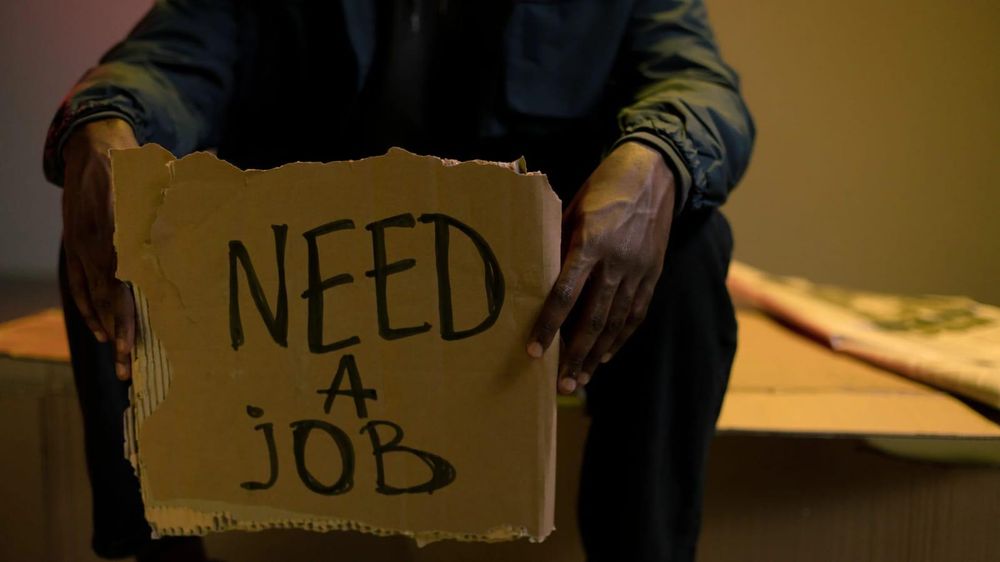
As millions of South Africans cast their ballots in yesterday's local government elections, five million unemployed young people are demanding more than political promises, with years of job applications, rejection, and mounting financial pressure leaving many frustrated and desperate for opportunities.
For many, years of applications have brought nothing but rejection, while qualifications and experience have offered little protection against a labour market that continues to shut out millions.
According to Statistics South Africa's Quarterly Labour Force Survey, released in August, unemployment among young people aged 15 to 34 reached 47.4% in the second quarter of 2026, up from 45.8%.
The number of unemployed young people increased by 264 000 to five million, while youth employment fell by 40 000 to 5.6 million. Among those aged 15 to 24, unemployment stood at 62.8%.
In the Vaal, 35-year-old Palesa Maloka has spent three years searching for employment after losing her retail job in 2023.
Despite years of experience, she has secured just one interview from numerous applications, and even that opportunity ended in rejection.
“I thought having years of experience would make it easier to find another job, but I was wrong. I have applied everywhere, even for jobs outside retail. Sometimes you start asking yourself what more employers want from you.”
Maloka has applied for general worker positions and learnerships, including unpaid bricklaying training, hoping to acquire skills that could open other doors.
Her desperation also exposed her to an alleged recruitment scam involving a R500 payment for a supposed paramedic job.
In 2025, Maloka entered what she described as a questionable raffle for 100 general worker positions linked to the Sebokeng Driving Licence Testing Centre project, which received a R138 million allocation from the Gauteng Department of Transport.
Maloka believes employment opportunities are increasingly reserved for people with connections or those willing to pay. Meanwhile, she must provide for three children as food and other household expenses continue to rise.
“Nowadays, it feels like qualifications and experience mean nothing. If you don't know someone or have money to pay for a job, you are left behind. I have three children who depend on me. I cannot keep living like this. We need jobs, not promises every time there are elections,” she added.
Bambi Sithole, another unemployed voter, shared similar concerns about the shortage of opportunities.
Sithole said repeated applications had brought little success, leaving unemployed residents competing for a limited number of positions. The frustration, Sithole said, was compounded by uncertainty about whether applications were being fairly considered.
“Every day you hear people talking about jobs, but when you apply, nothing happens. We are willing to work. We just need someone to give us an opportunity. Whoever wins these elections must remember the people who are sitting at home without work.”
Nationally, 8.5 million South Africans were unemployed in the second quarter, with the official unemployment rate at 33.6%. About 3.8 million people aged 15 to 24 were neither working nor studying or undergoing training.
With millions of South Africans unable to find work, the pressure is on political leaders to explain how they intend to turn election promises into employment opportunities. In the Vaal, where the decline of major industries has left thousands without jobs, ANC mayor Hassan Mako and DA mayoral candidate Kingsol Chabalala outlined their plans to tackle unemployment.
Mako said attracting investment and expanding industrial operations were priorities for his administration.
He identified the Vaal Special Economic Zone and planned business expansions, including a Snowflake project he said would create 1 200 permanent jobs.
The mayor also highlighted the decline in employment at ArcelorMittal.
“You would remember that ArcelorMittal used to employ about 37,000 people. Right now, they are employing only 3 500 people,” he said.
Mako said the loss of industrial jobs had weakened the municipality's revenue base, making further investment necessary to revive the local economy.
Chabalala said his plans included supporting youth-owned businesses, improving municipal infrastructure and attracting investors.
“We cannot create employment if we don't grow our economy,” he said.
He proposed skills development centres, greater support for small businesses and investment in agriculture and tourism.
“We are going to ensure that we support the skills development initiatives. Also ensure that our kids have access to skills development centres,” Chabalala said.
He also proposed a mayoral advisory council bringing together businesses and community organisations to address unemployment.
For Maloka, the election offered another opportunity to demand change. After three years without work, she wants the next administration to give unemployed South Africans a fair chance of earning a living.

