It’s an ADMM-Plus joint sail, but where were the Southeast Asians?
Already have Rappler+? Sign in to listen to groundbreaking journalism.
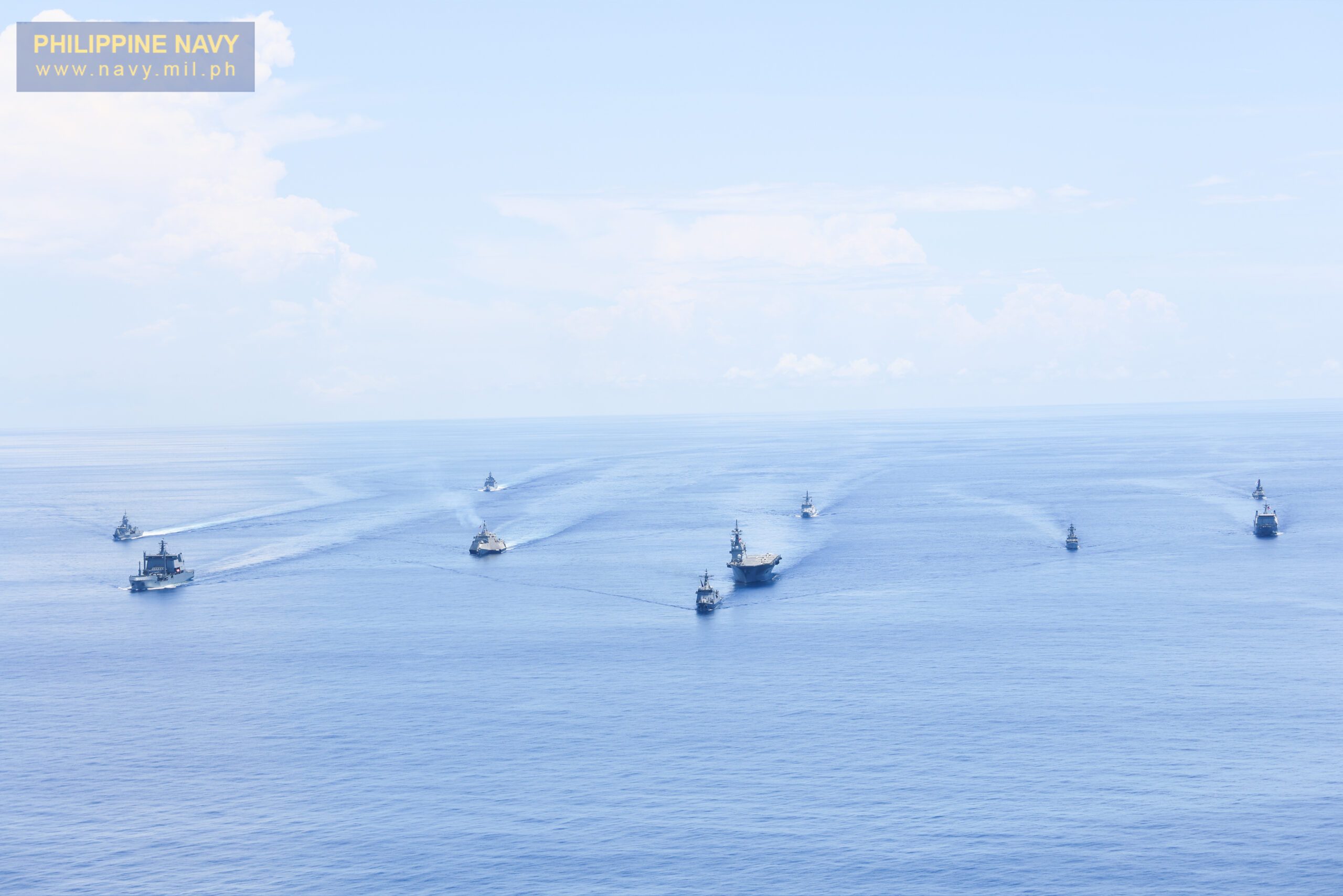
ADMM-PLUS SAIL. The BRP Jose Rizal leads 10 other warships during a division tactics drill in the West Philippine Sea on September 23, 2026.
It was a breathtaking sight to see — 10 gray ships, sailing alongside each other — as the Philippines’ flagship, the BRP Jose Rizal, led the way.
Fine weather, for the most part, graced the two-day maritime activity under the ASEAN Defense Ministers’ Meeting (ADMM)-Plus and its Experts’ Working Groups (EWGs) as navies of Southeast Asia and their partners practiced how they could help each other out in case of emergency in the South China Sea.
India and New Zealand sent two vessels each, including Wellington’s resupply vessel, the HMNZS Aotearoa. Japan’s JS Ise, a helicopter destroyer, was a domineering presence in the lineup. Australia and the US also sent a warship each.
Singapore sent the RSS Justice while Brunei sent the KDB Darussalam, although it would later bow out of the seaphase activity.
Manila’s BRP Tarlac, the first landing platform dock to be delivered under the revised modernization program of 2012, joined the Rizal as well.
So where was the rest of the Philippines’ SEAblings — or fellow members of ASEAN? And where was China, a dialogue partner to both ASEAN and ADMM-Plus?
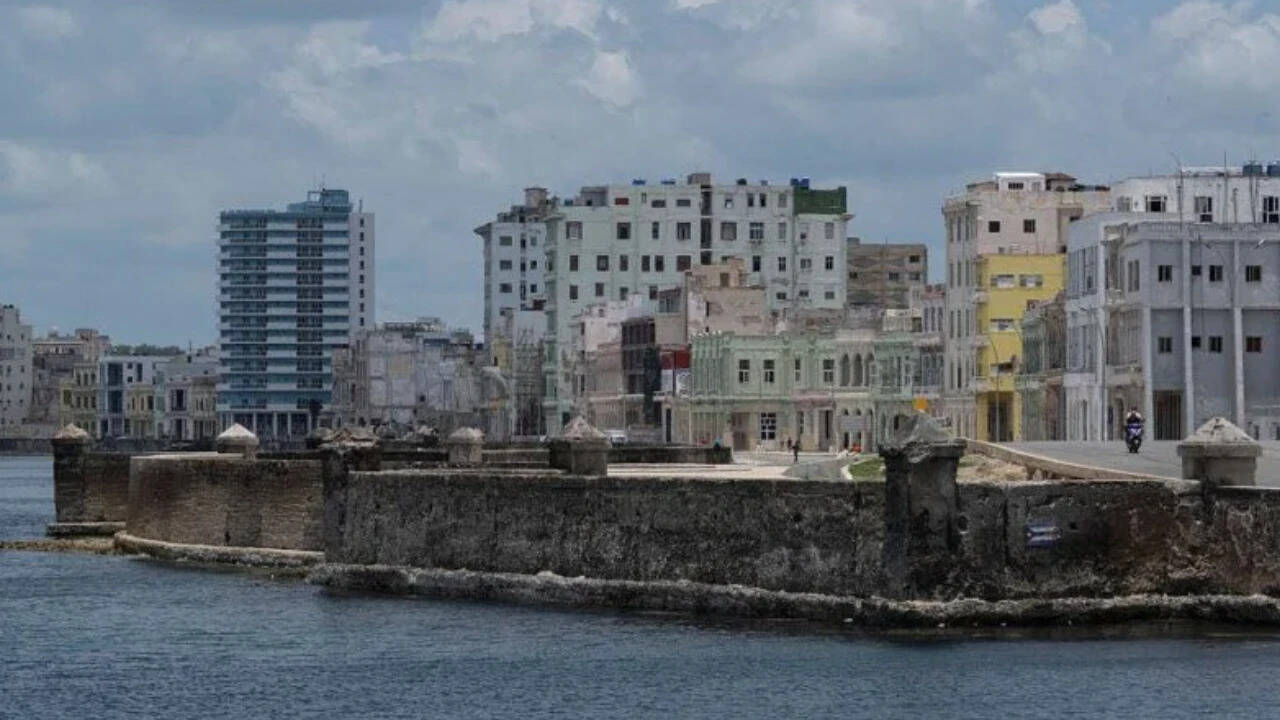
Where the exercise took place could offer a clue — waters between Zambales and Bajo de Masinloc (Scarborough Shoal), a high-tide feature that’s within the Philippines’ exclusive economic zone, claimed by several countries, and under China’s virtual control since 2012.
Bajo de Masinloc has been a flashpoint for tensions between Manila and Beijing for years — most notably in 2012, when the two countries had a tense standoff in the shoal. While Manila retreated under a truce the US had supposedly brokered, Beijing did not.
At least one China Coast Guard vessel and several of its auxiliary Chinese Maritime Militia stand guard at the shoal’s sole entrance at all times.
That 2012 standoff is what spurred the 2012 Revised Armed Forces of the Philippines Modernization law. It’s also what pushed Manila to bring Beijing to court, and eventually win the landmark 2016 Arbitral Award — the same award China does not recognize.
It wouldn’t be a stretch to think that Beijing, since it claims sovereignty over and has control of, Bajo de Masinloc, would want to boycott any joint drill near it. It wouldn’t be surprising if China convinced — or pressured — other ASEAN countries to opt out of the drill, too.
ASEAN members, however, were in full attendance in the land-based events, including in subject matter expert exchanges and even a Future Leaders’ Program.
China’s ties with the 11 members of ASEAN vary dramatically. Most surveys indicate that the Philippines tends to be an outlier in the region when it comes to its perception of China, mostly because of West Philippine Sea issues.
In a lengthy statement, the Philippines’ Department of National Defense said it remains committed to the “principles, purpose, and objectives” of ADMM and its EWG as it “[provides] important platforms for practical cooperation, camaraderie, confidence-building, and mutual understanding among participating countries in addressing contemporary security challenges.”
The DND, whose head, Defense Secretary Gilberto Teodoro Jr. is also chair of ADMM, said the joint sail’s location was done by the book — through the usual ADMM-Plus processes and “based on operational, logistical, and other practical considerations discussed during the Initial Planning Conference (IPC) in March 2025 and subsequent planning conferences, which was attended by all participating countries, including China.”
It went on: “The designated exercise location, which is near Bajo de Masinloc (BdM), has long served as a venue for the Philippines’ bilateral and multilateral maritime exercises, including the ASEAN Multilateral Naval Exercise (AMNEX) held in 2023. This is in consideration of the area’s proximity to the Philippines’ largest naval port facility, which ensures that the necessary infrastructure and logistical support to accommodate the widest possible participation are met, including adequate berthing facilities, sustainment services, and operational support for participating naval assets.”
By largest naval port facility, the DND was referring to Naval Operating Base in Subic, where most of the Philippine Navy’s newest warships are usually berthed. The day before the exercise, warhips of India, Singapore and Brunei were all docked at the same base.
The DND also clarified the Philippines’ position on Bajo de Masinloc as an “integral and longstanding part of the Philippine national territory.”
As a high-tide elevation, Bajo de Masinloc generates its own 12 nautical-mile territorial sea. Its classification as a high-tide elevation also means the arbitral tribunal could not rule on who had sovereignty over it, since that was beyond its jurisdiction.
The tribunal did, however, say that since the shoal was the traditional fishing ground of Filipino, Vietnamese, Chinese, and Taiwanese fisherfolk, they should not be hindered from access to it. Beijing has routinely driven away Filipino fisherfolk who try to sail close to the shoal’s once plentiful waters.
Bilateral ties between the Philippines and China have vascilated between tense and strained in the recent years under Marcos, primarily over disputes in an area of the South China Sea that Manila calls the West Philippine Sea.
Tensions have eased considerably beginning 2026, as Marcos sought a “reset” and Manila assumed chairship of ASEAN.
But that reset is backdropped by a strong pushback against China, over its supposed untrustworthiness as a negotiator — chief of those critics being Teodoro, who chairs ADMM. The Philippine defense chief has also been sanctioned by Beijing for his remarks.
So what happens when he hosts defense ministers from ASEAN and its partners — including China — before 2026 ends? – Rappler.com