Israeli parliament advances 3 bills to reverse Netanyahu-backed laws - Anadolu Ajansı
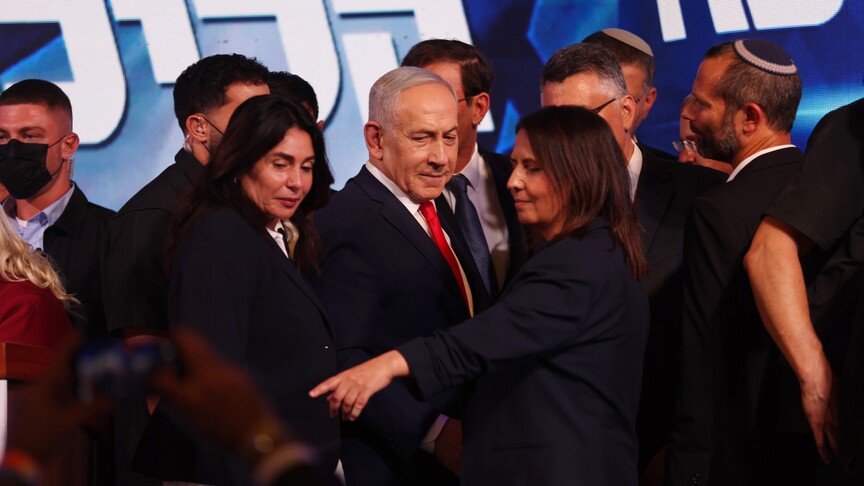
Israel's parliament, the Knesset, gave preliminary approval Wednesday to three bills seeking to reverse Netanyahu-backed changes to the judiciary, attorney general's powers and broadcasting regulations, according to parliamentary statements.
Lawmakers voted 63-47 to advance a bill repealing the attorney general law and 63-49 to advance legislation reversing the broadcasting law, the Knesset said in separate statements.
A third bill seeking to restore the previous composition of the Judicial Selection Committee also advanced by a vote of 63-47.
All three bills must pass three additional readings before becoming law.
The bill, introduced by lawmaker Efrat Rayten Marom and other lawmakers, seeks to restore the legal framework in place before the attorney general law took effect.
The Knesset said the proposal aims to safeguard the attorney general's independence and ensure the office serves the public interest without partisan interference.
The Knesset passed the law on July 15 by a vote of 61-51.
It made the attorney general's legal opinions nonbinding and gave the government broader powers to appoint and dismiss the attorney general and determine its legal representation in court.
Attorney General Gali Baharav-Miara warned in June that the government's measures targeted law enforcement institutions and mechanisms overseeing the executive branch.
Gilad Kariv, a lawmaker from The Democrats party, said his party had pledged to repeal the law immediately after the election.
"After that, with genuine consensus, we will work to regulate relations between the branches of government," he said.
Justice Minister Yariv Levin of Netanyahu's Likud party criticized the repeal effort as a "hysterical and disgraceful legislative blitz."
"Everything you are trying to repeal will come back, and with greater force," he told lawmakers from the change bloc.
The bloc, led by Prime Minister-designate Gadi Eisenkot, has pledged to repeal laws backed by Netanyahu's government that restricted judicial powers.
It also seeks to reverse measures affecting the attorney general's authority and legislation the bloc says personally benefited Netanyahu.
The judicial appointments bill would restore the previous composition of the Judicial Selection Committee by repealing an amendment the Knesset passed in March 2025.
The amendment had kept the nine-member panel but replaced two Bar Association representatives with legal professionals appointed separately by the government and opposition.
The committee's other members remained the Supreme Court president, two other Supreme Court judges, two government ministers and one lawmaker each from the governing coalition and opposition.
The Bar Association warned at the time that the governing coalition was seeking to impose political control over the judiciary.
The Knesset said Wednesday that the amendment increased political representatives' influence over judicial appointments while reducing the role of professional bodies.
Restoring the previous composition would help protect judicial independence and preserve the balance between branches of government, it added.
The broadcasting bill, introduced by lawmaker Eitan Ginzburg and other Knesset members, seeks to repeal the 2026 broadcasting law and restore the previous regulatory framework.
The proposal would also reverse indirect amendments made to other legislation under the law.
Passed in July, the broadcasting law provided for a new regulator to replace the Council for Cable and Satellite Broadcasting and the Second Authority for Television and Radio.
The changes raised concerns that they would give the government greater influence over broadcast media.
The Supreme Court froze implementation of the changes in July pending a ruling on petitions challenging the legislation.
"This law must be repealed, and the broadcasting market must be regulated anew, but in the right way," Ginzburg said.
He described the legislation as containing internal contradictions and fundamental problems.
Communications Minister Shlomo Karhi of Likud rejected the repeal effort, saying it would not prevent new broadcasters, including Channels 15 and 16, from entering the market.
"The left's monopoly has already been broken. The train is moving," he said.