Iran: Activists sound alarm as regime seizes Baha'i assets
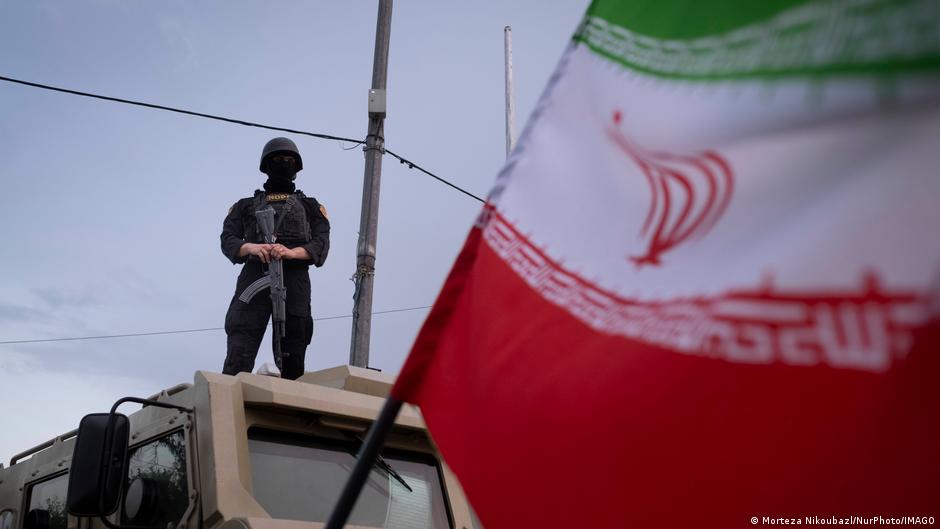
Activists report Iran's security forces taking gold, electronics, tools, wedding rings, and even children's toys during recent home raidsImage: Morteza Nikoubazl/NurPhoto/IMAGOAdvertisementAs Washington attempts to intensify economic pressure on Iran, ordinary Iranians face mounting financial distress.
Rights groups say Iranian authorities are increasingly using asset seizures against religious minorities, dissidents and government critics, adding a new layer of economic pressure for people already struggling with soaring living costs.
Members of Iran's Baha'i religious minority seem to be bearing the brunt of the crackdown.
The faith, which originated in 19th-century Persia — now Iran — is not officially recognized by the Islamic Republic. Unlike Christians, Jews and Zoroastrians, Baha'is are not protected under Article 13 of Iran's constitution, leaving them vulnerable to longstanding discrimination and persecution.
The US-based Human Rights Activists in Iran (HRANA) reported "a wave of arrests, searches of homes and businesses, and seizures of property belonging to Baha'i citizens" at the end of August.
Amnesty International said persecution of the Baha'i community has intensified since the 12-day war between Iran and Israel in June 2025, citing what it described as "a coordinated state campaign of incitement to hostility, violence, discrimination and disinformation falsely accusing Baha'is as spies and collaborators for Israel."
"Under current conditions, all people in Iran are facing economic hardship and extremely difficult living conditions, barely putting food on the table for their families," says Padideh Sabeti, spokesperson for the International Baha'i Community.
However, Baha'is suffer even more from the country's economic situation, "as the government's discriminatory practices deprive them of the ability to earn a living," she added.
Sabeti adds that the judiciary uses poverty as leverage, demanding exorbitant bail "which is sometimes equivalent to a hundred years' wages for an average citizen."
The apparatus of repression does not only target religious minorities. The government has announced judiciary orders identifying and seizing assets belonging to over 400 individuals living abroad who authorities described as "supporters of the enemy," including actors, athletes, and overseas journalists.
Domestically, Sadegh Saedinia, manager of the "Saedinia" chain of cafes, received a 12-year prison sentence, a two-year operating ban, and total asset confiscation for posting content related to anti-government protests in Qom, a conservative city considered sacred to Shiites.
The growing number of confiscations has led some observers to ask whether property seizures are also aimed at filling state coffers at a time of economic strain.
Arezoo Karimi, a London-based economic analyst, says the financial impact is likely to be limited. The resources gained through seizures are "very, very insignificant" compared with Iran's massive budget deficit, she said.
According to Karimi, confiscated properties are often auctioned off below market value to individuals with political connections.
Sajjad Khodakarami, a Paris-based journalist, says targeting diaspora dissidents sends a clear psychological warning.
"This tool — which the Islamic Republic previously tested on a segment of society — is now being deployed on a broader scale against its opponents," Khodakarami said.
"Today, this instrument of repression targets not only parts of the Baha'i community, but also various strata of society, including journalists, social and human rights activists, and artists who oppose the ruling political establishment," he added.
"When the Islamic Republic targets the assets of hundreds of people, it sends them a message: Even when you are beyond our physical reach, we will continue to apply pressure on you from all sides."
International human rights monitors reported security forces taking gold, electronics, work tools, wedding rings, and children's toys during recent home raids.
Khodakarami views the confiscation of everyday household items as a dark indicator of the regime's trajectory.
"When government agents stoop so low as to confiscate a couple's wedding rings or a child's toys, it is a sign of barbarism," said Khodakarami. "Moreover, this behavior is not merely a message to the Baha'i community, but a broader warning to all dissidents."
Khodakarami argues that the government is placing a growing share of the economic burden on ordinary citizens rather than on powerful state institutions.
"As the regime's resources shrink, it tightens the screw on the people's livelihoods," Khodakarami said.
According to Karimi, the government is relying on money printing and subsidy rollbacks to compensate for declining foreign currency revenues. The analyst warns that current fiscal policies risk pushing the country into galloping inflation.
"On one hand, banks are creating money, while on the other, production is effectively paralyzed," said Karimi.
"If we continue down this path at the current pace, I foresee a day when hyperinflation hits Iran — a day when people pay one fare to commute to work in the morning, but have to pay up to double that for the ride back home, just like what we witnessed in Venezuela and Zimbabwe."
While seizing personal assets may serve as a tool of intimidation and generate limited funds for the security apparatus, analysts say it cannot fix Iran's underlying economic problems and is unlikely to ease the financial pressures facing ordinary Iranians.
/https://i.s3.glbimg.com/v1/AUTH_da025474c0c44edd99332dddb09cabe8/internal_photos/bs/2024/7/t/2BDWycSnaQJTADiBHqFA/fgts-detalhes-do-aplicativo-do-fgts-.-foto-guito-moreto-ag-o-globo.jpg)