India is launching an AI lab into space today: Here's what it is
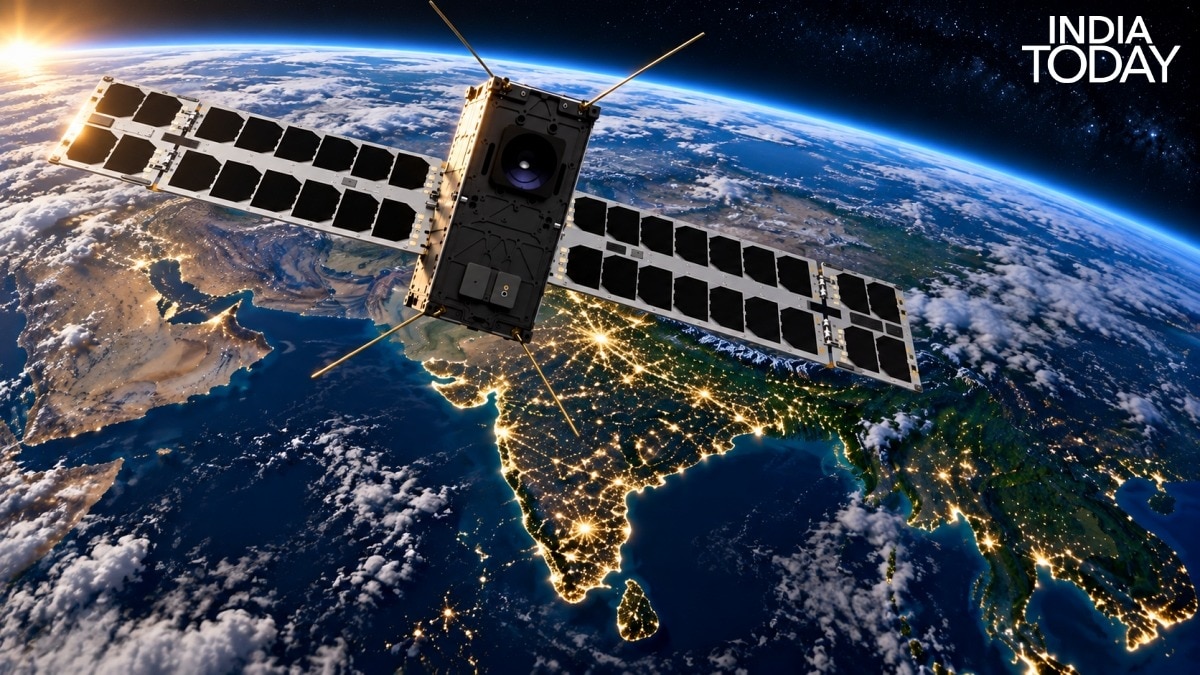
Imagine a satellite looking down at Earth, capturing thousands of images, but instead of sending all that data back to a computer on Earth, it stops, thinks and sends back only what matters.
That is the idea behind MOI-1A, an orbital computing satellite being developed by Hyderabad-based startup TakeMe2Space.
The spacecraft is scheduled to launch on October 1 aboard SpaceX’s Falcon 9 as part of the Transporter-18 rideshare mission. The company describes it as India’s first orbital computing satellite.
So, what exactly does an “AI lab in space” mean?
Today, satellites can collect enormous amounts of information, from images of farms and forests to observations of infrastructure and ships. Traditionally, much of that information has to be transmitted to Earth, where computers analyse it.
That process takes time and requires considerable communication bandwidth. TakeMe2Space wants to move part of computing process into orbit. (Photo: Getty)
TakeMe2Space wants to move part of that computing process into orbit.
MOI-1A is essentially a small computer in space. The satellite carries Nvidia Orin NX edge-computing processors, allowing it to run AI models while orbiting Earth. The spacecraft weighs less than 50 kg.
In simple terms, think of it as the difference between sending every photograph on your phone to a distant computer and asking your phone to identify the important photographs first.
For a satellite, that could mean scanning Earth-observation imagery in orbit and transmitting only the useful information to the ground.
For example, an AI model could potentially be instructed to look for particular changes in an area, rather than sending an entire collection of raw images back to Earth. TakeMe2Space says customers will be able to upload AI models for targeted data analysis.
The company says it already has 23 customers across sectors including agriculture, mining, supply chains and insurance.
This is also not TakeMe2Space’s first attempt. The spacecraft is scheduled to launch on October 1 aboard SpaceX’s Falcon 9. (Photo: SpaceX)
Its earlier MOI-TD technology demonstrator, launched aboard ISRO’s PSLV-C60 in December 2024, was designed to test orbital computing.
The company's own technical document says the mission conducted more than 20 experiments, although its two primary objectives, imaging and AI inference, were not achieved. The AI experiment was halted by a software pipeline bug that prevented the hardware from being triggered.
MOI-1A is the next step: moving from a technology demonstration to a dedicated orbital computing satellite.
And the ambition goes beyond one satellite. TakeMe2Space is working towards a future network of orbital computing satellites, potentially turning space into a new location for data processing, effectively bringing the idea of the data centre into orbit.
The broader question is whether computers can reliably perform demanding AI tasks in the harsh environment of space, while dealing with limited power, heat management, radiation and communication constraints.
MOI-1A is therefore less about putting “AI in space” as a futuristic slogan, and more about testing one practical question: Can a satellite learn to process what it sees before sending it home?- Ends