
In Pir Panjal, new strategy to keep terrorists from slipping between Jammu and Kashmir - The Indian Express
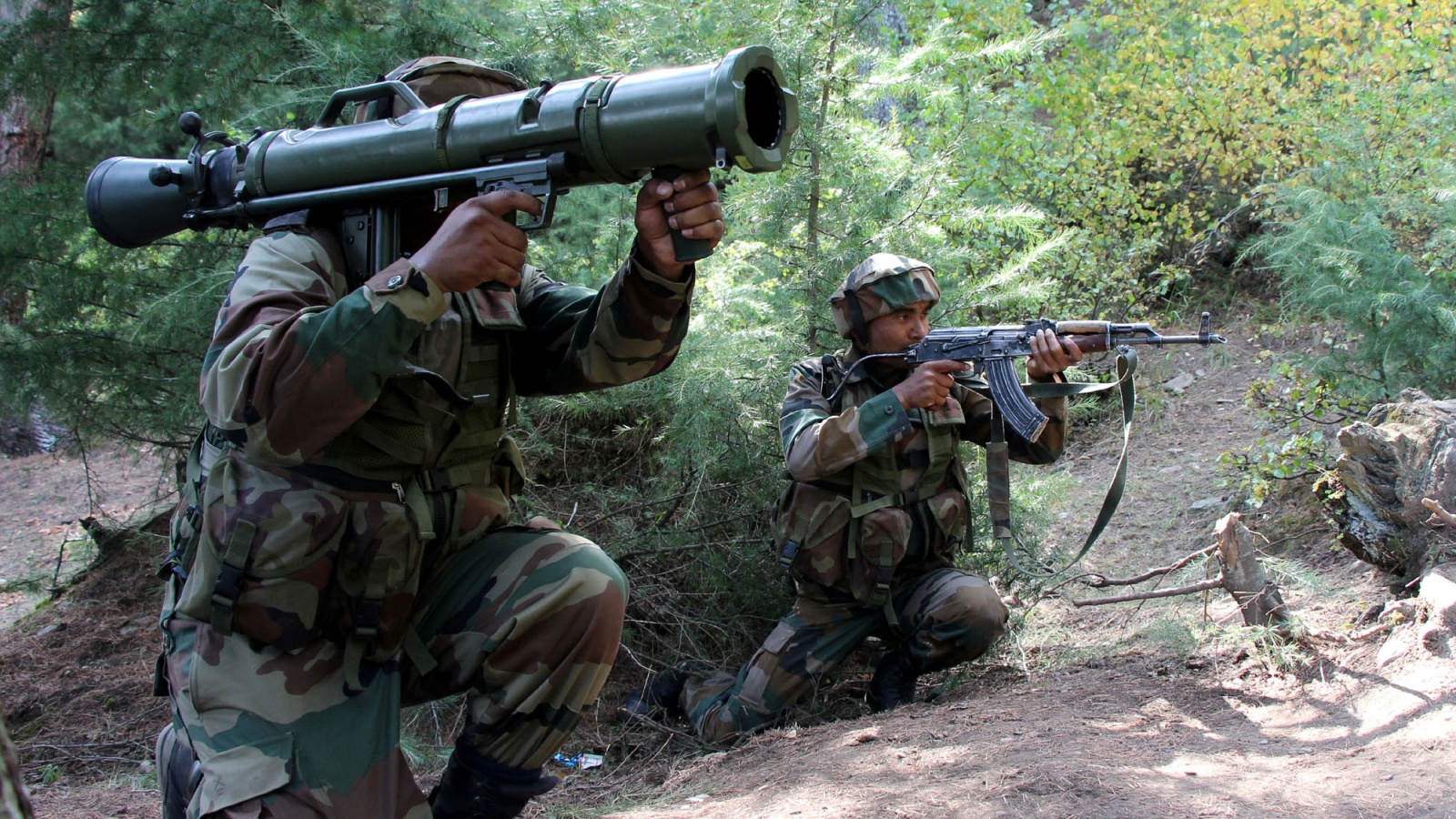
On September 4, a Lashkar-e-Toiba (LeT) terrorist was killed in Ashdar Gali, in the upper reaches of the Pir Panjal mountains, connecting Kashmir with Jammu’s Poonch. The operation followed a four-month effort by joint forces of the Army, its elite para forces, J&K Police, and paramilitary forces deployed in the dense Pir Panjal mountains.
The operation showed a decided shift in the way security forces were approaching the arduous Pir Panjal, a terrain long considered one that gives a decisive advantage to terrorists: it showed that the joint team of forces operated out of a Temporary Operational Base (TOB), which helped the security agencies maintain a sustained presence and tight vigil over the area after a series of setbacks over the last three years.
“This is a temporary arrangement to maintain a more permanent footprint in the difficult mountain terrain,” a senior police officer said. “Under this set-up, the security forces remain deployed in the mountains for extended periods, ranging from more than 10 days to several months. If a natural shelter is available, like a Gujjar dhok (shack) or a cave, they use it as a temporary base. Otherwise, they operate from the dense forests without a shelter.”
Officials say the mountains are divided into three zones — the upper reaches, the middle range and the lower reaches. Typically, the army’s elite paratroopers are deployed in the higher reaches. The middle range is manned either by the Rashtriya Rifles, the army’s anti-insurgency force, or the joint teams of J-K Police and paramilitary forces, depending on what’s required, and the lower ranges usually have J&K Police and paramilitary forces.
After the Pahalgam attack on tourists in April last year that killed 25 tourists and one local, J&K Police established a new elite unit within its Special Operations Group (SOG) to strengthen operations in challenging terrain. The unit — named ‘Snow Leopards’ and ‘Markhor’ — has drawn its names from the high-altitude wild animals found here and known for their strength, resilience, precision and speed. While the ‘Snow Leopards’ unit is trained for high-altitude warfare in rough terrain during the winter, ‘Markhors’ are trained for gunfights in dense forests.
The personnel of these units have undergone specialised training with different elite forces in the country, officials said.
“The paratroopers are specially trained and equipped for high-altitude warfare,” said another senior officer. “They are often stationed at mountain tops and use drones to monitor large swathes of the terrain. This has helped the security forces to keep a closer watch on the transit routes used by terrorists and curtail their movements”.
Officials say that over the last four years, terrorists often exploited the high-altitude transit routes running through the dense forests to move between Kashmir and Jammu regions.
“In high altitudes, combat militants had several advantages. For one thing, they were at a stationary position that helped watch soldiers, and, for another, they had sophisticated weapons such as the American M4 carbine that were highly efficient in close combat,” the officer said. “Now, the special troops deployed in these mountains are also equipped with more sophisticated weapons comparable to M4 carbines. They also have night vision devices for effective patrolling at night.”
The Pir Panjal mountains divide the Jammu and Kashmir regions. To the south are Jammu’s Poonch and Rajouri districts, which connect to the Line of Control (LoC). Towards the north lies the vast stretch of the Kashmir Valley, from South Kashmir’s Anantnag to Budgam in central Kashmir. The mountains connect Kashmir to the Pir Panjal region — Poonch and Rajouri districts — of Jammu on one side, and the Chenab Valley, comprising Doda, Kishtwar and Ramban districts, on the other. In Kashmir, the mountains stretch to Gulmarg and Baramulla, connecting the Valley to the Line of Control.
The Poonch-Rajouri axis in Jammu was a militant hotbed, and would see a large number of militants — mostly foreigners — openly moving through the forests. In 2003, the Indian Army, with the help of locals, launched Operation Sarp Vinash to flush out militants. The region was declared militant-free in 2012.
However, over the last few years, the difficult mountains covered by dense forests have been a major challenge for the security forces, since permanent encampments were technically infeasible given the vast area, treacherous mountains and logistical issues.
“Before, whenever the security forces launched operations south of Pir Panjal, the terrorists would move into Kashmir valley,” the officer said. “Similarly, sustained pressure on this side of the Pir Panjal would lead them to move to Poonch and Rajouri. These Temporary bases have taken away that advantage by allowing the security forces to maintain a sustained presence across these routes.”
There are also other challenges — such as changing overground worker networks and newer terrorist hideouts in the area, which make tracking challenging.
“No doubt that there are a lot of hideouts in areas south of the Pir Panjal,” he said. “Since 2020, militants have been setting up new hideouts – but this time without taking locals’ help. This makes tracking harder,” said a senior Army official overseeing a counter-terror operation in Udhampur that saw two Jaish-e-Mohammed militants killed on September 16. “The old overground workers OGWs aren’t there anymore, which means they need new ones.”
As an example of this, he cited the case of Saifullah, a top Jaish-e-Mohammad (JeM) commander who was killed in an encounter in February after a two-year-long chase. The official said that a phone recovered from Saifullah, who was one of three militants killed in Kishtwar district’s Chatroo, led security officials to bust an underground hideout with a gas stove and winter food stock.
“When we recovered his mobile phone, we saw photographs of terrorists cutting trees, etc., and making preparations for making the hideout. That is why they remain undetected from the local populace.”
Officials hope that the Temporary Operational Bases (TOBs) resolve these problems. The bases are scattered across the mountains based on “intelligence inputs and ground situation analysis” by the security agencies.
Officials say that while most of these remain operational for a few weeks, some — such as one at Ashdar Gali above the Doodhpathri meadow — are maintained for several months at a time, depending on the security situation and intelligence inputs.
“At a given time, there could be something around 40-50 such bases operational across the area,” an officer said. “The number keeps changing based on intelligence inputs and strategic decisions taken after assessing the situation on the ground.”
The security officials say the tactic has worked to a large extent. Security forces mark a significant reduction in terrorist attacks on “either side of the Pir Panjal”. The last 1.5 years have seen one major attack in the area – the one in Pahalgam, in which armed terrorists killed 25 tourists and one local.
A total of three terrorists have been killed this month in various encounters: two in Udhampur’s forests and the third, a Pakistan-based LeT terrorist, in Ashdar Gali.
“We have been able to sustain the pressure, helping us prevent attacks,” one official said. “All the gunfights over this period have been on our initiative. and led to the loss of wanted terrorists like the Pahalgam attackers, the Saifullah group in Kishtwar or recently the killing of a terrorist at Ashdar Gali.
Bashaarat Masood is a Special Correspondent with The Indian Express. He has been covering Jammu and Kashmir, especially the conflict-ridden Kashmir valley, for two decades. Bashaarat joined The Indian Express after completing his Masters in Mass Communication and Journalism from the University in Kashmir. He has been writing on politics, conflict and development. Bashaarat was awarded with the Ramnath Goenka Excellence in Journalism Awards in 2012 for his stories on the Pathribal fake encounter. Expertise and Experience Two Decades of Frontline Reporting: Bashaarat has spent 20 years documenting the evolution of Kashmir, from high-intensity conflict and political shifts to socio-economic development. Award-Winning Investigative Journalism: He is a recipient of the prestigious Ramnath Goenka Excellence in Journalism Award (2012). This honor was bestowed for his reporting on the Pathribal fake encounter, a series of stories that highlighted his ability to handle sensitive human rights and security issues with investigative rigor. Specialized Beats: His authoritative coverage spans: Political Transitions: Tracking the shift from statehood to Union Territory, electoral dynamics, and the pulse of local governance. Security & Conflict: Providing nuanced reporting on counter-insurgency, civil liberties, and the impact of the conflict on the civilian population. Development: Documenting the infrastructure, healthcare, and educational landscape within the Valley. Academic Background: He holds a Masters in Mass Communication and Journalism from the University of Kashmir, providing him with a localized academic and professional foundation that is rare in regional reporting. ... Read More


