
In 25 years, how the impossible was made routine - The Indian Express
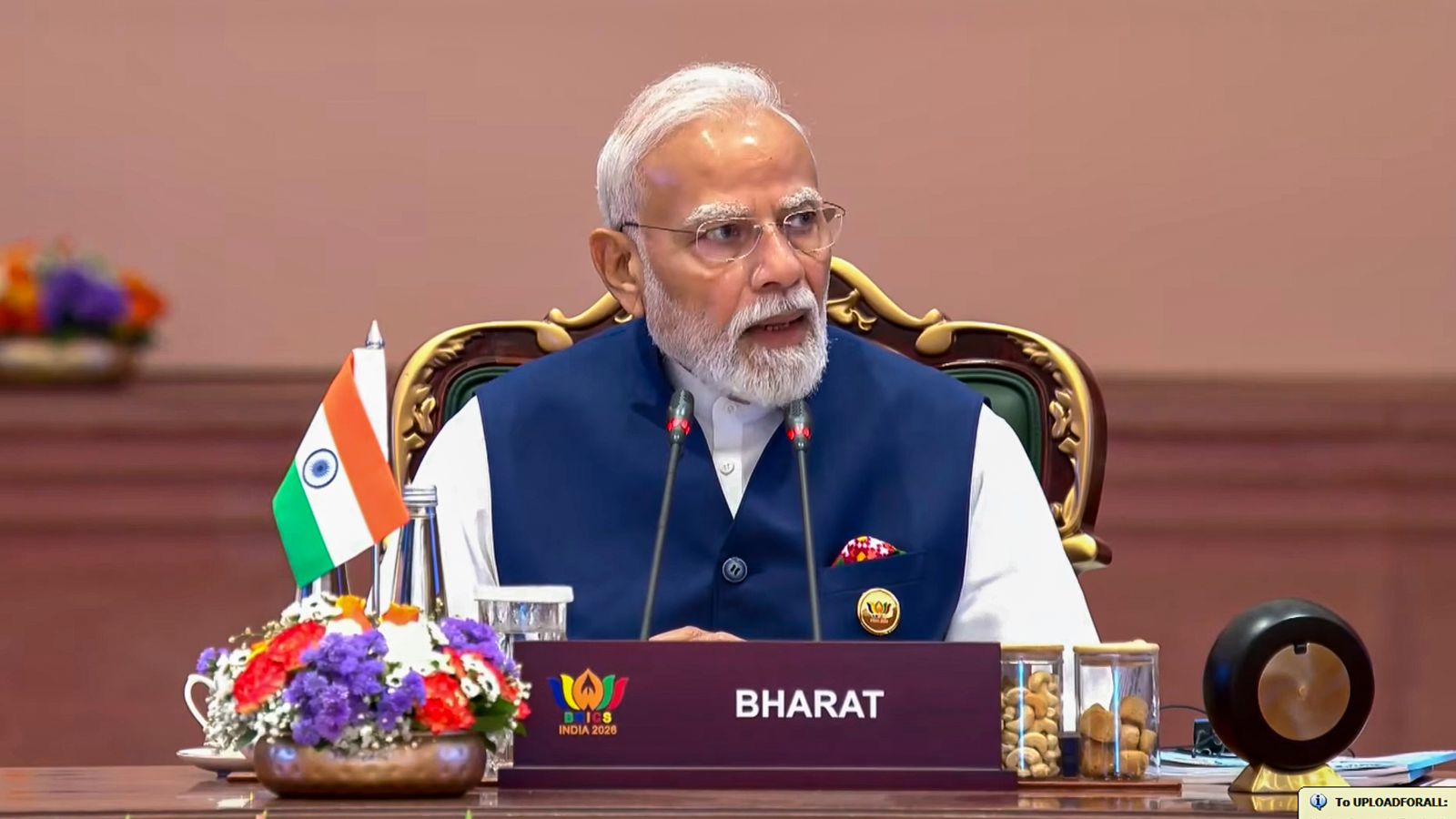
Today, on September 17, Narendra Modi turns 76. Three weeks later, on October 7, he completes 25 unbroken years as head of a government, first as Chief Minister of Gujarat and then as Prime Minister. No elected leader in the history of the Republic, at the Centre or in any state, has carried that responsibility for a quarter of a century.
Anniversaries like this produce two kinds of writing, the tribute and the audit. This piece attempts a third, an inventory of the impossible, because solved problems have a way of vanishing: Nobody remembers or gives credit for it.
Begin with Gujarat in October 2001. Saurashtra, Kutch and north Gujarat lived from one failed monsoon to the next; water came by tanker and, in the worst years, by train. The answer was thousands of small works and one very large one: More than 1.5 lakh check dams, Narmada water carried by canal into Saurashtra and Kutch, and Jyotigram, which gave every village round-the-clock power. Gujarat’s agriculture grew at close to 10 per cent a year through that decade, three times the national rate. Today nobody in Rajkot talks about water trains.
In 2001, a fifth of Gujarat’s children dropped out before finishing primary school, and girls dropped out first. From 2003, every June, in the worst heat of the year, the Chief Minister and his entire cabinet left Gandhinagar for three days to walk into villages and enrol children. Kanya Kelavani and Shala Praveshotsav were dismissed as photo opportunities. By 2012 the dropout rate was about 2 per cent. A photo opportunity does not do that for ten years running.
Gujarat, the argument went, was a state of traders and diamond polishers, not manufacturers. Vibrant Gujarat began in 2003 to polite laughter. In 2008, when the Nano was driven out of Singur, it found Sanand within days, and Ford, Suzuki and Honda followed. With 5 per cent of India’s population, Gujarat now produces over 8 per cent of its GDP and more than a quarter of its merchandise exports.
Gujarat was the state of the riot. Ahmedabad burned in 1969, 1985, 1992 and 2002, and curfew was almost a season of the year. It has not seen a major communal riot in the 24 years since. A generation has grown up there knowing curfew only from their parents’ stories.
Gujaratis make businessmen, the joke went, not athletes. Khel Mahakumbh began in 2010 and now draws lakhs of children into competitive sport. The world’s largest cricket stadium stands in Ahmedabad; the state routinely produces top sportsmen in varying fields, including cricket and chess; the state hosted the National Games in 2022; and last November Ahmedabad won the 2030 Commonwealth Games, with the 2036 Olympics declared the next step.
Now widen the lens to India in 2014.
Will India ever make high-technology products, such as the iPhone? In 2014-15, mobile phones stood at number 167 among India’s exports. In 2025-26, they stood at number one, worth about Rs 2.6 lakh crore, the iPhone alone being India’s single largest branded export.
Will India ever export defence equipment? In 2013-14, India exported arms worth Rs 686 crore. In 2025-26, the figure was Rs 38,424 crore, to over 80 countries.
Will India ever answer Pakistan’s terror in a language it understands? Uri was answered across the Line of Control in 2016, Pulwama at Balakot in 2019, and Pahalgam last year with Operation Sindoor, which struck terror camps deep inside Pakistan and then its air bases. The nuclear shield behind which terror operated is gone.
Will Article 370 ever go? It went on August 5, 2019, was upheld by the Supreme Court in December 2023, and Jammu and Kashmir has seen record tourism and a return to normal life after three decades of insurgency and violence.
Will the Ram temple ever be built? Five centuries of dispute ended in a unanimous court verdict, and on January 22, 2024, Ram Lalla was consecrated in Ayodhya.
Will India ever make chips? Made-in-India memory modules have shipped from Micron’s Sanand plant since March, and the Tata fab at Dholera is due to produce its first chips by December.
Will India ever be an entrepreneurial society? From a few hundred recognised startups in 2016 to over 1.5 lakh today, more than a hundred of them are unicorns, the world’s third-largest such ecosystem. That is at the top tier; below which stand millions of Mudra-funded entrepreneurs, making it a pan-society phenomenon.
Will Naxalism ever end? Maoist violence, six decades old and once called the country’s gravest internal security threat by a Prime Minister, is decisively over, the affected districts down from 126 in 2014 to almost none.
Then the quieter list: Every village and household electrified, 12 crore toilets, 59 crore bank accounts, tap water in four rural homes in five against one in six in 2019, health insurance to over 50 crore people; infrastructure connectivity rivalling the best in the world; 24 billion UPI transactions a month, 25 crore people out of poverty, and the tenth largest economy of 2014 now the fourth.
How does one life contain all this? Not through politics alone; India has had many supremely talented political leaders. The answer is what the life is pointed at.
Most political careers run on three words: Me, my family, my party. Modi’s vocabulary has been different, and so has his conduct. There is no family to install, no business to grow, no heir to anoint. He has treated every office as a duty rather than a possession, has taken no holiday in a quarter of a century, and holds no visible wealth beyond the trust of the people he serves. His three words are our people, our country, our aspirations. The power of these words, as lived reality of a life, can move mountains, and they indeed have.
Indian civilisation had a name for such a ruler: Not a king who happened to be pious, but a rishi who happened to hold the throne, carrying the whole burden of the state while living like a renunciate, holding everything and owning nothing. The word was Rajarshi, the sage-king. That is why some people fondly call Narendra Modi the Priest King, the Rajarshi of our age, a title no government can confer and no election can give or indeed take away.


