'I'm a man in my house': SASSA worker dismissed for assaulting manager loses Labour Appeal Court - IOL
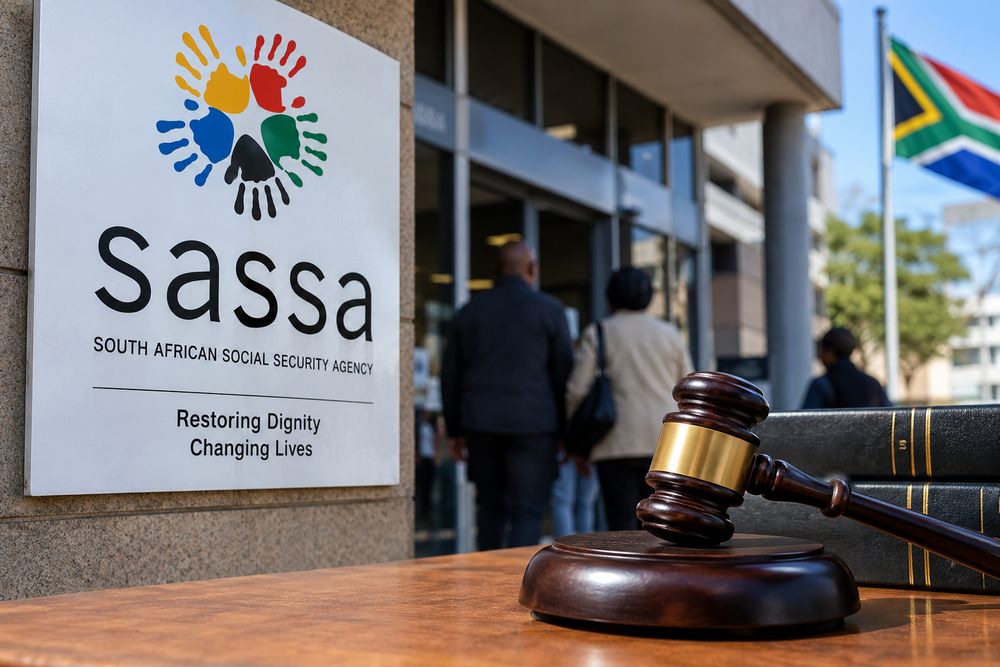
Labour Appeal Court upholds dismissal of SASSA worker over manager assault.
A SASSA worker who accused of assaulting his manager has lost his bid to overturn his dismissal after the Labour Appeal Court found that he had assaulted his superior and committed gross insubordination.
NN, a Senior Grants Administrator who had worked for the South African Social Security Agency (SASSA) since June 2006, was dismissed for misconduct in November 2020.
The Labour Appeal Court in Durban dismissed his appeal in September 2026, upholding the findings that his dismissal was both substantively and procedurally fair.
The dispute arose from an incident at SASSA’s Vulindlela Local Office in Pietermaritzburg, KwaZulu-Natal, in August 2019.
NN had assisted a woman with an application for a social grant for her grandson. The application was declined, among other reasons, because the child’s father was still alive and living with the child.
The woman returned to the office the following day with her niece to complain about how she had been treated.
NN’s manager, Mr M, called him into his office to explain what had happened.
According to the judgment, NN refused to explain the matter in front of the two women and asked that they be sent outside so that he could give his version privately.
Mr M refused and insisted that NN explain himself in their presence.
NN then accused his manager of not respecting him, saying he was “also a man in his own household”.
The situation escalated when Mr M eventually decided to ask the women to leave the office so that he and NN could speak privately.
The women testified that NN suddenly got up and struck the manager. One of them intervened to prevent the two men from fighting.
Mr M told the disciplinary proceedings that NN pushed or hit him in the chest before leaving the office.
NN denied assaulting his manager, although he admitted that there had been a “wrestling with the door” as he tried to leave.
He later told the disciplinary proceedings that he had pulled the door while Mr M was blocking it and that Mr M was pulled along with the door.
After the incident, Mr M and the two women went to a police station and laid an assault complaint.
NN was subsequently suspended and faced disciplinary proceedings.
The first disciplinary proceedings resulted in six charges being withdrawn.
He was later charged with three allegations relating to the August 2019 incident.
It was alleged that he had committed insubordination by assaulting Mr M with the intention of causing bodily harm. He was also accused of breaching SASSA’s code of conduct and ethics and bringing the agency into disrepute.
He was found guilty on two of the charges and dismissed in November 2020. His internal appeal was unsuccessful.
NN referred an unfair-dismissal dispute to the Commission for Conciliation, Mediation and Arbitration (CCMA).
The commissioner found that the dismissal was substantively and procedurally fair.
The commissioner rejected NN’s version of events, finding that he had changed his account and failed to make concessions about facts supported by the evidence.
She concluded that SASSA had proved, on a balance of probabilities, that NN had assaulted Mr M.
The commissioner also found that NN’s conduct amounted to gross insubordination because he had challenged the authority of a manager several levels above him, in front of clients, and had used violence in doing so.
NN took the matter to the Labour Court, seeking to have the arbitration award reviewed and set aside.
The Labour Court dismissed his application, finding that the commissioner’s evaluation of the evidence and reasoning could not be faulted.
The matter eventually reached the Labour Appeal Court.
The appeal court found that the evidence of the witnesses largely complemented each other and that the alleged contradictions concerned minor details about how the assault occurred.
The court noted that NN himself had made a statement to police saying that he had “pulled” Mr M.
The court also found that it was common cause that NN had refused to explain the complaint in front of the complainant, had become involved in the struggle over the door and had disobeyed his manager’s instruction to report to his office after the women had left.
The appeal court rejected NN’s argument that the evidence did not establish an assault.
It found that his own evidence indicated that he had pulled Mr M while trying to open the door.
“From this piece of evidence, it is clear therefore that the witnesses were correct when they said he pulled Mr M by his clothes,” the court found.
The court further held that Mr M's belief that he was being assaulted was supported by the evidence.
The Labour Appeal Court concluded that the commissioner had not made an error in finding that NN assaulted his manager.
It agreed that his conduct amounted to gross insubordination and that his dismissal was warranted.
The court also found that the commissioner’s decision fell within the range of decisions that a reasonable decision-maker could reach.
The appeal was therefore dismissed.
The court ordered that there be no order as to costs.