I was Canada’s special envoy to Europe. Here’s how Mark Carney can get our new relationship right - Toronto Star
Canada needs to think beyond the Trump era.
For an agreement with Europe to work well, Prime Minister Mark Carney must think beyond the Trump years and think of Europe as a stable long-term partner, writes Stéphane Dion.
Stéphane Dion is the Diplomat in Residence at the Université de Montréal as well as a former envoy to the European Union. He is a former leader of the Liberal party and a former ambassador to France and Monaco.
By suggesting that Canada could eventually become the first associate member of the European Union (EU), European Commission President Ursula von der Leyen expressed in her own way how much Europe wants closer, more ambitious, and more intense co-operation with Canada. At the same time, she stirred up concerns on both sides of the Atlantic.
In Canada, there is strong opposition to transferring part of sovereignty to Brussels, whether it involves federal or provincial jurisdictions. And in Europe, it’s unimaginable that a country could enjoy all the benefits of the EU without the obligations that come with it, especially regarding financial contributions and regulatory alignment.
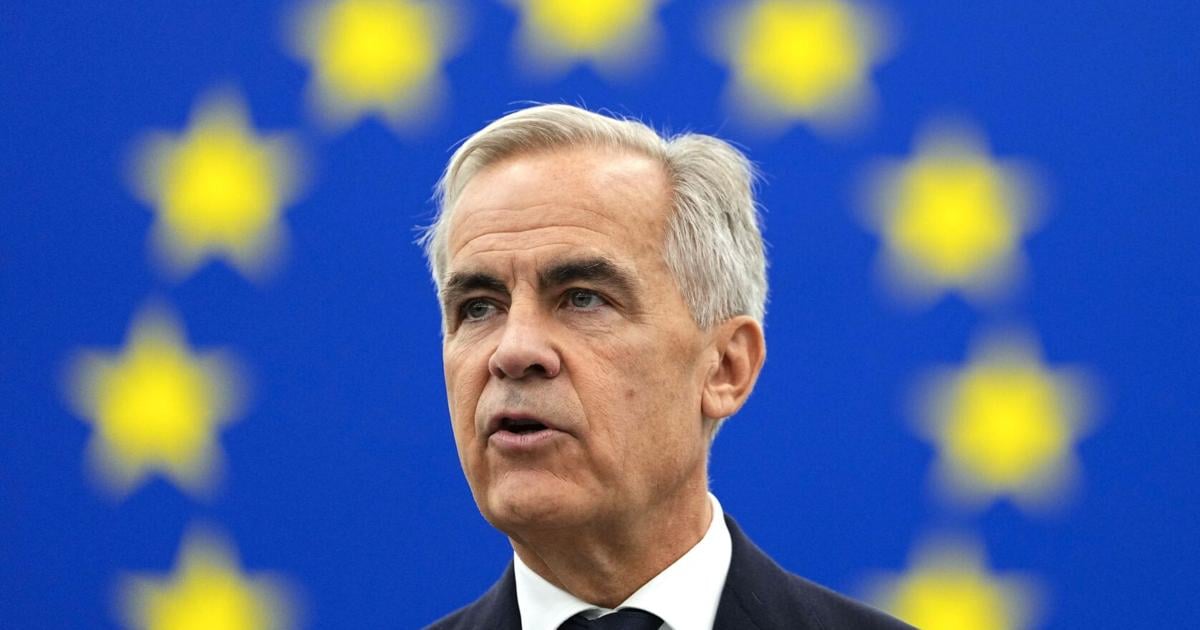
The terms chosen by Prime Minister Mark Carney better express what it’s about: a unique and stronger alliance. That’s what both sides are aiming for, with the next big step being the Canada-EU summit taking place in Canada on Oct. 29 and 30.
The goal is to strengthen the Strategic Partnership signed in June 2025 between Canada and the EU, which also includes a security and defence partnership. This is the most comprehensive partnership the EU has ever concluded with a non-member country. So, it’s about building the best on top of the best, to make progress in all key areas mentioned by Prime Minister Carney in his Strasbourg speech: trade, investment, defence and security, scientific and academic co-operation, mobility, diploma recognition, AI and its attendant technologies, critical minerals, financial services, payment systems, clean energy, space, quantum technology, vaccines and satellite communications and the Arctic.
The increase in exchanges between Europe and Canada is already being felt in concrete ways. French companies (SNCF, Keolis, and Systra) are involved in developing Canada’s first High-Speed Train. A German-Norwegian consortium (TKMS) is building Canada’s new fleet of twelve submarines. The French company Alstom will manufacture 313 train cars to replace Via Rail’s fleet. The Canadian mining company Lumina Metals is engaged in a major copper and silver project in western Poland. The momentum is undeniable; we need to speed it up, widen it, and make it last for the long term.
We are at a time in history when Europeans and Canadians feel an exceptional need to come closer to each other. This need for rapprochement is due, as we well know, to our disapproval of the erratic and unfriendly behaviour, not to say more, of the Trump administration. Then Europe appears to us as a vital political and economic ally at a time when we really need it. And Canada stands out, for many Europeans, as the “good” country in North America, the one you can rely on, that believes in win-win agreements, that keeps its word, the most European of non-European countries.
Yet, at this crucial stage of our relationship with Europe, I feel the need to emphasize that our goal to get closer to Europe should go far beyond the Trump era. We need to learn, in a lasting way, to be less dependent on the United States, both in terms of military and security matters, and economically and commercially.
It is now, while our rapport with Europe is so strong and our Prime Minister enjoys such an exceptional reputation there, that we Canadians need to develop effective working habits with this continent, with the 27 countries of the European Union, and beyond.
Let’s suppose that in two years the American people elect a more normal president, as friendly toward Canada as all of Donald Trump’s predecessors have been since at least the early 20th century. Then the insults against our country, the blatant extortion, the threats of annexation, and the trade war will end. But customs barriers and trade disputes will remain, and protectionist pressures will continue in the United States. Surely, the unhealthy sympathies for hostile dictators, the threats to withdraw from NATO, the refusal to help Ukraine — all these aberrations will stop — but the United States will still want to pivot toward the Asian front and ask Europe and Canada to take more responsibility for their own defence. We’ll still have a stake in not putting all our eggs in one basket.
The famous Davos speech by Prime Minister Carney was addressed to the whole world, but our prime minister also sent a clear message to us Canadians: we need to take our economic and geostrategic diversification goals seriously. We’ve been talking about it since Pierre Elliott Trudeau. This time, we must get it right.
We need to significantly strengthen our ties with Latin America, the Indo-Pacific, the Middle East, and Africa — and with Europe. There will be no successful diversification strategy for Canada without a considerable strengthening of our ties with Europe. Luckily, our interest in a considerable and long-term strengthening of our ties with Europe is mutual. Europe also has an interest in reinforcing its ties with us for the long term, beyond the current difficulties caused by the hostility of the Trump Administration.
Of course, Europeans are drawn to us because of the strong dislike they feel toward Trump. That dislike is intense. One can see it in the polls, or in the fact that it took the European Parliament a whole year just to barely and reluctantly approve the 15-0 deal (the US imposes 15 per cent tariffs on the EU with no reciprocity) negotiated by President Von der Leyen. Trump regularly threatens to break this agreement, in order to put pressure on Europe regarding Greenland, which he dreams of annexing, or to force Europeans to back him in his war against Iran.
The U.K. government is also tasting this medicine, as Trump threatens them, if they don’t increasingly align with his views, to support his Argentine ally Milei regarding the Falkland Islands issue.
But Canada and the EU’s relationship with the U.S. also differs. For the EU, the American market doesn’t account for three-quarters of foreign trade like it does for Canada, but rather about a fifth. So, trade issues are seen as less crucial there than for us, since we’re the country in the world whose economy is most closely tied to that of the United States. On the other hand, the massive U.S. military support, their steadfast presence in NATO, and their unwavering backing of Ukraine are seen in Europe as vital, existential issues, especially in the eastern part of the continent. The growing tensions with the Putin regime, its drone intrusions into NATO territory, its meddling in the political life of European countries, its blatant attempts to sabotage energy infrastructure in Germany and elsewhere — all of this makes Donald Trump’s threats of military withdrawal, his support for far-right parties including German neo-Nazis, and his repeated insults toward European leaders extremely worrying, especially in contrast to his deference toward Putin.
Faced with Trump, European governments pick their battles, avoiding unnecessarily adding fuel to the fire. So we shouldn’t expect European leaders to make loud declarations of support in the trade war that Trump is imposing on us. But our resilience earns their admiration and further boosts the exceptional prestige of our prime minister in Europe.
Europeans are relieved to see that we resisted an attempt at vassalization and extortion that went beyond trade issues. The United States would have taken over our resources, even granting itself a right of first refusal on our critical minerals. We would have practically violated our trade agreement with the EU, CETA, which would have abruptly halted the current momentum of our economic exchanges with Europe.
There is for Europe a long-term interest in a stable, allied democracy, strong in technology and R & D, and blessed with critical natural resources like Canada. The European Union and its Member States consider Canada as a rapidly expanding strategic market, a cutting-edge economy rich in critical resources, essential for the energy and digital transitions as well as for military rearmament, at a time where European states are seeking to get out of their dependence on Russian gas and on critical minerals from China.
Politically, Europeans see us as a stable democracy, much more reliable than the United States. They need such a stable and credible ally, while they themselves are facing huge challenges: the rise of the far-right; disputes over immigration; increasingly threatening pressures from Putin’s regime while some EU countries are showing fatigue over supporting Ukraine; costly and unpopular rearmament; tough EU budget negotiations between frugal countries and those heavily in debt; an aging workforce, weak economic growth with European industry — especially German and the automotive sector — faltering against Chinese competition.
Things could get worse. In 2027, elections will be held in Estonia, Finland, France, Greece, Spain, Slovakia, Poland, and Italy. Several of these elections are expected to see a rise in populist-nationalist right-wing parties that are against the EU, immigration, and climate policies. Some of these populist parties are against continuing aid to Ukraine and are sympathetic to Putin.
As if all these difficulties weren’t enough, Europe is now being hit hard by climate change, with blistering heatwaves, devastating wildfires, and water shortages affecting public health and the entire economy. Yet, there is a backlash against climate and environmental policies, which are being attacked, delayed, or abandoned in the name of economic priorities related to the cost of living, productivity, and deregulation.
All these challenges mean that Europe is not immune to turning inward. For Canada, it follows that we need to stay vigilant to make sure we have full access to European markets. Our diplomacy is making effective efforts to prevent Canadian exporters from becoming collateral victims of the industrial and trade strategies that the European Union adopts in response to American protectionism and to curb the flow of Chinese goods. In many European countries, the electoral weight of protectionist movements is growing with the rise of radical nationalist right-wing and anti-globalization left-wing forces.
We want to keep the European market as open as possible to our products and services. Hence our interest in maintaining a coherent, functional, and liberal European Union, open to our arguments for an inclusive trade which is our country’s hallmark, and not an incoherent Europe fragmented by self-centred nationalisms.
In any case, the current situation is favourable for a lasting strengthening of our relations with the European continent, as the European Union and Canada are close allies in all key areas: NATO, international security, Ukraine, the Middle East and Iran, open trade, AI, the transition to a decarbonized economy, the fight against foreign interference. For all this and more, the EU and Canada are essential strategic partners, who need to learn to act more together, more effectively, with more convincing results.
Sure, a country is tied to its geography. Europe can’t replace the United States for us, but it can help us be less dependent on them. Right now, 72 per cent of Canadian foreign trade is with the U.S., compared to 8 per cent with EU countries. The Canadian government has announced that it plans to double Canadian exports to markets other than the U.S. over ten years. To succeed in doubling Canadian exports to Europe from 2025 to 2035, they would need to grow at an average annual rate of 7.18 per cent. This rate is significantly higher than the average annual rate of 3.93 per cent over the past ten years. This is a considerable challenge that will require sustained performance far beyond recent historical trends. This ambitious goal is achievable, but it will require a significant improvement in Canadian work methods.
Europe is being approached from all sides. The competition to take market share there and attract its investors is fierce. We need to give ourselves the means to achieve our ambitions in Europe.
Europe really must be a priority for the government and should be integrated now, not later, into Canada’s new defence, AI, and critical minerals economy currently in development. We need determination, consistency, and a long-term vision that goes well beyond the disruptions caused by Trump-style anomalies. Even when the situation with the United States improves, we’ll still need to strengthen our ties with Europe.
To a large extent, our strategic security, our ability to defend democracy around the world, including at home, our ability to achieve our economic diversification goals, pursue truly sustainable development, and have a carbon-neutral economy will depend on our ability to strengthen our alliances in Europe and build increasingly strong and effective partnerships there, while achieving concrete and positive results.
This article first appeared in Sage a new policy analysis site to which Stéphane Dion regularly contributes.
Error! Sorry, there was an error processing your request.
There was a problem with the recaptcha. Please try again.
You may unsubscribe at any time. By signing up, you agree to our terms of use and privacy policy. This site is protected by reCAPTCHA and the Google privacy policy and terms of service apply.
Stéphane Dion is the Diplomat in Residence at the Université de Montréal as well as a former envoy to the European Union. He is a former leader of the Liberal party and a former ambassador to France and Monaco.
Opinion articles are based on the author’s interpretations and judgments of facts, data and events. More details