‘I killed no one, send me home’: The Indian student now a POW in Ukraine - The Indian Express
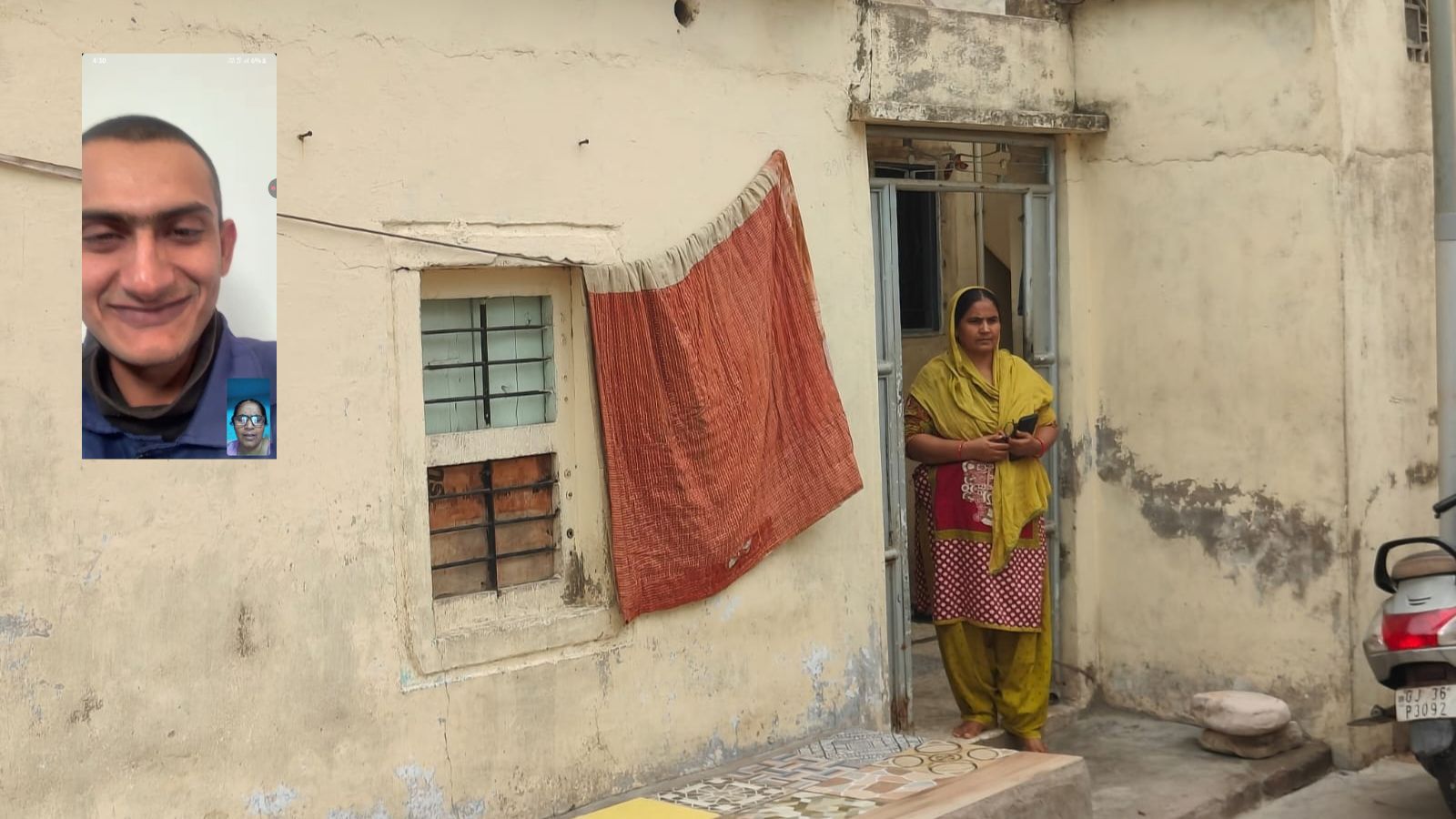
MAJOTHI Sahil Mahamadhusen… India…Morbi…” That was all Hasina Majothi could understand of what her son Sahil was saying in the video. It was a strange tongue. The boy only knew Gujarati, Urdu, Hindi and some English. What was this then? It was the first time in a year that Hasina had heard from Sahil. The last time he called was to say that he was in a jail in Moscow. On April 10, 2024, three months after he left for Russia on a student visa, Sahil had been arrested in a drug case.
And now, this video, released by the Ukrainian army. In the video, Sahil wore a red T-shirt, his hair closely cropped. He didn’t look particularly distressed, even laughed a bit as he spoke. But her mind raced. Was he in more trouble? Had he been kidnapped? Hasina recalls crying loudly that day, October 7, 2025, her heart aching.
It was after her brother got the video translated that Hasina got to know more: Sahil, speaking in Russian, was talking about his arrest in the drug case, that he was not at fault, how he had later been “forced” to fight Russia’s war against Ukraine and how he surrendered to the Ukrainian army. Soon, his photograph was on all news channels — as the Indian caught in the Russia-Ukraine war.
Sahil would later be sent to a Ukrainian facility that houses Russian prisoners of war (POW), many of them foreigners like the 23-year-old.
Since then, thousands of kilometres from the war front, from her home in Morbi, Gujarat, the 43-year-old has been waging a war of her own: both against a breast cancer that is, for now, in remission, and to get her son repatriated to India.
Since the Russia-Ukraine war began on February 24, 2022, several Indian youth have found themselves at the front lines of a battle they have no stakes in. Many of their stories follow a similar thread: in Russia on a student or work visa, and recruited by the Russian army to fight its war.
On September 1, 2026, Foreign Secretary Vikram Misri said India had information about 227 of its nationals being recruited into the Russian armed forces, of whom 139 had been discharged, 51 had died. New Delhi, he said, was in constant discussions with Moscow for the release and repatriation of those still in Russia.
Addressing the UN General Assembly on September 23, Ukrainian President Volodymyr Zelenskyy named India among 47 countries whose citizens, he said, Russia was using in its war against Ukraine.
What gives Hasina some comfort is that Sahil is now more than 1,000 kilometres from the war zone, at a POW internment facility in Lviv, western Ukraine. He is believed to be the only Indian at the facility.
“At least he is safe… at least he is not fighting the war,” says Hasina.
A year into her marriage, Hasina had separated from her husband and moved in with her maternal family in Morbi. Since then, Sahil had grown up in the old, yellow house in the corner of Lane No. 4, diagonally opposite the convent of the Sisters of Charity, where Hasina teaches tailoring to girls. She also stitches school uniforms for a private company.
Her mother, brother and his family live on the floor above. She says she never left Sahil out of sight, with the boy spending hours curled up on the bed across hers, talking to her or sleeping to the rhythmic clack of Hasina’s sewing machine. He could stitch, too, and was especially good at making shirt collars. Sometimes, he would carry out deliveries for her.
Hasina says that after Sahil finished school in 2021, he wanted to go abroad to study engineering. But with the pandemic raging that year, he gave up on the idea and later worked 12 hours at a ceramic factory in Morbi, bringing home Rs 22,000 a month.
By 2024, he finally got into an engineering course at ITMO University in Russia’s St Petersburg, before which he had to do a Russian Language and Culture course. Hasina says the family pooled in money to send Sahil abroad.
On January 10, 2024, he flew to Delhi and from there to St Petersburg. “He was so happy. But that was the biggest mistake I made, letting him go,” says Hasina.
From Russia, Sahil would call her on video, send her photographs — of snow, of him in jackets, selfies in front of St Basil’s Cathedral in Moscow. He also found part-time work as a courier.
He was living his dream. Until Hasina got a call on the midnight of April 10, 2024. “It was a video call, but I was sleeping and I missed it. When I called back at 3 am, he was crying. He said he was delivering a packet, but police had found drugs in his bag. Bechara… he didn’t know what was inside. He said he was being arrested,” says Hasina.
The line broke off. “After that, I kept calling him, but he didn’t answer. The next day was Eid, and I wished him, but the message was never delivered. After that, I lost all contact with him,” she says.
For the next few months, the family launched a frantic effort to trace him. Hasina’s brother Farukali Samsudinbhai Majothi wrote several letters, to the Union Home Minister, to the Ministry of External Affairs (MEA), reached out to the Indian Embassy in Russia and politicians in Gujarat, and registered on the grievance portal of the Prime Minister’s Office.
In a letter to the MEA on June 12, 2024, Farukali wrote, “It has been two months and two days and we are not in touch with Sahil…We have received information that he is currently in a rehabilitation centre somewhere in Russia… Currently everything is grey for us… Please help me get Sahil back to India with all the formal and legal process. If required, I am ready to travel to Delhi.”
Then, sometime in October that year, six months after Sahil’s arrest, Hasina got another call from him. “He said he was in a jail in Moscow. He told me he was being forced to accept Russian citizenship. If he agreed to do so, they would give him a house, a job, and a girl to marry, and drop the case against him. I told him not to sign it. I don’t think he signed,” she says.
It was around the same time, in October 2024, that advocate Deepa Joseph took up Hasina’s case pro bono. “I found a news report about the advocate helping a Kerala nurse return from Yemen. I managed to get her contact and spoke to her,” says Hasina.
As vice-chairperson of the Save Nimisha Priya International Action Council, Advocate Deepa had run a campaign to stop the execution of Nimisha Priya, a nurse from Kerala who was on death row in Yemen.
For almost a year after that October call in 2024, Hasina got no calls. Traumatised and worried sick, and as a side effect of the cancer treatment, she says she ate less and less. “I lost 12 kg in that period,” she says.
Then came the October 2025 video, posted on the X handle of the 63rd Separate Mechanised Brigade of the Ukrainian army. A friend had brought it to Hasina’s brother Farukali’s attention.
In the video, Sahil, speaking in Russian, talks about how he was sentenced to seven years in prison in the drugs case. “I didn’t want to serve time in prison, so I signed a contract for the SVO (the Russian term for the war with Ukraine). It’s a one-year contract, you serve for one year, and then… well, they let you go home… Someone said they give 1.5 million rubles. I think they gave me nothing. In short, everyone there is a total liar,” he says, chuckling.
He says he was trained for 16 days. “How to hold [a rifle], shoot… This is an F-1 [grenade]. Here’s how to prime it… throw it, that’s all. And on September 30 [2025]… they transferred me to the green lines [the stage before the combat zone]. The next day, on the 1st [of October], the commander asked, ‘Well, are you ready?’ There were three of us… We walked 3 or 3.5 km. We had to dig a trench.”
He says he didn’t want to do any of it. “I told the commander: ‘I am very tired. My legs hurt, my heart hurts.” An argument followed, the Russian commander asked a soldier to confiscate Sahil’s radio and throw him out. “I gave my radio and ran.
The Ukrainian dugout was 2-3 km away. I went there, put down my assault rifle… I don’t want war, that’s all. I need help… I killed no one… It’s only my third day… I don’t want to go back to Russia. I’d rather stay here, in prison. If possible, send me home to India.”
After the video became public, the Gujarat Police took Hasina to the headquarters of the Anti-Terrorist Squad in Ahmedabad, where she told them everything she knew.
On October 30, 2025, advocate Deepa Joseph filed a writ petition in the Delhi High Court, seeking the judiciary’s intervention to bring Sahil home. At the first hearing on November 3, 2025, the court asked the Indian embassy in Kyiv and the MEA to file status reports within four weeks. The MEA was also asked to depute an officer to liaise with officers in Ukraine.
In a March 18, 2026, response to the Delhi High Court, the MEA said that the embassy in Kyiv was in contact with the Ukrainian government, but communication from Ukraine’s foreign affairs ministry on Sahil’s release and repatriation was still pending.
Asked for an update, MEA sources said they had obtained consular access to Sahil and officials from the embassy had met him twice. They also said they were pressing the Ukrainian government for his early release.
A month after the court order, advocate Joseph, while on a personal tour to Europe, decided to go to Ukraine “to find out what was happening” since “there was no response from the authorities”.
She reached Ukraine on December 23, 2025, and contacted the Indian embassy. “They had already met Sahil. But Hasina didn’t know about it,” says Deepa, adding that she finally sought help from ‘I Want to Live’, an organisation that works for foreigners in Ukraine jails. “They told me that Sahil was in a POW camp in Lviv. That was the first time any of us, even his mother, knew where he was.”
On New Year’s Day in 2026, advocate Deepa and Sister Ligy Payyappilly, Superior of the Sisters of St Joseph of Saint-Marc, drove four hours from Mukachevo, a city in western Ukraine, to the Lviv camp. They carried a few items for Sahil: clothes, undergarments, coffee powder, biscuits, and four boxes of cigarettes that he could barter for milk and coffee.
“They took me past a room where there were a lot of POWs watching television. As I walked, all eyes turned to me. I spotted a familiar face and shouted, ‘Sahil’. He was shocked. I introduced myself. He had had no contact with his family since he went to jail in Moscow. He was called out of the room to meet me,” says Deepa.
At the end of their meeting, recorded by the ‘I Want to Live’ team, Joseph made a video call to Hasina.
In Morbi, Hasina says, “It was the first time in over a year that he had heard my voice and seen my face. Out of 18 minutes, he cried for 10 minutes. We hardly spoke, but at least I knew he was safe.”
Since then, Sahil has been calling once every couple of months. There is never enough time for a conversation. “We have so much to say to each other, but we need to rush… There are others waiting for their calls,” she says.
When Hasina speaks, it’s with a rare stoicism, honed over dozens of interviews that she has given since the 2025 video. Over and over again, she has stepped out of the yellow house, veil on her head, eyes fierce and dry, and stood in front of the line of microphones and cameras to explain her son’s case, hoping someone important enough would intervene to bring her son back home.
These days, Hasina’s life revolves around the calls she gets — from Sahil and from advocate Deepa with updates on the case. Hasina makes sure her phone never runs out of charge.
She is also part of a WhatsApp group of families whose sons are stranded in Russia. “We are a group of 61 from across the country. Somebody or the other says something almost every day,” she says, before lowering her voice to a whisper. “Some left the group after losing their sons to the war.”
The advocate had passed on the news, but all Hasina understood was that it was a reason to hope. She has now started preparing for Sahil’s return, browsing through an online portal on her phone and making purchases — a T-shirt that says “soldier, never off duty”, a cap, a sweatshirt, a wallet, a pair of shoes, a belt, deodorant, some socks. “He told me he left all his stuff behind in Russia. When he comes home, he will need something,” she says.
Beside her lie two electric sewing machines, the plug off the sockets and the needles without thread. “I don’t feel like working. I keep praying, I can hardly sleep,” says Hasina, her voice finally cracking.
Brendan Dabhi works with The Indian Express, focusing his comprehensive reporting primarily on Gujarat. He covers the region's most critical social, legal, and administrative sectors, notably specializing at the intersection of health, social justice, and disasters. Expertise Health and Public Policy: He has deep expertise in healthcare issues, including rare diseases, Antimicrobial Resistance (AMR), the complex logistics of organ transplants, and public health challenges like drug-resistant TB and heat health surveillance. His on-ground reporting during the COVID-19 pandemic and Mucormycosis was critical in exposing healthcare challenges faced by marginalized communities in Gujarat. Social Justice and Legal Administration: He reports on the functioning of the legal and police system, including the impact of judicial philosophy, forensics and crucial administrative reforms (. He covers major surveillance and crackdown exercises by the Gujarat police and security on the international border. Disaster and Crisis Management: His work closely tracks how government and civic bodies respond to large-scale crises, providing essential coverage on the human and administrative fallout of disasters including cyclones, floods, conflict, major fires and reported extensively on the AI 171 crash in Ahmedabad. Civic Infrastructure and Governance: Provides timely reports on critical civic failures, including large scale infrastructure projects by the railways and civic bodies, as well as the enforcement of municipal regulations and their impact on residents and heritage. ... Read More