How Putin’s Invasion of NATO Could Unfold as Estonia Border Closed - Newsweek
Russia could stage a limited incursion into Estonia to test NATO's resilience, according to a scenario from the Institute for the Study of War (ISW), which comes amid heightened tensions between Moscow and Tallinn.
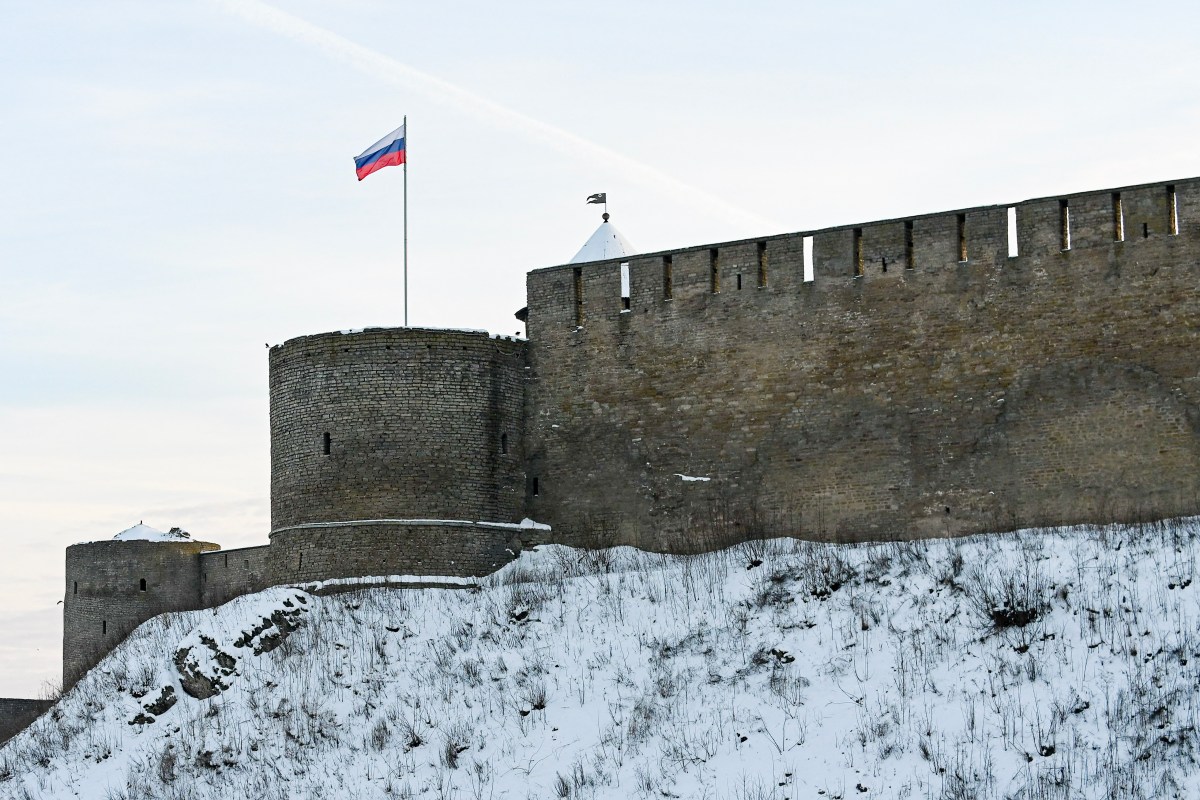
Russia's FSB intelligence services imposed restrictions last week on two Russian districts in the Leningrad oblast bordering Estonia—Kingisepp and Slantsy, limiting nighttime movement and access to parts of the Narva River both countries share.
This follows Estonia's announcement that it would shut its border with Russia if Vladimir Putin ordered a mass mobilization in Russia to replenish losses in his war on Ukraine, a move which could prompt a mass exodus.
As officials in the wider Baltic region express alarm at Russian drone incursions, airspace violations, sabotage, and other hybrid threats, the ISW suggested that Narva, a predominantly Russian-speaking border town, could be at the frontline of Moscow's move on NATO.
This would test NATO's Article 5 mutual defense clause, in which an attack on one is deemed an attack on all.
The Washington, D.C., think tank emphasized that there is no current Russian buildup by the Baltic states and a Russian invasion of NATO is extremely unlikely while Vladimir Putin is militarily preoccupied in Ukraine.
However, it said that such a scenario "will present a series of complicated challenges and decisions to NATO military structures." Newsweek has contacted the Kremlin and the Estonian foreign ministry for comment.
The ISW said that the border spat with Estonia gave important context behind Moscow's view that the Baltic republic could be a stepping stone towards a de facto war with NATO.
It said ahead of such an operation, Moscow could push propaganda accusing Estonia of oppressing its Russian-speaking citizens, or claim Estonian aid to Ukraine is akin to helping Kyiv in its strikes against Russia.
Russia's military could also gather FPV drones from its drone units within range of Narva and the nearby military base of Johvi.
Russia could use long-range, shorter-range fiber-optic and radio-controlled drones up to 40 miles behind its border as well as long-range one-way attack drones for possible use against NATO positions, the ISW said.
When the time was right, Russian agents already in Narva could seize key buildings, including municipal sites, and declare a "Narva People’s Republic" (NPR) before calling on Moscow to defend them.
Russia could then enter the fray, using its pre-positioned drone and air defense units, without pledging to enter Estonian territory unless Tallinn escalates the crisis.
The Russian drones striking Estonian forces trying to clear the positions could be bolstered by Moscow's elements in Narva operating their own tactical drones.
The situation could become a localized stalemate as Estonian personnel cannot immediately defend against large volumes of Russian FPV strike drones.
The ISW said that the Kremlin could demand de-escalation if Tallinn recognized the NPR’s control of Narva; otherwise, it could threaten to expand its strike campaign.
However, on the pretext of protecting Russian citizens, the Kremlin can deny it is an attack on NATO, which would pose a strategic challenge to the alliance.
Estonia would likely seek an Article 5 activation or seek help from NATO member states, but there may be a reluctance among alliance members to do so over a limited incursion, fearing a full-scale war with Russia, the ISW said.
However, if Article 5 is not activated, its significance will be diminished, which Putin will take advantage of, the think tank added.
Tensions between the U.S. and Europe over defending NATO territory and airspace may delay or preclude U.S. involvement, and Russian cognitive warfare could drive the wedge between the US and Europe even deeper.
However, the scenario would mean Putin risking NATO escalating in ways that force him to choose between taking on the alliance and continuing his war in Ukraine, the ISW added.
The ISW's hypothesis about Narva is not a prediction but rather a sketch of how Moscow could potentially launch a small military operation against NATO that forces the alliance to decide how to respond.
It resembles aspects of the book If Russia Wins: A Scenario, by the German political scientist Carlo Masala, professor of politics at Bundeswehr University.
He also suggests a disinformation campaign about persecuted Russian speakers could precede a move on Narva, as well as the Estonian island of Hiiumaa, mirroring Kremlin rhetoric ahead of its 2014 invasion of Ukraine's Donbas region.
He also posits a split among NATO members over whether to invoke Article 5 with the alliance weakened by less American commitment.
However, unlike the ISW scenario, Masala's book places the attack in 2028 after the end of the Ukraine war ends in Moscow's favor. This would include Kyiv's surrender of 20 percent of its territory and being prevented from pursuing NATO membership with little other security guarantees.
Masala told Newsweek in October 2025 that there are circles in Moscow who do not believe any longer in Article Five, and they would like to test it. “The Russians are becoming more and more reckless in the way they test the deterrence of NATO," he said, "this has to do with driving a wedge between the Europeans and NATO."
Newsweek’s reporters and editors used Martyn, our AI assistant, to produce this story. Learn more about Martyn here.
Contact Newsweek editors on this story: John Fitzpatrick and Gray R. Thomas