How Nigeria declined into criminality, poor governance in 66 years - Vanguard News
“What does corrupting time not diminish? Our grandparents brought forth feebler heirs; we are further degenerate; and soon will beget progeny more wicked.” Homer, 65-8 BC
Read Also: NIGERIA @ 66: Scandalised? – How NJC’s hammer fell on judges, justices
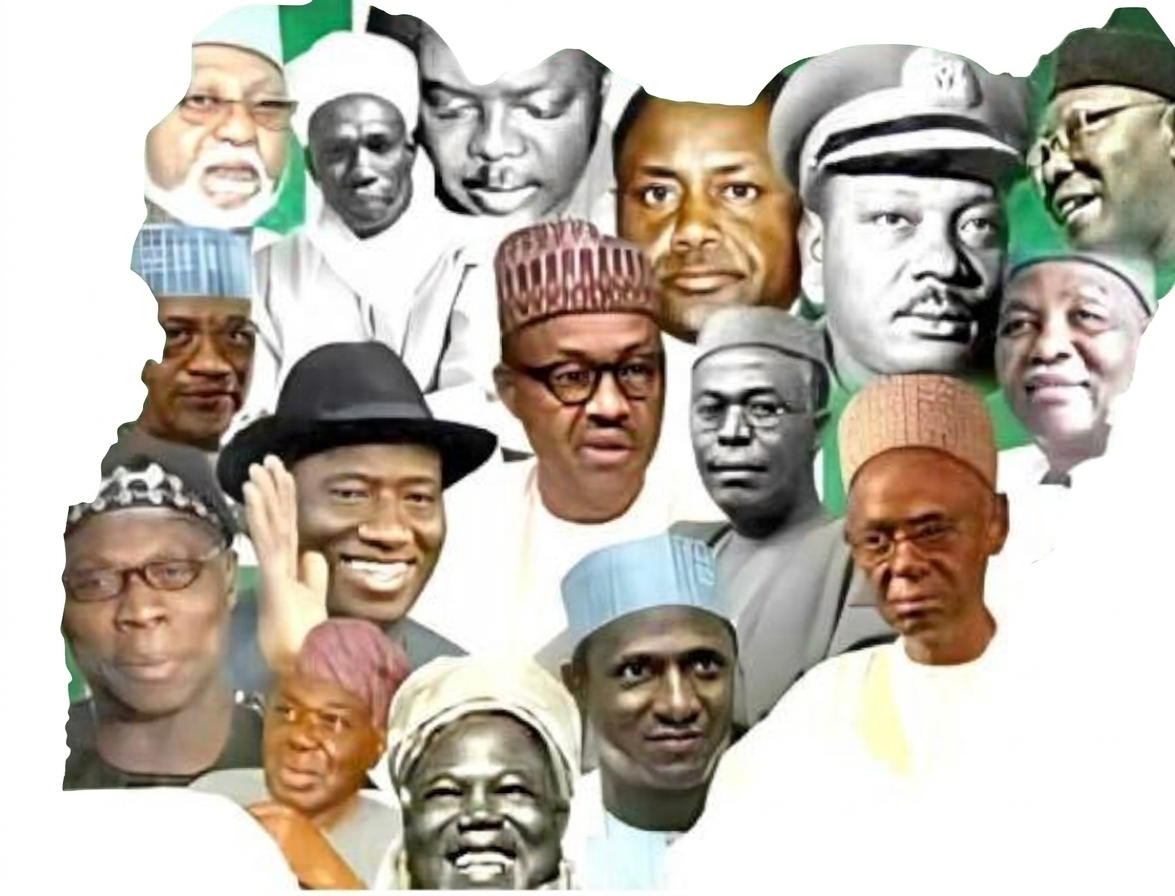
In 1960, nobody being prosecuted for embezzlement of public funds would have been fielded for the next election by any political party. Today, dozens of suspected criminals – certificate forgers, financiers of terrorists and drug traffickers — are running for the highest offices. No graduate of any university would consider crime as his first choice for employment. Today, thousands of the grandsons of the graduates of 1960 routinely join yahoo syndicates in order to fund lavish life styles as their first option. It is difficult to blame them; when former Governors accused of serious crimes are either Senators or aspiring to be – without the slightest sense of remorse. Our founding fathers – Ahmadu Bello, Nnamdi Azikiwe and Obafemi Awolowo would not believe what the nation they fought for had become in the hands of their political children and grandchildren today. Virtually everything – food supply, education, health, roads, infrastructure and, above all, governance — is in relative decline; compared with 1960.
“There are people in the world, so hungry, that God cannot appear to them except in form of bread.” Mahatma Gandhi, 1869-1948.
The great Indian leader and liberator made that remark before he was assassinated in 1948 at a time when his country, now divided into at least three nations, suffered from food scarcity worse than Nigeria is experiencing now. Certainly, it can also be said that there are millions of people in Nigeria today, so hungry, that God cannot appear to them except either as a loaf of bread or a bowl of cooked rice. I was only four years old in 1948. So, I had to interview those far older than me to know how the food situation was like at the time – in addition to historical research. Surprisingly, Nigeria was then a net exporter of food at a time when almost 99 per cent of Nigerians were illiterates; when the University of Ibadan was just opening its doors to students. All the Nigerian university graduates could not have been more than 1000. Today, UI alone graduates over 5,000 annually. All Nigerian universities throw more than 120,000 into the job market. What is the use of our famed “educated manpower” if we cannot feed ourselves now?
In 1960, Nigeria was the largest exporter of vegetable oil; the third largest exporter of cocoa; and imported no grain of rice. Today, Nigeria is the exporter of cocoa; a net importer of vegetable oil and the importer of rice. With each passing year, sustainable food security becomes more elusive.
“Nigeria’s fertilizer use shortfall.” VANGUARD, Editorial, September 25, 2026.
The comment by the paper should be read by everybody aspiring to lead Nigeria and the states. “The Federal Ministry of Agriculture and Food Security says national fertilizer consumption is about 18.6 kilogrammes per hectare, against 50kg/ benchmark associated with the 2006 Abuja Declaration”. Obviously, twenty years, after the Abuja Declaration, Nigeria has not achieved up to half of its benchmark. Food security will remain a mirage for years to come.
“133 million Nigerians poor – NBS, November 18, 2022.
In 1960, the population of Nigeria was under 60 million; and less than 30 per cent was categorized as poor – when the country was not a majour oil producing and exporting nation. Instead, Nigeria had a more diversified economy. Today, the nation is again moving towards greater diversification; after decades of operating as a heavily oil-dependent economy. Food insecurity and import-dependence were to worst repercussions of the flight from domestic food production.
The decline from a Middle Income economy in the early 1960s and 1970s to the Worlds Poverty Capital in 2018, except for occasional reversals, was gradual and relentless. It continues till today. The figures speak for themselves: 18 million in the 1960s; 133 million in 2022 and approximately 138 million in 2025. That figure is expected to increase in 2026 and for at least a few more years on account of President Tinubu’s poorly articulated reform programme centre around fuel subsidy removal. Nigeria is still trying to assimilate the intentions of Tinubu’s economic programme.
“A bicycle …once rolling, retains its balance so long as it moves. Without movement, it collapses.” Aleksander Solzhenitsyn,
The 1970s and early 1980s can be regarded as the golden years of Nigeria’s ranking in the global crude oil export. The nation was once the sixth or seventh largest world producer and exporter. Refineries were established to process some of the crude and the rest was exported. Under military President Ibrahim Babangida, IBB, crude and fuel were produced and exported for a while. The bicycle was moving. It stopped suddenly; when Turn-Around-Maintenance, TAM, were no longer conducted. Apparently one small mistake; but, the consequences for Nigeria had been devastating. No other Federal Government has been able to keep the refineries open since 1994.
The repercussions were obvious for decades as every President promised but did nothing to revive the refineries. They are now scraps of metals and electrical lines.
In Nigeria ranks as the eleventh oil exporting nation; and we now import crude from the United States, thanks to Dangote Refinery, which was once our largest customer. Economic disaster cannot be better defined; since the Americans have no intention of returning as buyers of Nigerian crude.
“Health is wealth” is one of the most enduring gems of wisdom handed down to mankind through the ages. Every regional government during the First Republic took public health seriously. Patients paid next to nothing for the best possible treatment available in General Hospitals. In 2026, services in General Hospitals have deteriorated so badly, and those rushing there better have a lot of money; otherwise there is no service and it is seldom the best. Patients to doctor ratio in Nigeria has reached about 300,000 patients per doctor in Nigeria; making it one of the worst in the world. Surprisingly, unprecedented revenue since 2023 has brought no improvement. Quite the contrary; the situation has never been worse. Here is evidence.
“Only N36m released from 2025 N216bn health capital budget – Minister.”
When only about 0.06 per cent of capital appropriations for health are released, the repercussions are inescapable. Several services provided by all health institutions – from Primary Health Centres to Teaching hospitals – grind to a halt. Obsolete equipment are not replaced; care provision is not upgraded; staff morale is low everywhere.
The failure in this regard can be measured by the fact that Nigeria is the largest country whose life expectancy has barely moved up for nearly a decade. Expect no change soon.
“Why 2026 capital budget may not be implemented this year.”
The recent report by VANGUARD has merely re-confirmed a stream of tendency by the Tinubu administration to treat annual budgets with the levity they don’t deserve. With the releases for 2026 deferred until 2027, it is clear that what is broken and un-repaired this year will remain that way until next year, at least. How many lives will be lost?
“The devil finds work for idle hands.” That has been known since the dawn of history. Nigerian secondary and tertiary institutions churn out nearly half a million graduates annually. Most of them, including those who graduated First Class, will finish National Youth Service and end up jobless. But, the international crime syndicates are waiting to employ them. It is now a painful experience to read or watch the news these days. More Nigerian youths than ever before are now employed in cyber crimes – yahoo, romance scams, trans-national money laundering – at home or abroad. Drug trafficking, Ponzi schemes and other forms of internet aided felonies have proliferated beyond anybody’s imagination. Law enforcement is lagging behind in many respects. Nobody now knows how many escape for each one caught and prosecuted.
More chillingly, some operate their crime syndicates from inside prison walls.
“Some public officers take Nigeria’s money ‘every minute”, says Olukoyode. The Cable.
“Corruption: EFCC uncovers officials with hundreds of house, millions in assets.”
When the Chairman of the Economic and Financial Crimes Commission, EFCC, talks about pervasive embezzlement of public funds by public officials, Nigerians should listen. It is almost impossible to be a public servant — federal, state or local government – without being involved individually in crimes or colluding with others to commit larceny.
Unknown to most Nigerians, the public service is the greatest crime syndicate in the country today. Public servants steal more funds from the federal, state and local government accounts than any other group of criminals can match.
The most casual glance at the Annual Report of the Auditor-General of the Federation, AuGF, for any year, would reveal questionable transactions, now running into trillions, by every Ministry, Department and Agencies, MDAs. Shockingly, the worst offenders are: the Central Bank of Nigeria, CBN, the NNPCL, the Presidency, the Police and the Judiciary. Any nation whose law enforcement officers constitute the apex financial predators is probably beyond redemption.
Nigeria’s debt now stands at N166 trillion; a significant percentage of the funds borrowed to improve national welfare and reduce poverty were, and are being, stolen by public servants.
“Yes, we will do anything for the poor man; anything, but, get off his back.”
“FG seeks fresh $1.5bn World Bank loan.” Report, September 28, 2026
The national debt jumped to N166.79 trillion at the end of June 2026. That should not be surprising. Nigerians were warned about this government. Here is a reminder from 2024.
“The DMO said as of March 31, 2024, the country’s domestic and external debts stood at N121.67 trillion ($91.46 billion). Nigeria’s debt rose by N24.33 trillion within three months – from N97.34 trillion ($108.23 billion) in December 2023 to N121.67 trillion ($91.46 billion).” Channels Television.
Nigerian government leaders, Presidents and Governors, are addicted to loans the same way drug addicts cannot kick the habit; and become increasingly hooked. What Dr Ngozi Okonjo-Iweala persuaded Obasanjo to do in 2004, that is paid off Nigeria’s external loans was so alien to our government leaders that one late former Governor called her “stupid”. Since then, no President or Governor has repeated it – even when opportunities made it possible.
In just two years, the Tinubu administration has increased the national dent by N45 trillion. That is more debt than Nigeria racked up from 1960 to 2015 – when APC’s wind of debt change overwhelmed us. The future has been mortgaged for three generations. Right now every Nigerian owes the world N759,000; for which he had received next to no benefits. On the contrary; higher debts have translated into deepening poverty. Yet, there is more debt is on the way.
3.7M DISPLACED NIGERIANS IN EIGHT STATES
Note: 3.7 million Nigerians are reported displaced in March 2026. Only eight states account for 3,341,000 or 91% of them. Borno State, alone, accounts for 46 per cent; and together with Benue, the two states hold 60 per cent of all displaced persons in Nigeria. There are reasons for this situation – which we ignore at our perils
Internally Displaced Persons, IDPs, can justifiably be a measure of security in the nation. Behind the 3.7 million people in the camp are several hundred thousands killed, homes and means of livelihood destroyed; families broken and futures blighted. Before 2013, seldom were 30 Nigerians massacred in one day; now, it is a good day for the nation if less than 50 people were killed, inducted, maimed or kidnapped by hoodlums in various categories. Before 2010, the Nigerian state had a near monopoly of the use of lethal violence. Not anymore; today, so many groups compete with state security forces for control of power. And, the bandits are succeeding like never before. Almost every day, the media publishes news of mass murders, kidnapping and destruction of entire communities. Occasionally, Nigerians in particular, and the global community is invited, via live video, to witness victims being slaughtered like cattle.
The current administration inherited the disaster bequeathed by Buhari; but, for a few successful rescue operations, has so far failed to improve on the security situation since 2023. This being a year when politics takes precedence over governance, and political intolerance on the rise, there is very little hope for relief until after the elections.
“Why 2026 capital budget may not be implemented this year.”
The 2026 Budget is suffering the same fate as the 2024 and 2025 budgets – written to be discarded as soon as they are presented to the worst National Assembly, NASS, since 1999. The steep decline in budget management started with late President Buhari; who left Nigeria “an economy on the brink of bankruptcy”. Buhari’s economic disaster was founded on incompetent budget preparation; and woeful execution; both of which were concealed by propaganda and falsehood. It was only the failure to redeem the promises made and the extension of budgets, well into the following year, which eventually revealed that capital budgets had not been implemented.
In May 2023, the annual budget extension, regularly condoned by the NASS, proved particularly costly to the country. Buhari was forced to disclose that N23.7 trillion had been illegally withdrawn from the Central Bank of Nigeria, CBN. Eventually N30 trillion was discovered to have been withdrawn without the authority of the docile NASS. The collusion between the Presidency and the CBN was unprecedented in Nigeria – even under Abacha’s draconian military rule. Till today, there is no record of how the N30 trillion was spent. National debt took a giant leap forward – with nothing to show for it.
Since the 2024 Budget, Tinubu has demonstrated that the worst is yet to come.
When the National Drug Law Enforcement Agency, NDLEA Decree 48 of 1989 was promulgated, Nigeria was regarded as a drug transit country; with low consumption. Today, the country has become a high consumer, producer and exporter of illicit drugs. Drug traffickers are apprehended everyday with large consignments of drugs. To cap it all, two multi-billion drug producing factories have been discovered in the country. From all indications, there might be more.
Despite the valiant efforts of the NDLEA, the agency is obviously losing the war. Drug addiction has become so pervasive, it has reached primary schools in some states.
“Tinubu misses UNGA for the third time.”
“Jimoh Ibrahim, Nigeria’s Permanent Representative to the United Nations had earlier said Tinubu would attend the 81st UNGA, saying that provisions had been made for him to sit close to Donald Trump, his American counterpart.”
Mr Jimoh Ibrahim, without realizing it, was passing fake news. President Tinubu was in France while President Macon was packing his bags for UNGA. The Nigerian President made no plans to go to UNGA. Nobody was fooled by Tinubu’s absence. The whole world is aware of his case in the US and the efforts to conceal the past.
The annual United Nations General Assembly, UNGA, is the global biggest political event. Heads of Government of the 193 member nations seize the opportunity to promote their nations, network collectively and individually – even when the reception is hostile. It is quite possible that no President has missed two in a row. Tinubu missing three in a row should be concerning to every Nigerian – including his strongest supporters.
Several reasons have been advanced for Tinubu’s absence from UNGA. One is most concerning. It has been alleged that a warrant of arrest might have been obtained for hid detention if he stepped on American soil. President Trump was said to be unwilling to save the Nigerian President the embarrassment, as well as the consequences.
As things stand, if re-elected, Tinubu might still not be able to attend UNGA in the future. In the 1970s and 1980s, no President of Nigeria evaded the US.
That summarises the external affairs situation.
Comments expressed here do not reflect the opinions of Vanguard newspapers or any employee thereof.