How Grassroots Mobilisation Can Reshape 2027 Polls - The Guardian Nigeria News
Ahead of the 2027 general election, Nigeria’s political landscape is witnessing a shift in which grassroots support and candidate appeal increasingly matter alongside party structures. Recent elections suggest that party machinery alone may not guarantee victory as voters assert greater influence over electoral outcomes. GBENGA AKINFENWA writes.
Prior to the 2019 general election, Kwara State witnessed one of the most significant political realignments in its recent history.
The movement, popularly known as ‘O To Gẹ́’, or ‘enough is enough’, became the rallying cry of a coalition seeking to end the political dominance associated with the Saraki political structure in the state.
The outcome was decisive. The All Progressives Congress (APC) candidate, AbdulRahman AbdulRazaq, defeated the Peoples Democratic Party (PDP) candidate, Razak Atunwa, with 331,546 votes to 114,754. The APC also won all 16 local councils.
The Kwara experience demonstrated how political structures could be challenged when different interests coalesced around a common electoral objective. But it also raised a question that has become more relevant ahead of 2027: how much of electoral power belongs to political parties, and how much resides with voters and candidates themselves?
Seven years later, that question is resurfacing in different forms across the country.
In Ogun State, a non-partisan grassroots civic advocacy group, Make Ogun State Great Again (MOGA), has emerged from community-based activism around infrastructure and governance concerns in Ado-Odo/Ota Local Council. The group says it is mobilising citizens to demand accountability, monitor public projects and encourage participation in governance ahead of the 2027 elections.
Its activities reflect a wider development in which some civic organisations are attempting to move beyond election-day observation to sustained engagement with communities on governance, accountability and citizens’ rights.
A similar initiative emerged in May when civil society and civic technology organisations established the Coalition for Participatory Governance (CPG), aimed at promoting transparency, accountability and improved service delivery, beginning at the local government level. The coalition was convened by TriAfrica Empowerment Foundation and supported by BudgIT and Lagos Island Connect, alongside other civil society organisations.
The coalition said its objective was to encourage citizens to become active participants in governance rather than limiting political participation to voting during elections.
That development is significant because the emerging political currency is no longer confined to party membership, rallies or endorsements. Increasingly, political actors are seeking to understand where voters live, what issues influence their choices, how they behave at polling-unit level and what persuades them to turn out on election day.
The Osun Test The recent Osun governorship election provides one of the clearest examples of the changing relationship between candidate identity and party platform.
Governor Ademola Adeleke contested the 2026 election on the platform of the Accord Party, having won his first term in 2022 on the PDP platform. He was re-elected with 511,067 votes, defeating APC candidate Bola Oyebamiji, who polled 444,815 votes. Adeleke won 19 of the state’s 30 local councils, while the APC won 11.
More significant for the argument about candidate-centred politics is the comparison with 2022.
Adeleke polled 403,371 votes in 2022 on the PDP platform. His 2026 tally of 511,067 therefore represented an increase of 107,696 votes, despite his change of political platform.
The result does not establish that party structures are irrelevant. Rather, it raises questions about the extent to which an incumbent’s personal political identity, record, grassroots networks and relationship with voters can travel across party platforms.
For political strategists, therefore, the relevant question may no longer be simply which party controls a state. It is also where each candidate’s votes are coming from, the margins involved, turnout levels and the strength of the candidate’s network at polling-unit level.
Political commentator, Sanusi Muhammad, argued that federal influence should not automatically be equated with electoral support.
“Federal power is not the same thing as electoral power,” he said, noting that the number of governors, ministers, National Assembly members, appointments, financial resources, rallies and endorsements does not necessarily translate directly into votes.
Using Osun as an example, he argued that campaign organisations should look beyond the number of local councils won and examine polling-unit performance, vote margins and turnout.
“A modern campaign dashboard should never simply say: we won 19 LGAs. It should say: where did we win, by how much, with what turnout, among which voter segments, and at what mobilisation cost?” he said.
That distinction is becoming increasingly relevant as political parties prepare for 2027.
From Party Structures To Voter Networks The changing political environment does not mean that party structures have disappeared. Rather, the relationship between the party, candidate and voter appears to be becoming more complex.
A party may possess governors, lawmakers, political appointees and extensive organisational structures, yet still have to convert those advantages into votes at the polling-unit level.
Conversely, a candidate with strong personal recognition may attract voters beyond the traditional boundaries of his or her party.
This was also part of the lesson of the Kwara election in 2019, when the ‘O To Gẹ́ campaign brought together politicians, professionals, civil society actors, youth groups and ordinary voters around a common political objective. The APC’s victory across all 16 local councils demonstrated the electoral effect of a broad coalition operating against an established political structure.
The current debate in Kwara is, however, different. The political conversation has shifted from the 2019 campaign to questions of governance and performance under the APC administration. Some residents and political actors have begun using the expression “O Tun Ya” to express dissatisfaction and demand another political change.
Such developments illustrate another feature of Nigeria’s electoral politics: slogans and movements may be powerful, but their durability depends on whether the underlying grievances remain relevant to voters.
The Grassroots Question Coordinator of MOGA, Apostle Kayode Olawoye, believes grassroots mobilisation will be critical in 2027.
“The grassroots are the real voters,” he said, arguing that organised citizens could exert greater influence when they act collectively rather than individually.
Olawoye said MOGA was non-partisan and focused on voter education and demands for development.
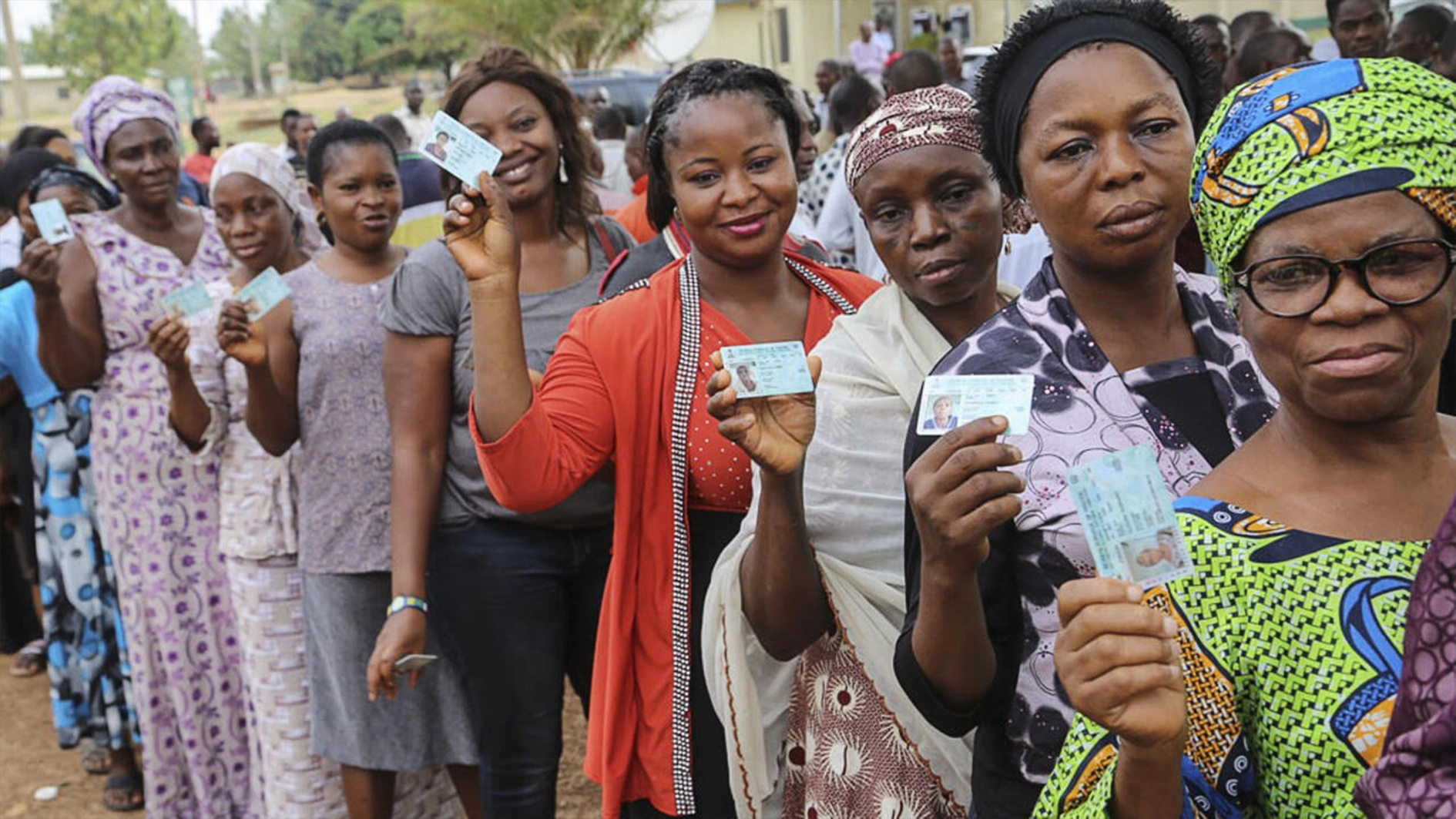
He also urged eligible citizens to obtain and protect their voter credentials and participate in the electoral process.
His position reflects a wider argument among civil society actors that electoral participation should not begin and end with campaign rallies.
National Secretary of the Campaign for Democracy, Femi Lawson, said citizens needed to understand the influence they exercise through their votes.
“There has been this impression that it is one political leader or godfather or one political party that determines the victory in an election,” he said. “But it has shown that when the people are determined, they can actually dictate the direction of where the citizens should vote and who governs them.”
Lawson cited the emergence of candidates on relatively smaller party platforms as evidence that electoral competition can extend beyond the dominant political parties. He referred to Olusegun Mimiko’s 2007 victory in Ondo State on the Labour Party platform and the emergence of Peter Obi as a major political force under the Labour Party in the 2023 presidential election.
The examples, however, also underline the importance of candidate identity. In each case, the party platform provided the legal vehicle through which the candidate contested, while personal networks, political circumstances and voter sentiment influenced the outcome.
Mobilisation And Turnout For Lawson, one of the central challenges facing Nigerian elections is low voter participation.
He argued that low turnout can make electoral manipulation and vote buying easier because a relatively small number of active voters can determine the outcome of a contest involving a much larger registered electorate.
The argument places turnout at the centre of grassroots politics. But participation alone is not enough.
Andrew of ActionAid said citizens must also be sufficiently informed to assess candidates and parties on issues such as security, employment, education, healthcare, food prices and poverty.
“The recent Osun governorship election provides some important lessons as Nigeria approaches 2027,” he said, noting that turnout remained relatively low despite the large number of registered voters. He also pointed to reports of vote buying and voter inducement as evidence that threats to free electoral choice remain.
The implication, he argued, is that civic mobilisation must move beyond asking people to vote.
Citizens need to know how to verify their voter information, locate their polling units, understand the voting process, recognise electoral offences and report intimidation or other violations.
Civil society organisations, he said, also have a responsibility to reach communities that are often poorly represented in mainstream political conversations, including rural residents, women, young people, persons with disabilities and people living in poverty.
The emergence of the Coalition for Participatory Governance points to another dimension of the changing political landscape: the attempt to make citizens participants in governance between elections.
The coalition said its approach was designed to begin at the local council level, where citizens interact directly with the government on roads, water, healthcare, education, markets and other basic services.
For Andrew, such engagement should remain independent of political parties.
“Civil society must also remain independent. Our responsibility is not to tell Nigerians which political party or candidate to vote for,” he said. “Our responsibility is to protect their right to make that choice freely and ensure that the system respects whatever choice they make.”
That independence, he argued, would be particularly important in 2027, when civil society organisations would be expected to scrutinise the conduct of both governing and opposition parties.
The 2026 Osun election also demonstrated the continuing importance of election observation. According to Andrew, observers documented issues including vote buying, difficulties with the Bimodal Voter Accreditation System (BVAS), accessibility challenges and isolated cases of intimidation.
The larger lesson is that grassroots politics cannot be reduced to campaign mobilisation alone. It also involves voter education, accountability, community organisation and the ability of citizens to monitor the electoral process.
The New Political Currency The emerging picture ahead of 2027 is therefore more complicated than a simple contest between party structures and voters.
Political parties still provide the legal and organisational framework for elections. Governors and other political office holders retain substantial resources and networks. Campaign organisations still require money, agents, logistics, data and structures to convert support into votes. But the electorate is becoming an increasingly important variable in that equation.
The experience of Kwara in 2019 showed how a broad-based movement could challenge an entrenched political structure. The 2026 Osun election demonstrated that a candidate could retain and even expand his vote base after changing political platforms. The activities of MOGA and the Coalition for Participatory Governance point to growing efforts to organise citizens around governance issues outside conventional party structures.
None of these developments means that party machinery has become obsolete. Rather, they suggest that political power is increasingly being negotiated among parties, candidates, organised grassroots networks and individual voters.
For the parties preparing for 2027, the challenge will therefore extend beyond securing endorsements and assembling political structures. They will have to understand the issues that matter to voters, establish durable relationships with communities, build credible candidates and translate those relationships into lawful election-day mobilisation.
The emerging political currency may ultimately be neither party size nor the number of political office holders controlled by a party, but the ability to establish a credible connection between political organisations, candidates and voters.
That connection, rather than the size of a rally or the number of endorsements, will be one of the central issues to watch as Nigeria moves towards the 2027 elections.