How Fed Rate Hike Could Hit Millions Selling Their Homes - Newsweek
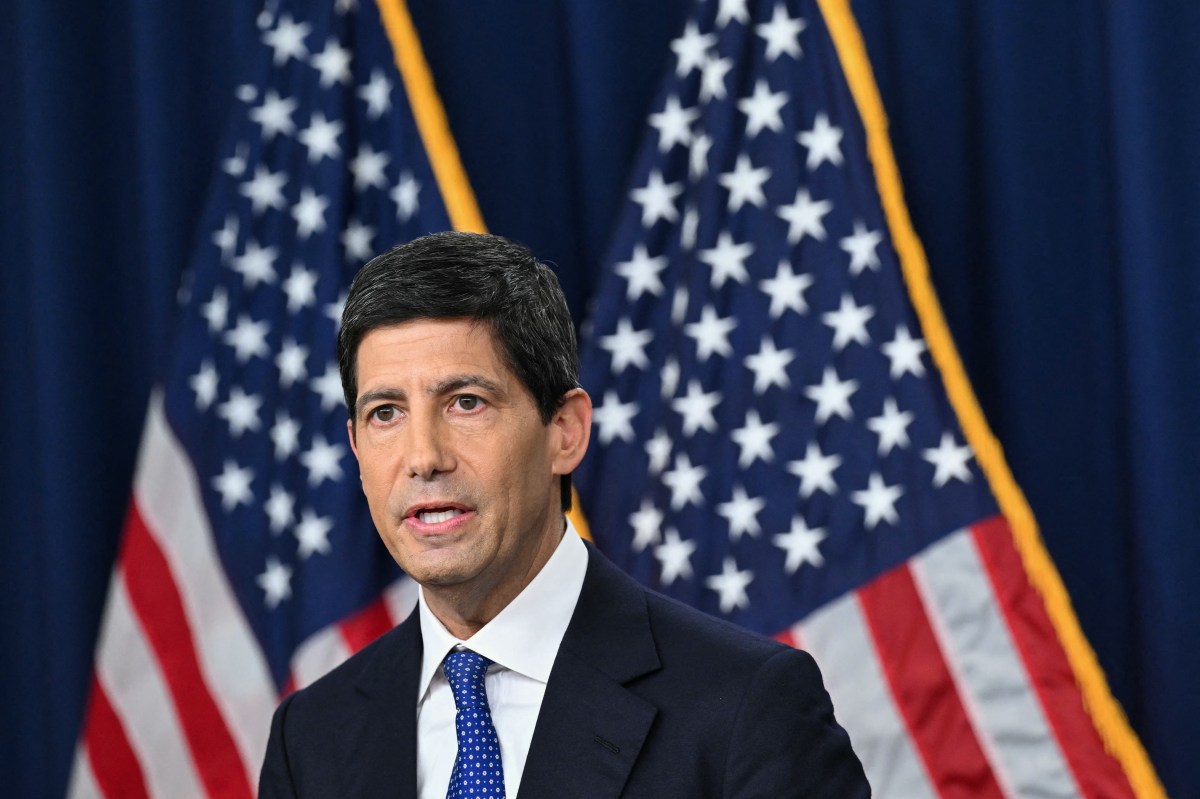
The Federal Reserve raised its benchmark interest rate for the first time in three years, in a move that the central bank hopes will bring inflation closer to its target without inflicting too much pain onto American borrowers.
The decision, which was unanimously backed by the Federal Open Market Committee (FOMC) on Wednesday, brought the overnight rate to a range between 3.75 percent and 4.00 percent, the highest level since last fall.
The expected rate-hike had already been anticipated by mortgage rates, which climbed closer to 7 percent last week, with the 30-year fixed-rate mortgage averaging 6.76 percent as of the week ending September 10, according to Freddie Mac.
Borrowing costs could climb even higher, especially as the Federal Reserve is now widely expected to raise interest rates one more time before the end of the year.
It is bad news for would-be buyers across the country as much as it is for sellers, who are likely to struggle even more than they are now to offload their properties at their asking price.
President Donald Trump has long been pushing for the Federal Reserve to cut its benchmark rate so as to bring down mortgage rates, repeatedly clashing with former chairman Jerome Powell over his refusal to cut rates as much as he would have liked.
Crucially, neither the president nor the Federal Reserve have the power to set mortgage rates. The president has no direct authority over the interest rate lenders charge homebuyers. While the central bank has no direct authority over them either, its decision influences financial markets, particularly the yield on the 10-year U.S. Treasury note, which mortgage rates tend to follow.
The Federal Reserve’s new chair, Kevin Warsh, was nominated by Trump when Powell stepped down, but he appeared to defy the president’s will on Wednesday by siding with the rest of the committee in support of a rate hike.
While Trump has not so far attacked Warsh the way he did Powell, he wrote on Truth Social on Wednesday: "Interest Rates in the United States should be 1 percent, or less, because we are the Best Credit in the World—BY FAR. Our Country is BOOMING with new Investment!
"If we stopped Trading with every country that we have a Deficit with, which is most of them, we would make, at least, 1.5 Trillion Dollars a year. The word ‘Deficit’ is nothing more than a fancy word for LOSS. We are ‘carrying’ almost every country in the World, and that cannot go on any longer," Trump added. "LOWER THE INTEREST RATES FOR THE UNITED STATES OF AMERICA, AND FAST!"
The reason why many were expecting the central bank to increase its rates is that Warsh suggested so himself in a late August speech in Jackson Hole, Wyoming, when he acknowledged that inflation had been "too high" for too long.
Part of the recent increases has been caused by the spike in energy prices that has followed the start of the war in Iran and disruptions in the global oil supply, but "inflation has been above target for over 5 years," Chris Zaccarelli, chief investment officer for Northlight Asset Management, told Newsweek.
The same was admitted by Warsh in Jackson Hole last month, when he said that "the responsibility for 65 months of sustained, elevated inflation" in the country "sits squarely with the central bank," hinting at impending action by the Federal Reserve.
The decision was possibly fortified by the latest data on inflation. The consumer price index rose 0.4 percent in August, putting the 12-month increase at 3.4 percent, in line with expectations.
But the core CPI, which excludes volatile items such as food and energy, accelerated 0.3 percent for the month, as the annual inflation rate stood at 2.4 percent, the Bureau of Labor Statistics reported.
"The plain fact is that inflation is too high and has been for too long," Warsh said at a press conference after the FOMC’s meeting. "The committee’s unanimous vote shows our resolve to achieve price stability on a timelier basis."
When the Federal Reserve increases interest rates, borrowing costs usually become more expensive for consumers and businesses.
For sellers, higher mortgage rates could further disincentivize movement, encouraging them to hold on to their lower mortgages, a move that could further shrink supply in areas of the country with low housing inventory, such as the Northeast and the Midwest.
For would-be homebuyers who have gotten used to mortgage rates between 6 percent and 7 percent over the past four years, this only means they "should not expect immediate relief," Landy Liu, founder and CEO of Foyer, a platform helping renters build savings, strengthen credit, and prepare for homeownership, told Newsweek.
"If inflation pressures persist, borrowing costs could remain elevated for longer than many buyers hope," she said.
But, for would-be homebuyers, it is not the disastrous news it may look like.
"The practical takeaway for first-time buyers is not to wait for a single Fed decision to solve the affordability problem. Lower rates would help, but they will not address high home prices, limited inventory, down-payment hurdles, or the time it takes to become mortgage-ready," Liu said.
"Buyers should focus on what they can control now: building savings, strengthening credit, understanding affordability in their local market, and preparing to act when the right opportunity appears."
Bill Banfield, chief business officer at Rocket Mortgage, agrees that the central bank’s decision does not fundamentally change the situation buyers are in.
"We have a solid economic foundation for housing, even as elevated rates squeeze affordability, especially for first-time homebuyers. For anyone house-hunting right now, it's a buyers’ market in many metros, with inventory at a six-year high and plenty of room to negotiate," Banfield told Newsweek.
"That changes the dynamic for buyers, especially those who remember the ultracompetitive market in recent years."