How Execution Fail Rates Compare as Christa Pike Taken to Hospital - Newsweek
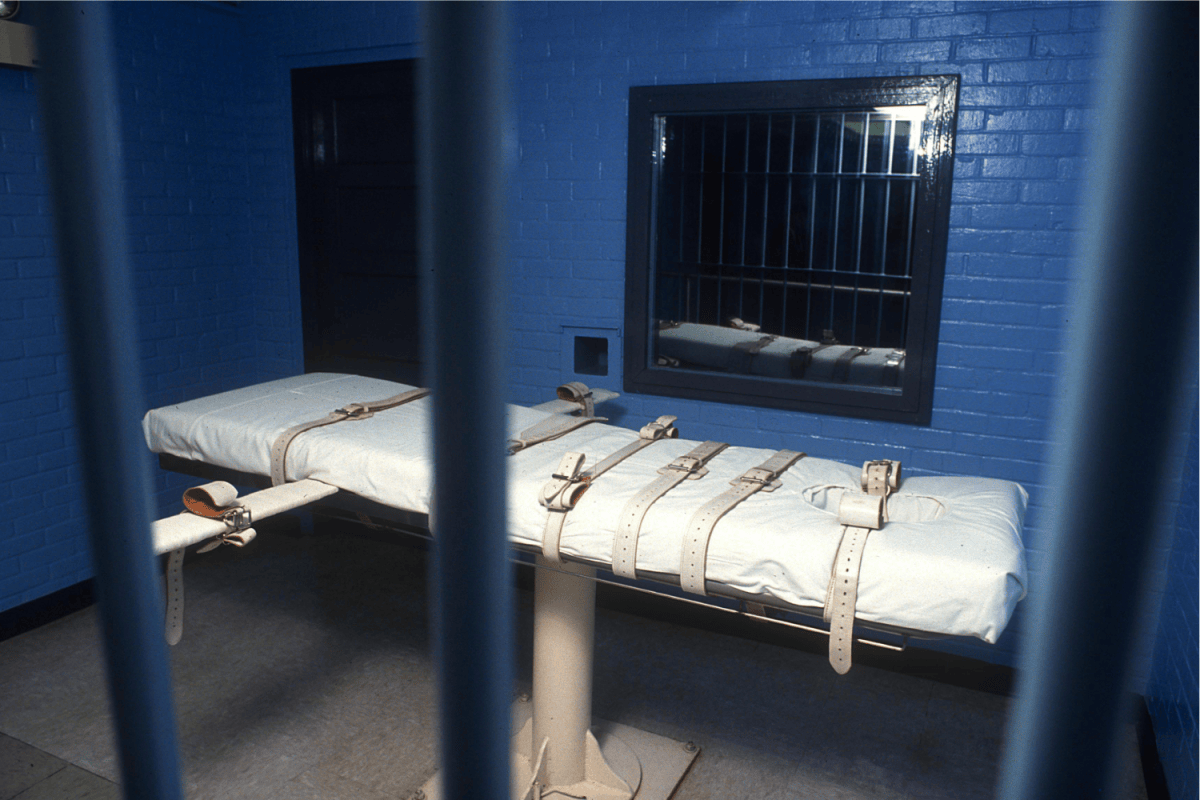
Tennessee Governor Bill Lee has ordered for all scheduled executions in the state to be halted after the execution of Christa Pike failed dramatically on Wednesday.
Robin M. Maher, executive director of the Death Penalty Information Center, called the incident “unparalleled” after Pike was still breathing following two lethal pentobarbital injections.
Laura Porter, executive director of the U.S. Campaign to End the Death Penalty, said Wednesday's failed execution came after repeated calls to pause executions in Tennessee and review the state's procedures. "Since the botched execution in May of this year, people from diverse political backgrounds across Tennessee have called for a pause in executions to examine the problems with the execution process," Porter said in a statement shared with Newsweek. "These pleas were ignored. The state of Tennessee has shown the world it cannot be trusted to implement capital punishment in a way that preserves human dignity and the rule of law. This has to stop now."
While the survival after injections is particularly shocking, failed or botched executions in other circumstances are well documented.
A botched execution is a broad term used to cover any execution in which something goes wrong.
This can include delays, procedural failures, equipment malfunctions, problems administering the execution method, prolonged dying, or other complications that cause unnecessary suffering or reflect serious errors by officials.
Depending on the method used, botched executions have involved difficulty establishing IV lines, improperly administered drugs, malfunctioning electric chairs, problems with gas chambers, and other departures from established protocols.
"I think many people believe the line that the state has sold, which is that the person will just slip off into sleep—like putting your favorite pet to sleep. So I think cases like Pike’s really pull back that curtain," Blaire Andres, head of U.S. death penalty case work for nonprofit Reprieve that advocates against lethal injection, told Newsweek.
"While this is probably one of the worst executions in American history, what we saw last night is not unusual. Botched executions by lethal injection are unfortunately not unusual. They happen quite a lot," Andres said.
According to The Death Penalty Information Center, between 1890 to 2010 there were 8,776 executions and 276 of them were botched, giving an overall botched rate of 3.15 percent.
In these figures, lethal injection had the highest botch rate at 7.20 percent. This was compared with 5.4 percent for lethal gas, 3.12 percent for hanging and 1.92 percent for electrocution. The only method with no reported botched incidents was firing squad.
In a 2024 report by Reprieve, 73 of 1,407 lethal injection executions or attempted executions between 1977 and December 2023 were classified as botched, a rate of about 5.2 percent.
"Due to the extensive secrecy around executions... it is likely that the true number of botched executions in the reporting period is much higher than the number identified in the dataset,” the report read.
There are cases of botched execution involving hanging, electrocution and lethal gas, but most high profile cases relate to lethal injection.
Perhaps the most closely comparable to Pike’s failed execution is the case of Clayton Lockett, who was executed in Oklahoma in 2014.
Lockett, convicted of murder, rape, kidnapping and robbery in 1999, died after drugs were improperly administered into tissue rather than a vein after executioners struggled to establish IV access.
Officials halted the execution, but Clayton died of a heart attack about 43 minutes after it began.
"If what took place in Miss Pike's case is similar to Clayton Lockett's, and there was a case of IV infiltration where the drugs leaked out into the tissue instead of going into the bloodstream, then what can happen is with an overdose of a drug like pentobarbital—the person could end up very deeply sedated, but still alive,” Andres said.
Most recently, in May 2026, Tony Carruthers, who was convicted of kidnapping and murdering three people in 1994, had his execution called off after prison staff spent roughly 30 minutes trying unsuccessfully to establish IV access before Dr. Mark Fowler, who was also expected to oversee the execution of Christa Pike, was called.
The execution was halted after repeated unsuccessful attempts to obtain access, and Governor Bill Lee granted Carruthers a one-year reprieve.
Carruthers’ attorney later said that she witnessed her client in “agony” and added: “When I saw the process unraveling with my own eyes, it became clear that the overriding imperative was not competence or even the appearance of professionalism. It was completion.”
Pentobarbital is a powerful barbiturate sedative that depresses the central nervous system. In high doses, it can cause unconsciousness, respiratory failure and death.
It is currently used by several U.S. states, including Tennessee, as a single-drug lethal injection protocol.
The intended effect is rapid sedation followed by loss of consciousness, and at execution doses, the drug suppresses the brain’s control of breathing to the point that it stops. Without oxygen, the heart eventually stops, causing death.
Pike, 50, was administered two doses of pentobarbital when she reportedly said: “My arm feels like it’s about to burst open.”
Media witnesses reported that Pike lifted her head up and looked around, shouting that it was burning and hurting and asking if it was normal.
The Tennessee Department of Correction later reported that Pike had been transported to a hospital, though it is unclear what treatment may occur.
May Martinez, the mother of Pike's victim, Colleen Slemmer, described the failed execution as "a mess" in comments to NBC News. Martinez said victims' relatives were asked to leave without initially being told what had gone wrong and later learned Pike was being transported to a hospital.
Joel Zivot, professor at the Emory University School of Medicine had been retained by Pike's legal team as a medical expert. He told Newsweek: “It seems to me that both intravenous blew. The veins ruptured and the pentobarbital never made it into her circulation.
“Maybe some small quantity of it did, but not enough that would cause her death. One round, properly done, should kill her,” he explained.
Zivot said that the other possibility was that the pentobarbital itself was “degraded” or similar. “All the ways that the pentobarbital is prepared and purchased, that is all secret stuff,” he said.
Zivot added: “Failures with lethal injection has become an increasingly common occurrence. This is a stolen medical act. It's using the tools of medicine intended to treat people not to harm them, to kill them. And it's not easily transferable into this execution chamber."
The state has not given an update on Pike's condition since reporting that she was taken to hospital following the execution attempt.
Zivot said it was “hard to know” what would happen next.
“It could be anything from surviving intact, to with a series of injuries including brain damage, or die in the hospital—all of that is possible,” he said.
Contact Newsweek editors on this story: Tobias Meyjes and Cristina Diciu.