
Himanta Biswa Sarma writes | Led by PM, HM, thorny inter-state disputes are giving way to dialogue, progress - The Indian Express
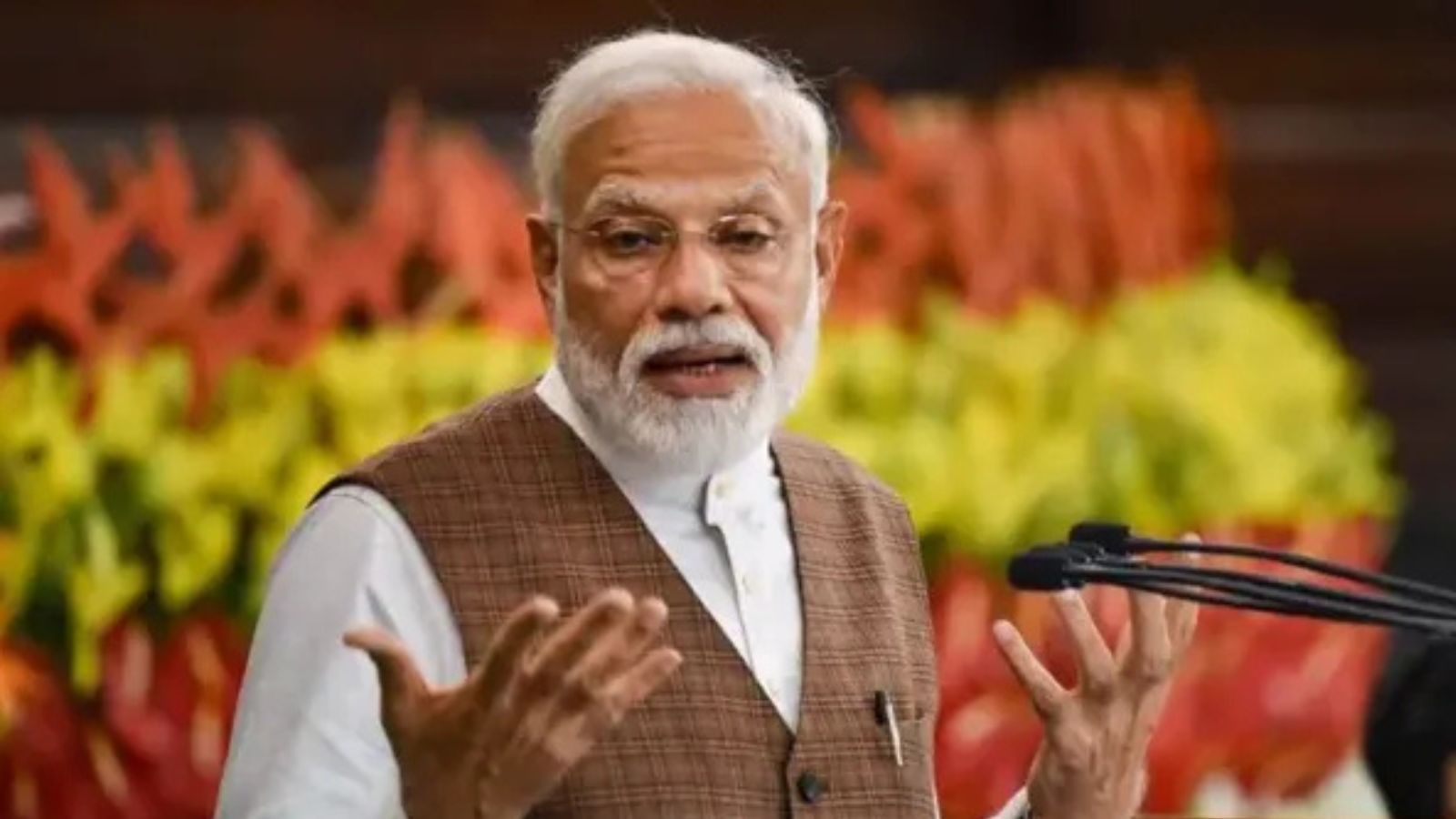
As Narendra Modi completes 25 years as the head of a government — first as Chief Minister of Gujarat and for over a decade as Prime Minister of India — one conviction has remained constant. “India cannot advance without all its states advancing in tandem. States and the Centre must work together to forge a model of cooperative federalism, resolve differences, and chart a common course to progress and prosperity.” PM Modi said this at the first meeting of the NITI Aayog Governing Council in February 2015. It is a vision he has carried since his days as Gujarat CM, and one he has entrusted, as PM, to Union Home Minister Amit Shah to translate into reality. Over the last few months, the Union Home Ministry has formalised memoranda of understanding that resolve some of India’s oldest inter-state disputes.
The first was the tripartite MoU between the Centre, my state of Assam, and Nagaland, signed on June 11. The second, among Himachal Pradesh, Uttarakhand, Haryana, Rajasthan, Uttar Pradesh and Delhi, revived the long-stalled Kishau Multipurpose Dam Project after an eight-year deadlock. The third, between Rajasthan and Haryana, ended a 32-year wait to operationalise the 1994 Upper Yamuna Basin agreement. The fourth, among Maharashtra, Gujarat, Madhya Pradesh and Rajasthan, was a one-time settlement of decades-pending dues under the Narmada Award. Most recently, Bihar and Jharkhand signed a pact ending a 25-year dispute over the Sone River. Within the same framework, Andhra Pradesh and Telangana have agreed to finally resolve their pending division of assets and liabilities.
As Gujarat’s longest-serving chief minister, most of it under a Congress-led Union government, he saw firsthand how inter-state and Centre-state disagreements can stall welfare works and become the genesis of societal disturbance. These agreements, touching some 15 states, are, I believe, part of the biggest rejuvenation of India’s federal structure.
A case in point is the Assam, Nagaland and Union government tripartite MoU. This agreement had eluded three governments for three decades. At stake was a belt of more than 1,000 square km straddling the Assam-Nagaland border, where domestic oil exploration had been effectively frozen because of a poorly demarcated, ambiguous boundary finalised in 1963. Committed to the PM’s agenda of an atmanirbhar Bharat, Amit Shah ji reframed the issue. Under his guidance, Assam and Nagaland agreed on a 50:50 split of hydrocarbon revenue, irrespective of how the ongoing boundary resolution efforts conclude.
This is not an isolated agreement: The Bodo Peace Accord, the Karbi Anglong settlement, the Assam-Meghalaya boundary agreement, the Assam-Arunachal Pradesh border resolution, and the Frontier Nagaland arrangement addressing the decades-old Eastern Naga demand for separate administrative recognition. This rapid succession of peace accords and MoUs in the Northeast is finally yielding dividends in building a secure Ashtalakshmi — a region once familiar with insurgency is now 80 per cent free of the Armed Forces (Special Powers) Act.
These agreements are a reminder of what steady, patient leadership can achieve. Disputes that outlasted governments of every hue, that were allowed to fester because resolving them seemed politically inconvenient, are today being settled not through grand gestures but through the unglamorous, persistent work of dialogue.
This is the hallmark of PM Modi’s leadership: A refusal to accept that any problem is too old or too complicated to be solved, and an unwavering belief that a strong, united India is built by strengthening its states, not by centralising at their expense. As the nation looks ahead to the goal of a Viksit Bharat by 2047, it does so with the confidence that comes from 25 years of proof that when the Centre and the states work as one, even the most stubborn of disputes give way to progress. That is the true and lasting message of the Modi story.


