Haze from Indonesia's fires reaches southern Thailand - Bangkok Post
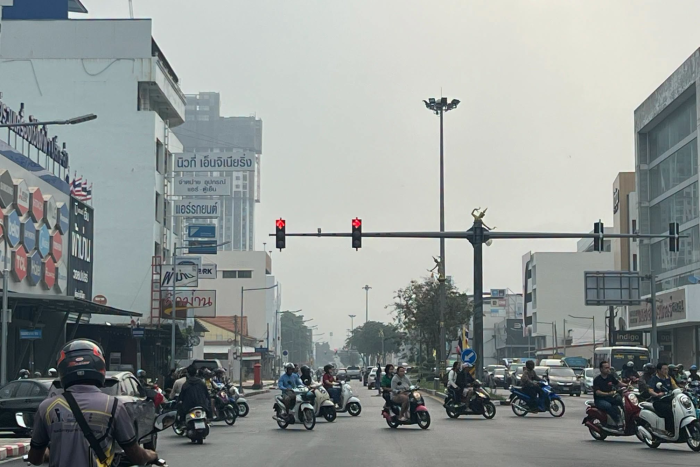
People in the Koh Hong area of Hat Yai district in Songkhla province travel on the road on Wednesday morning as the sky is seen shrouded by haze blown southwest from Indonesia. (Photo: Koh Hong Municipality) Smog from Indonesia's wildfires has reached Thailand's southern province of Songkhla, with major populated areas reporting PM2.5 levels at unhealthy concentrations mostly in the morning and evening.
On Wednesday, levels of particulate matter measuring 2.5 micrometres or less in Hat Yai reached 67.2 micrograms per cubic metre (µg/m³) at 9am, according to the Air Pollution and Health Effect Research Center at Prince of Songkla University.
The readings on Wednesday were in the orange level, meaning that air quality begins to affect health. The government-set safe threshold for PM2.5 in Thailand is 37.5µg/m³.
Some areas reported the dangerous red level of 88.2µg/m³. The daily average level was around 59.9µg/m³, the centre said.
Hat Yai is the largest city in southern Thailand, near the Malaysian border and home to nearly 800,000 people. It is also a popular destination for Malaysian tourists.
On Tuesday evening, the province also reported that thick smog had increasingly blanketed parts of the city, especially along the route to Khao Kho Hong, a popular viewpoint, and Hat Yai Municipal Park.
Local delivery riders told reporters that the haze had noticeably thickened recently, leaving their eyes and noses stinging. Schools have reportedly prevented students from playing outdoors.
The smog was blown southwest from fires concentrated on the island of Borneo, home to vast tropical jungles shared by Indonesia, Brunei and Malaysia, as well as from Sumatra.
The air has also turned unhealthy in neighbouring Singapore and Malaysia because of the transboundary haze, Reuters reported.
A staff member of the Regional Disaster Agency sprays water to extinguish a fire in a peatland area burnt by wildfires, in Kubu Raya, West Kalimantan province, Indonesia, on Tuesday. (Photo: Reuters)
Since the beginning of September, fire emissions from Indonesia have reached more than 19 million metric tonnes, making up more than a third of the global total, according to Fire Emissions Watch, a portal developed by the European Union's Copernicus climate monitoring service.
Indonesia is one of the world's most fire-prone countries, and "super El Niño" weather conditions have driven up temperatures and caused severe drought. Indonesian authorities have said the current situation is the country's most intense wildfire season in 11 years.