Has the word 'Zionism' become too radioactive to use? - Newsweek
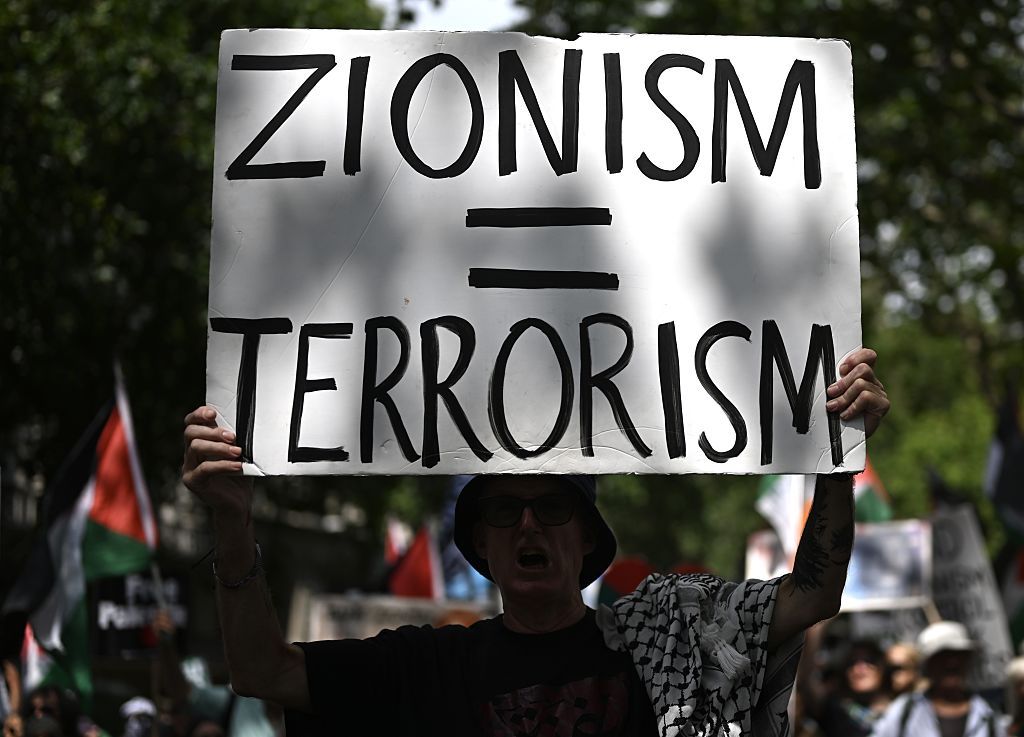
“Zionism” may be reaching the point where the discussion surrounding the word is swallowing the argument that the word was supposed to describe.
Jewish leaders and activists have been participating in a growing debate over whether to stop using the term altogether. The Washington Post reported this week that some prominent Jewish voices now see the word “Zionism” as so politically overloaded that it produces more heat than meaning.
A word that helped name the movement for Jewish national self-determination is being treated by some ardent defenders as a liability. A true historical twist of the semantical kind.
Jewish spokespeople make a relatively direct case. Retire the word and make everyone say what they actually mean.
Sounds easy enough, except that every ounce of discourse associated with the theme is now a battlefield. There is, it seems, no winning—ever.
In 2024, Case Western Reserve University professors Alanna E. Cooper and Sharona Hoffman argued that “Zionism” had become a poor way to describe contemporary politics and should largely be returned to its historical setting.
Actor and Jewish advocate Jonah Platt pushed the idea further in The Forward in 2025. Israel, he argued, already exists, so continuing to debate whether one “believes in” Zionism can make Jewish sovereignty sound like an unresolved proposition rather than an existing political reality that everyone should just accept.
He later told the American Jewish Committee that he wanted to retire the term for much the same reason. Israel’s existence should not be treated as a philosophical question every time someone asks whether a person is a Zionist.
Then, Moment editor-in-chief Nadine Epstein made the case in even starker terms, declaring in March that “The Word Zionism Is Dead.” She argued that “Zionism,” “Zionist” and “anti-Zionist” had become so elastic that people could use the same words while talking about entirely different things. The terms no longer described the same concept to all.
That is, actually, the problem in miniature.
To one person, Zionism means Jewish self-determination.
To another, it means support for the Israeli government.
To yet another, it means settlement policy.
To someone else, it means opposition to Palestinian nationalism.
To another, it means the simple idea that Israel should continue to exist.
A political word can survive disagreement over its implications, but can it survive a disagreement over the noun itself?
Think of a world without the word Zionism in it. The drop would primarily strip away a piece of political shorthand that often lets both sides avoid precision, forcing people to say what they actually mean. What a novel concept indeed.
Someone who opposes Israeli settlements, for example, would have to say, "I oppose Israeli settlements."
All for the Jewish cause but not a fan of Benjamin Netanyahu? Then at dinner parties and in social media comments sections, that person would have to say, "I oppose Netanyahu."Someone who supports a two-state solution would have to say, "I support a two-state solution," and someone who believes Israel should no longer exist as a Jewish state would have to state that proposition directly.
That same pressure would fall on Israel's defenders.
Calling yourself a Zionist doesn't say much about whether you support annexation, the current government or, maybe Israel's pre-1967 borders.
To put it simply, the label "Zionist" increasingly compresses too many arguments into one tribal password. And since American Jewish opinion on Israel is more textured than the binary language suggests, perhaps eliminating that duality might help everyone's cause. Or, at the very least, it will clarify everyone's cause.
After all, more and more often, the answer to "Are you a Zionist?" does not really tell us anything concrete.
What the word "Zionist" meant when it was first created decades ago is no longer what it means now. Whether that's the fault of opponents of the cause is beside the point, although one could argue that abandoning the word could look like rewarding the opponents' tactic.
Zack Bodner, founder of the pro-Israel Z3 Project, made that case in 2024, calling efforts to retire “Zionism” a “mistake of epic proportions.” He suggested reclaiming the term instead.
If Zionism means Jewish national self-determination, he argued, Jews should keep saying so. They should not allow critics who associate Zionism with racism, colonialism or particular Israeli policies to take possession of the definition.
That is a strong case against retiring the term because it asks a question larger than semantics. Who gets to decide when a political identity has become unusable?
Almost akin to the concept of horseshoe politics, the two ideological camps are closer than they sound.
Both believe the word has been valuable at some point and that its meaning has been distorted. They ultimately just disagree over the remedy.
If retiring “Zionism” forces a clearer debate over Israel’s existence, borders, settlements, Palestinian statehood and the Israeli government, the case for retirement gets stronger. But if the same hostility will simply migrate from "Zionist" to "pro-Israel" or "Jewish state" or "Israel," then changing the vocabulary won't solve anything at all.
Clearly, the battle over Zionism is no longer mainly a battle over what the word originally meant. It is becoming a battle over whether the word still has enough shared meaning to be useful.
Maybe the only way to save the argument is to kill the word.