
Hamas terror suspect guilty of wounding bailiff in violent knife attack over wife’s unpaid parking fines - The Independent
Want to bookmark your favourite articles and stories to read or reference later? Start your Independent Membership today.
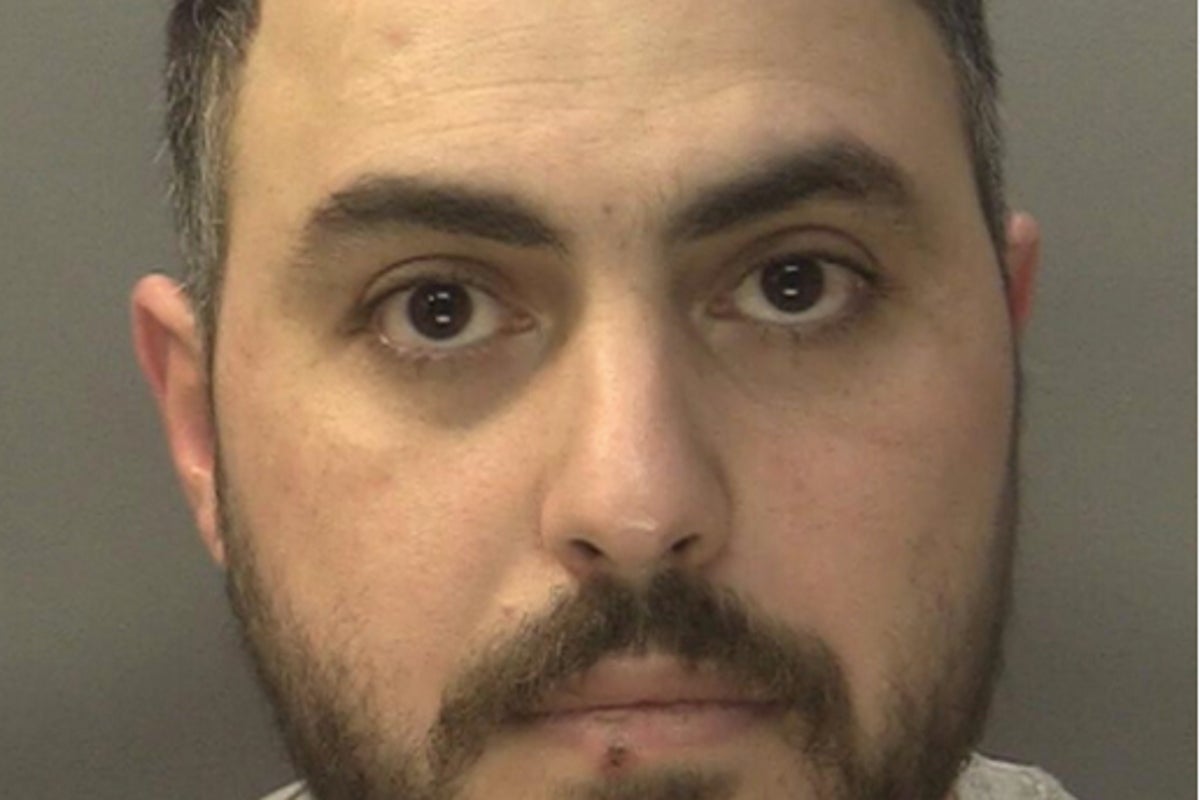
A suspected Hamas terrorist wanted over an alleged plot to murder members of the Jewish community in Germany carried out a knife attack on a bailiff outside his UK home.
Mohammed Alfatih, also known as Mohammed Naim, was born in Germany and is reported to have acted as a bodyguard to the leader of Hamas before being granted asylum in Britain in 2015 and British citizenship in 2020.
Jurors, who found Alfatih, 40, guilty after being shown footage of him brandishing two large kitchen knives outside his home in Kings Heath, Birmingham, were not told of his suspected links to Hamas during the trial.
They were also not told that Alfatih, reported to be the son of a senior Hamas official, was under surveillance by a counterterrorism unit after being released on bail on suspicion of a terror offence days prior to the bailiff being attacked.
Jurors at Birmingham Crown Court deliberated for over six hours across three days before convicting Alfatih of wounding. He was cleared of wounding with intent, but also convicted of two counts of unlawful possession of a knife. Alfatih, who mumbled to himself as the verdicts were returned, has been in custody since the knife attack in October 2025.
He is also facing extradition proceedings at Westminster Magistrates’ Court and was told he will be sentenced for wounding in Birmingham on 11 January.
Alfatih, whose wife had owed more than £2,250 linked to unpaid parking fines, could not be identified in media reports during his trial for attacking the enforcement officer.
Prior to the trial, a judge extended reporting restrictions after media reports that a suspect named only as “Mr X” had secured asylum in the UK and was then alleged to have been involved in planning for atrocities timed to coincide with the second anniversary of the 7 October 2023 attacks in Israel.
The reports also claimed “Mr X” had served in the personal security team of Ismail Haniyeh, who was then the leader of Hamas in Gaza, and had recorded a video in which he appeared masked and armed in front of a Hamas flag.
Before his trial, Alfatih, an IT worker, failed in a legal application to try to get the wounding charges thrown out on the grounds of prejudicial media coverage, including details of allegations related to seven arrests made by German authorities, but Judge George Lubega ruled that the reports did not pose a high risk of prejudice to Alfatih’s trial.
German prosecutors charged seven suspected Hamas members in September over an alleged plot to target Jews or Israelis in Germany or Austria around the second anniversary of the 7 October attack on Israel.
They said “Mohammed A” played a prominent role in transporting and storing weapons but was being prosecuted separately after UK authorities arrested him in London and noted he had not yet been returned to Germany.
German authorities also said he is connected to Hamas’s leadership and is said to have produced a video ahead of time, taking responsibility for the attack on the group’s behalf.
Reporting restrictions preventing Alfatih, a father of four, from being named ended on Friday after he was also found guilty of causing criminal damage to the bailiff’s van by smashing its driver’s side window with a half-brick.
A two-week trial was shown video footage of Alfatih lashing out with a knife at the broken window of the van on 14 October last year, leaving bailiff Kevin Bucknall with a deep cut to the back of his head.
The victim, who was left with blood pouring down his neck and back, could not tell the court whether the wound was caused by a knife or broken glass, and Alfatih pleaded not guilty on the grounds of self-defence using reasonable force. After the incident the bailiff, who reversed out of a one-way street, received hospital treatment.
Following the attack shortly before 11am, Alfatih – who had been bailed by anti-terror officers ten days earlier – walked calmly into his home and phoned police to claim he had been assaulted.
Alfatih – who was accepted in court to be of previous good character – told the court he chased the bailiff across the street to scare him away, after his wife was asked to settle her debts. Her car had been clamped by the enforcement officer, who was involved in a struggle inside Alfatih’s terraced home.
Alfatih told jurors he had gone to his kitchen to arm himself with knives – a day after learning that one of his brothers had been killed in Gaza – because of traumatic experiences in his past, including being shot and injured aged 16 and again in his early 20s.
A consultant forensic psychiatrist giving expert evidence told the trial that Alfatih appeared to be “a pleasant person” who was calm and co-operative and, in his opinion, has post-traumatic stress disorder.
During his evidence, Alfatih did not mention Hamas but told the court he had been tortured for 25 days while detained in Egypt in 2010.
Addressing the incident involving the bailiff, he told the jury: “I just want to be as honest as I can. The only thing I can imagine is that something more serious is coming. I don’t think I was even in my full mind. I didn’t intend anything other than him moving away. I wasn’t anything more than terrified.”
In her closing speech to the jury, defence barrister Kate O’Raghallaigh said the shooting in which the defendant was injured aged 16 had also killed one of his brothers. She described Alfatih as “a man who was then detained by the Egyptian regime” before being tortured, including electric shocks.
Her client came to the UK in 2014 and became a citizen in 2020, said Ms O’Raghallaigh, while members of his family – “the ones who are still alive” – were still in Gaza. “This is a man who has experienced violence and loss,” she told jurors. “War zones have all sorts of casualties – you may find that Mr Alfatih is one of them.”
Alfatih had a heightened perception of danger, triggered by fear and desperation he had previously experienced, she said, adding: “If someone believes that they are about to be attacked, they are entitled to defend themselves so long as they use reasonable force. Everything he did at that (van) window was because he genuinely believed he was in danger.”
Breaking the window was no more than was necessary in the circumstances as Alfatih perceived them to be, Ms O’Raghallaigh argued.
In his evidence, Mr Bucknall, the bailiff, said he believed Alfatih paused after seeing blood, giving him the opportunity to drive away and seek help at a nearby GPs’ surgery, where they advised hospital treatment.
He added: “I was basically trying to get him out of the van. I was trying to kick out. I could feel something warm running down the back of my head.”


