Golwalkar had reservations on UCC, called for ‘unity in diversity’ - The Indian Express
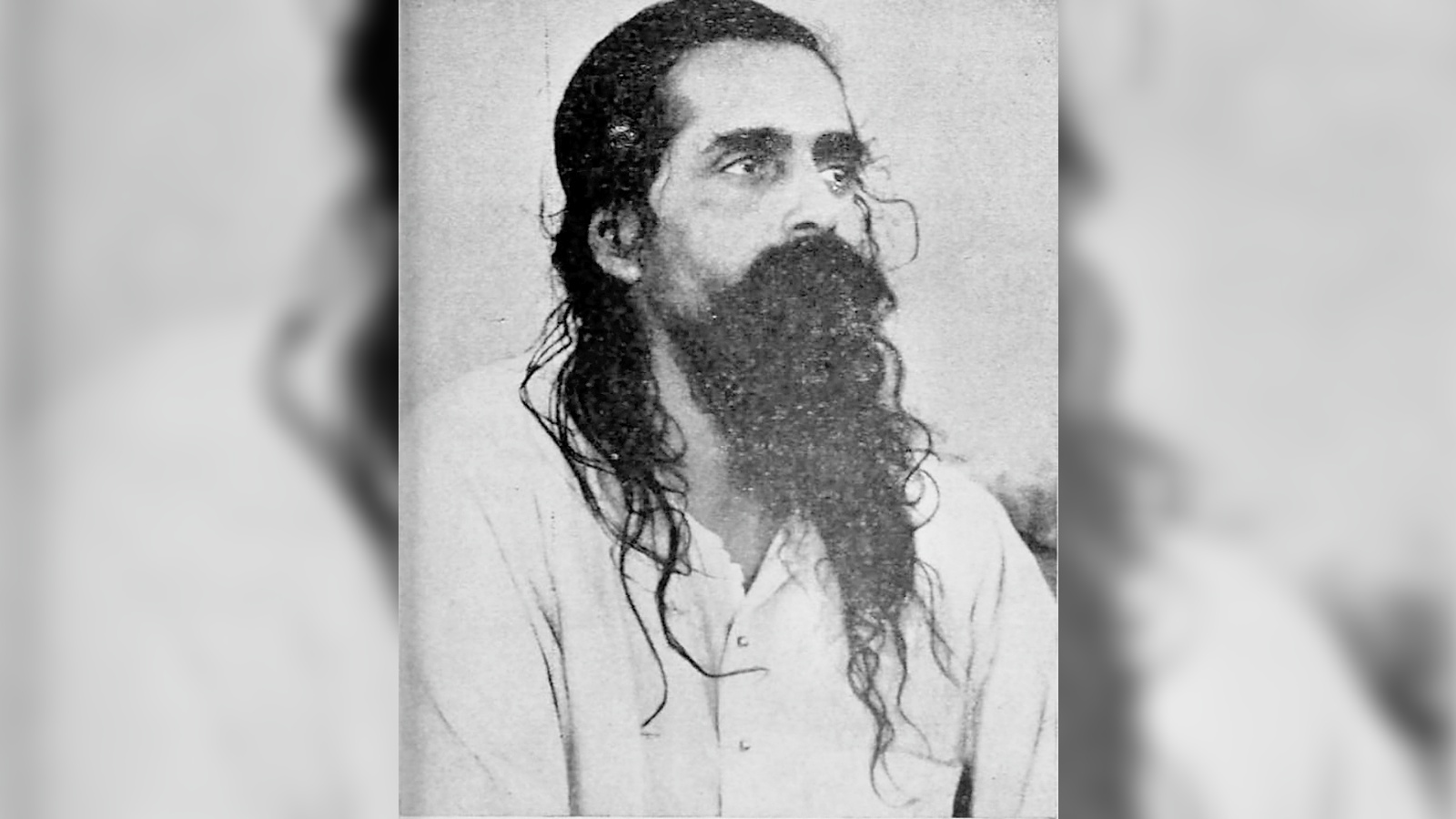
While the Uniform Civil Code (UCC) is seen as one of the core agendas of the BJP and Union Home Minister Amit Shah has promised to enact it in 21 NDA-ruled states by 2029, the party, and its predecessor, the Bharatiya Jana Sangh (BJS), have not always included it in their election manifestos. Even their ideological parent, the Rashtriya Swayamsevak Sangh (RSS), didn’t include it in its agenda as forcefully during the initial decades of Independence. The second RSS sarsanghchalak, MS Golwalkar, had, in fact, expressed his reservations in 1972 while advocating for “unity in diversity”.
The book Saman Nagrik Samhita: Ek Paricharcha, a Hindi publication by Suruchi Prakashan, New Delhi, carries an interview dated August 1972 of Golwalkar as it was published in the RSS-linked weekly Organiser. In it, Golwalkar said while responding to whether UCC was a must for promoting the spirit of nationality: “No. You and others may find this answer surprising. But my opinion is this… India has always encouraged diversity. Despite that, we have been a strong and unified nation for centuries. For unity, we need amiability, not uniformity”.
Responding to a question about polygamy among Muslims, he said, “Efforts to make uniform (civil code) in a mechanised way is not appropriate. Let Muslims evolve their (personal) law in their own way. I will be happy the day they reach the conclusion that polygamy is not good for them, but I would not like to force my views upon them… I am in favour of preserving the diversity of various ways of life.”
The Sangh Parivar’s harder line on the UCC developed later, mainly after the Shah Bano case in the mid-1980s, at a time when the BJP was trying to made inroads.
As far as the Hindu Code Bill — to codify, unify, and modernise traditional Hindu personal law — was concerned, the opposition to it concretised on April 15, 1955, when the Jana Sangh’s central working committee “deeply deplored” it as a measure brought “in defiance of public opinion without taking any mandate from the electorate”.
The Jana Sangh’s 1957 and 1962 manifestos called for a repeal of the Hindu Code legislation but did not mention UCC. The demand appeared in its 1967 manifesto, but disappeared in 1971 and was missing from the Janata Party’s 1977 manifesto. The BJP’s first manifesto, in 1980, was also silent on it.
It was the same in 1984, when Atal Bihari Vajpayee was party president, but in the mid-eighties, the party under LK Advani’s leadership foregrounded three issues: the UCC, abrogation of Article 370, and a Ram temple in Ayodhya. The Shah Bano case in 1985 was the turning point, with the BJP and the RSS then converging to make UCC one of their core demands. Golwalkar had died in 1973 and, in 1987, Advani replaced Vajpayee as BJP president.
The BJP’s 1989 manifesto proposed a commission to examine personal laws and draft a UCC through consensus; in 1991, it proposed a Law Commission study to “evolve a Common Civil Law”. The RSS pressed for UCC legislation in 1995, and the BJP’s 1996 manifesto promised, “We will adopt a Uniform Civil Code”. In 1998, it again proposed that the Law Commission formulate one, but after coming to power at the head of a coalition, set aside the UCC, Article 370 and the Ram temple. The party only returned to the UCC in its 2004 manifesto.
In 2009, with Advani projected as prime minister, the manifesto said the party “will set up a Commission to draft a Uniform Civil Code”. In 2014, 2019 and 2024, with Narendra Modi as the face of the campaign, the line was to “draft a Uniform Civil Code”.
But there were other difficulties in formulating a UCC. Scheduled Tribes, who form over 8.6 per cent of India’s population, have their own customs. Given the reservations that the Vanvasi Kalyan Ashram, an RSS affiliate, had about UCC, tribals were finally excluded from the law legislated in Uttarakhand. The points of discord include the minimum age of marriage, polygamy and polyandry, succession, and the legal age of marriage — matters that define ST identities that vary by tribe, region and state.
Amit Shah has promised to enact the UCC in all NDA-ruled states by 2029, but the diversity Golwalkar talked about in 1972 is still there. The People of India series edited by the former Director General of Anthropological Survey of India, lists such communities in detail. But after the Ram temple and the abrogation of Article 370, the ruling BJP — now in power at the Centre for a third time — may not want to leave its third long-standing promise unfinished.
Shyamlal Yadav is one of the pioneers of the effective use of RTI for investigative reporting. He is... Read More

/file/attachments/2998/GroundUp-water-Misgundmain_768480.jpeg)