
Gokul Dairy battle: Law change puts Maharashtra Cong-backed panel's majority at risk
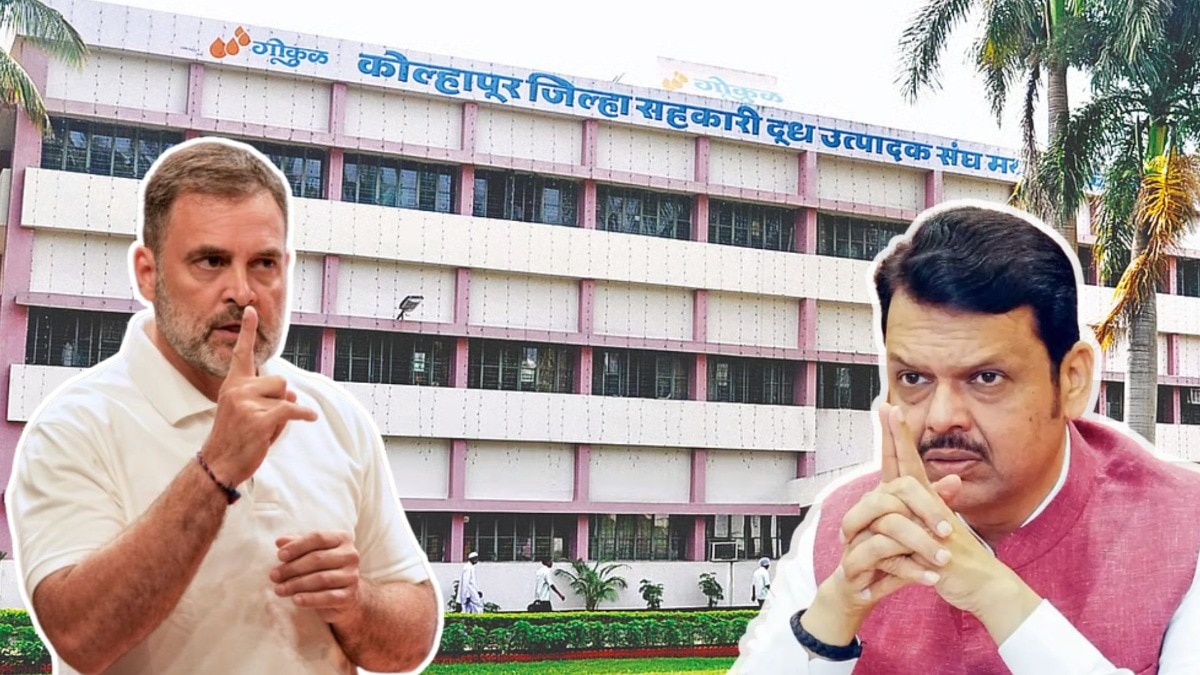
The political battle over control of Kolhapur’s influential cooperative dairy, Gokul, has intensified after the Maharashtra Cabinet approved an amendment to the Maharashtra Cooperative Societies Act, 1960, potentially changing the balance of power within the institution.
The decision has triggered Opposition backlash, with Congress leaders accusing the BJP-led Mahayuti government of attempting to overturn the mandate given by milk producers in the recently held board elections.
The controversy comes despite the Opposition-backed panel led by Congress MLA Satej Patil securing a majority in the Gokul board elections.
The panel was expected to elect its chairman, but the process was stalled after all 12 Mahayuti-backed directors remained absent from the October 29 meeting. Under Gokul’s existing bylaws, at least 14 directors must be present to fulfil the quorum requirement.
As the meeting failed to meet the required quorum, the chairman's election could not take place. Subsequently, Satej Patil's panel announced Shashikant Patil Chuyekar as chairman at a separate meeting. However, the administration did not recognise the election, triggering a legal battle.
On November 2, the Bombay High Court directed Gokul to convene a fresh meeting on November 10 to elect the chairman. It also directed that notices be issued to all 25 elected directors.
However, before the court-directed meeting could take place, the Maharashtra Cabinet, on November 4, approved an amendment to Section 73AAA(2) of the Maharashtra Cooperative Societies Act, 1960.
Under the proposed amendment, four expert nominees appointed to the boards of certain large cooperative institutions will have voting rights in board proceedings.
However, they will not be eligible to contest elections for office-bearer positions such as chairman.
A government-nominated officer will not have voting rights, while District Central Cooperative Banks have been excluded from the provision.
The amendment is understood to apply to only three cooperative institutions with an annual turnover exceeding Rs 500 crore, including Gokul. The move has raised questions about whether the proposed changes could alter the existing balance of power within Gokul and influence the chairman's election, despite the Opposition-backed panel winning the board elections.OPPOSITION CALLS IT AN ATTACK ON DEMOCRACY
Senior Congress leader and former Maharashtra Chief Minister Prithviraj Chavan launched a strong attack on the state government, calling the decision an example of dictatorship.
“This is nothing but dictatorship. Taking away the rights of elected representatives and appointing people who subscribe to your ideology in their place amounts to forcibly capturing an important financial institution. I don’t know whether people will tolerate this,” Chavan said.
Drawing parallels with other political developments in Maharashtra, Chavan referred to a recent incident involving political clashes during the Satara Zilla Parishad elections.
“We have seen what happened during the Satara Zilla Parishad elections, where BJP workers physically assaulted ministers from the alliance government. The attempt is to retain control over power through every possible means, whether by using Gyanesh Kumar to influence electoral rolls, through EVMs or by changing the law in the Gokul case,” he alleged.
Congress leader and MLC Satej Patil also accused the government of undermining the democratic mandate of milk producers.
“The state Cabinet has taken a decision to end the democracy reflected in people’s mandate. An ordinance will be issued tomorrow. The government has rejected the mandate given by the people of Kolhapur. This is a black day in Maharashtra’s history,” Patil said.
He alleged that the government had used technical provisions to change the majority in its favour.
“Nearly 5.5 lakh farmers depend on this institution for their livelihood. Hassan Mushrif and Chandrakant Patil are the two people behind this entire exercise. All three parties in the ruling alliance have given silent consent to the decision. Nobody raised an objection during the Cabinet meeting. How can the government take a retrospective decision like this?” he questioned.advertisementRAHUL GANDHI ENTERS CONTROVERSYThe controversy took a national political turn after Congress leader Rahul Gandhi criticised the BJP over the Cabinet decision.
In a post on X, Rahul Gandhi alleged that after milk producers defeated the BJP in the Gokul elections, the ruling party changed the rules to appoint four additional directors and increase its strength from 12 to 16.
“Milk producers defeated the BJP in Gokul. So the BJP changed the rules after the election — bring in four directors, increase 12 to 16 and steal the majority. This is theft of milk producers’ votes and manipulation of their mandate,” Rahul Gandhi said.
He further alleged that the BJP was desperate to retain power at any cost and warned that farmers would not forget the alleged attempt to undermine their mandate.HASSAN MUSHRIF DEFENDS GOVERNMENT'S DECISION
Maharashtra Minister Hassan Mushrif, who has been at the centre of the Gokul political controversy, defended the Cabinet's decision and rejected the Opposition's allegations.
Responding to Rahul Gandhi's criticism, Mushrif said the Congress leader had not fully understood the issue.
“Rahul Gandhi has tweeted about Gokul, but he has not understood the issue. Gokul is a prestigious milk producer's cooperative in Kolhapur. The Mahayuti secured 12 seats in the board elections. If the law had been in place earlier, the question of majority would have been considered differently,” Mushrif said.
Explaining the circumstances that led to the deadlock, Mushrif said a board meeting had been called but could not proceed because the required quorum was not met.
“The election rules must be understood. The question is when an administrator is appointed and under what circumstances. If there is a deadlock, the government has the authority to resolve it. We cannot simply say that we will attend the meeting and elect their chairman. The people have given us the position of Opposition,” he said.
Defending the provision for expert nominees, Mushrif said the objective was to protect the interests of milk producers and bring expertise into the institution.
“The decision has been taken to ensure justice for farmers. Expert nominees will be appointed, but neither my son nor Shoumika Mahadik will be among them. Qualified and experienced people will be included. The amendment applies only to three institutions with a turnover of more than 500 crore, and Gokul is one of them,” he said.
He also challenged Satej Patil to find a solution to the deadlock.
“If there are 13 on their side and 12 on ours, would this not have resulted in horse-trading? Gokul’s situation is different. They want to elect their own chairman. Satej Patil should explain how he intends to resolve the deadlock,” Mushrif said.A FRESH POLITICAL AND LEGAL BATTLE AHEAD
The Cabinet’s decision has opened another front in the Gokul controversy, with the Opposition questioning the timing and intent of the amendment, particularly as the Bombay High Court has already directed the cooperative to hold a fresh chairman’s election on November 10.
The central question now is how the proposed amendment will interact with the existing board structure and the High Court’s directions.
While the government maintains that the amendment is intended to resolve the administrative deadlock and ensure expert participation in large cooperative institutions, the Opposition sees it as an attempt to change the electoral arithmetic after losing the board election.
With the November 10 meeting approaching, Gokul has emerged as a major political battleground between the Congress-led Opposition and the ruling Mahayuti alliance, with the interests of nearly 5.5 lakh milk-producing farmers at the centre of the controversy.WHAT HAS CHANGED IN THE EXISTING COOPERATIVE LAW
Before the amendment, Section 73AAA(2) of the Maharashtra Cooperative Societies Act, 1960, provided for the nomination of government representatives and experts to the boards of certain cooperative institutions. However, the newly approved amendment changes the composition and voting powers of nominated members.
Under the revised provision, four expert nominees will be appointed to the board and will have voting rights in board proceedings. This means their votes can be counted while taking board-level decisions, potentially affecting the majority.
However, these nominated experts will not be eligible to contest elections for posts such as chairman or vice-chairman. A government-nominated officer will also be part of the arrangement but will not have voting rights. District Central Cooperative Banks have been excluded from the amendment.
The provision applies to three specified cooperative institutions with a turnover exceeding Rs 500 crore, including Gokul.- Ends
Omkar Wable has been working in the media since 2018. He is the curious about the world. Political coverage is his core competency and social issues have always been a priority. Covering ground reports from various communities along with civic issues is strength.


