Getting mystery CPF contributions? You might be part of a phantom worker scam. - Mothership
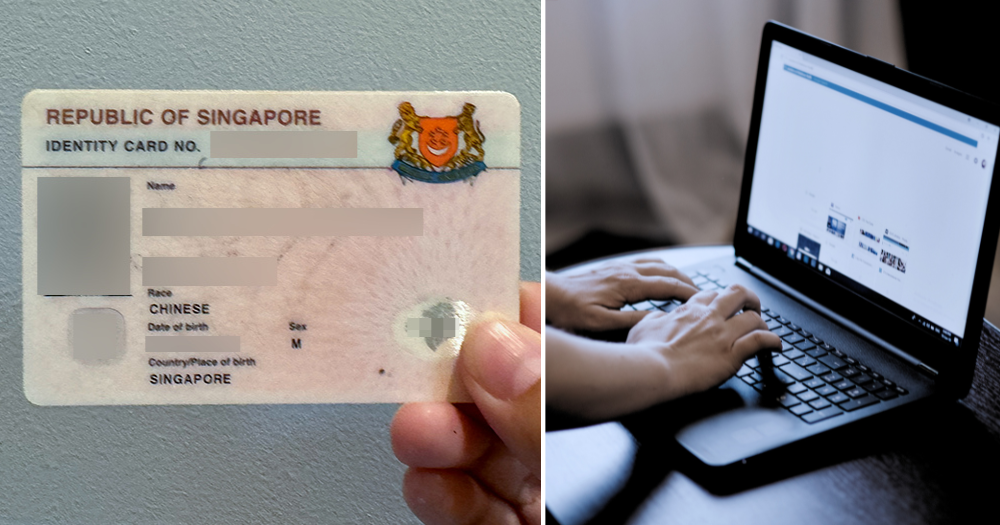
Think twice if you’re asked for your personal details.
Being on a company’s payroll without actually doing any work might sound like a dream — you receive Central Provident Fund (CPF) contributions and have all the time to pursue other activities.
But what someone in this position might not be aware of is that they’re now part of an illicit scheme, and their actions are very much illegal.
Individuals like these are called phantom workers. And no, the term doesn’t refer to that one colleague who’s on vacation or MC.
Phantom workers are locals who receive CPF contributions from an employer, but who don’t do any work for the employer.
These workers are employed in name-only.
Companies ‘hire' phantom workers for a variety of illicit reasons.
One such reason is to inflate their foreign worker quota — by using local phantom workers, companies won’t have to hire any local workers and pay them their salaries.
Sometimes, phantom workers are also hired to inflate the number of local workers companies hire. This allows the company to take advantage of government benefits or schemes that incentivise employers to hire local workers, such as subsidies or other monetary aids.
Another reason is that phantom workers can also be hired for tax evasion purposes.
CPF contributions made to these workers can be used by the employer to file claims for expenses in their tax declarations. This allows an employer to falsely declare a lower yearly taxable income.
According to the Ministry of Manpower (MOM), those who collude with companies by providing their particulars for fraudulent CPF contributions to inflate foreign worker quotas can be prosecuted for abetment of false declaration.
This carries a fine of up to S$20,000, jail of up to two years, or both.
In July 2026, the MOM arrested 14 people comprising four directors, nine foreign workers, and one key appointment holder from an employment agency.
These individuals are suspected of making fraudulent CPF contributions to 139 locals to bring in workers via the inflated foreign worker quotas, alongside other employment-related offences.
Earlier in April, a similar case occurred where 10 individuals, including directors and employees from five construction companies, were arrested for making fraudulent CPF contributions to locals not under their employment.
They had done so to inflate their companies’ foreign worker quota. These companies then used the inflated quota to make work pass applications to MOM to hire more foreigners.
More recently, on Sep. 2, MOM arrested four people over alleged fraudulent CPF contributions to locals not under employment.
If you’re wondering whether you’re a phantom worker, here are some red flags you can look out for.
As employers hiring phantom workers will require personal details such as your Singpass, NRIC or CPF account details, it is possible for you to unknowingly divulge this information without being aware of how they can be misused.
It is also possible for companies to obtain your personal details illicitly without you even being involved.
As such, the solution is to keep an eye on your CPF transactions.
Do not accept CPF contributions from unknown or illegitimate sources. Under the transaction history section of your CPF dashboard, you can track your CPF contributions.
If you spot a CPF contribution from an unknown source, you should investigate immediately.
If it came from an employer you’re not employed under, it could be a sign that the employer has registered you as a phantom worker.
Another sign is if you suddenly find yourself ineligible for certain subsidies due to wages that have been declared incorrectly.
If you are sure that you do not work for them, seek clarification with the employer directly. If they remain unresponsive or cannot be contacted, you can lodge a report to MOM.
Above all, you can simply make sure to never hand out your personal information without first verifying the requestor’s authenticity, especially if they offer you CPF contributions in exchange.
This branded article is brought to you by the Ministry of Manpower.