
From the India Today archives (2022) | Who is afraid of Uniform Civil Code?
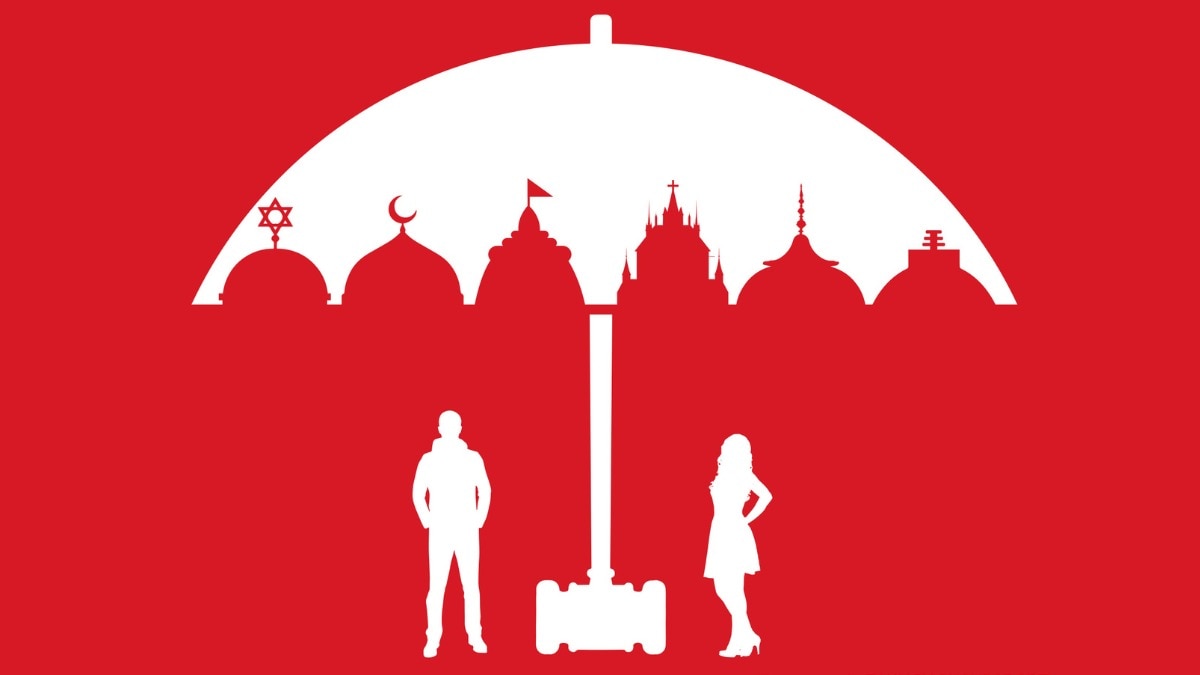
On April 22, Union home minister Amit Shah, while addressing a BJP meeting in Bhopal, reportedly told his colleagues that it was time to focus on the Uniform Civil Code (UCC). Almost on cue, the next day, Uttar Pradesh deputy chief minister Keshav Prasad Maurya said that the BJP government in the state was considering implementing the UCC. In next-door Uttarakhand, the BJP state cabinet is already forming a committee of experts for the same. Shah’s intent seems clear—Uttarakhand is a pilot project for what will soon have a national footprint.
The UCC has been part of the BJP manifesto since 1998. Nearly two decades later, the saffron party seems to be inching towards implementing the contentious agenda.
Having a common set of laws governing marriage, divorce, adoption and succession for all Indians, irrespective of religion—essentially one civil law applicable to all citizens— is an ideal mentioned in the Directive Principles and was seen as a desirable norm by Dr B.R. Ambedkar, the architect of the Constitution, though he felt the new republic was not ready for it at the time.
Is it ready now? The Supreme Court has occasionally answered in the affirmative: in its Shah Bano verdict in 1985; in 2015, as it spoke of the “total confusion” in civil laws across religions; and in 2019. In February, it also transferred cases on the UCC in various high courts to itself and tagged all of them for final adjudication. In August 2018, the Law Commission had struck a different note, though, saying a UCC was “neither necessary nor desirable at this stage”.This was in a paper on ‘Reform of Family Law’ prepared after the Union ministry of law and justice asked it in 2016 to examine the issue. The paper wanted discrimination against women within communities removed rather than looking for equality between communities in terms of family law. The final report is awaited. Union law minister Kiren Rijiju says when it is out, the Centre will start consultations with all the stakeholders. But since Justice B.S. Chauhan retired as chairperson in 2018, no appointment has been made to the Law Commission. The Centre, clearly, is treading cautiously.
Nobody knows what shape the UCC will take, what provisions it will cover and how it will affect the existing laws of India’s various communities Can a state frame its own UCC? Well, subjects such as marriage, divorce, adoption and succession are in the Concurrent List: both the Centre and the states can legislate on them. Does that include the power to frame a UCC? Constitution expert and former Lok Sabha secretary general P.D.T. Achary believes so, while former Union law secretary P.K. Malhotra feels only Parliament is competent to make such a law—since Article 44, the relevant Directive Principle, refers to all citizens across India. Uttarakhand has a precedent, though. Goa already has a Common Civil Code—a remnant of the Portuguese Civil Code of 1867. Not a uniform law in the true sense, it allows bigamy for Hindus in specific circumstances. The code also allows the church to both sanction and annul marriages and is disingenuous in many ways.
Meanwhile, many argue that a UCC violates the freedom of religion under Articles 25 and 26. “India is a multi-faith country, and every citizen is guaranteed to practise and profess their faith and religious beliefs, and to act on and preach the same,” said the Muslim Personal Law Board in November 2021. The SC, however, observed that the UCC doesn’t impinge on the “right to religion”.
Another problem with the UCC is that there is no single draft on it. Nobody knows what shape it will take, what provisions it will cover and how it will affect the existing laws of various communities. Many suspect—more so because the BJP and RSS have been batting for it—that the UCC will scrap the personal laws of minority communities in favour of majoritarian Hindu laws.
However, a UCC will impact Hindu laws as well. For example, Section 2(2) of the Hindu Marriage Act says its provisions will not apply to the Scheduled Tribes. Sections 5(5) and 7 of the law state that customary practices will override the provisions. The UCC won’t allow for such exceptions. The coexistence of personal laws with several criminal laws also adds to the confusion. For example, Section 125 of the Criminal Procedure Code (CrPC) too provides for the maintenance for wife, children and parents. Penal laws for protection against dowry and domestic violence also overlap the scope of personal laws.
A large section of the population, including Muslims, has already taken recourse to the various sections of the law to resolve civil disputes. The dependence on religious personal laws is gradually dwindling. While debates continue over the sagacity of a UCC, here is a cursory glance over the various personal laws in India and how the UCC may impact them.
A common law can fix minimum legal age for marriage, abolish bigamy and polygamy and encourage interfaith marriages.
Marriages in the three religions are governed by the Hindu Marriage Act (HMA), 1955.
MARRIAGE LAW FOR MUSLIMSThe Muslim Personal (Shariat) Application Act, 1937, states that Shariat or the Islamic law will guide marriage, divorce, and maintenance.
Governed by Indian Christian Marriage Act, 1872.
All marriages are solemnised according to the Sikh marriage ceremony called Anand (commonly known as Anand Karaj) and are governed by Anand Marriage (Amendment) Act, 2012.
Marriages among Parsis are governed by Parsi Marriage and Divorce Act, 1936.
With triple talaq now illegal, existing personal laws of all religions offer enough protection to women. The UCC may codify these to avoid overlap and misinterpretation.
Muslim and Parsi daughters still do not have the equal right to inheritance. The UCC may change that. It may also grant the right to children born out of wedlock.

