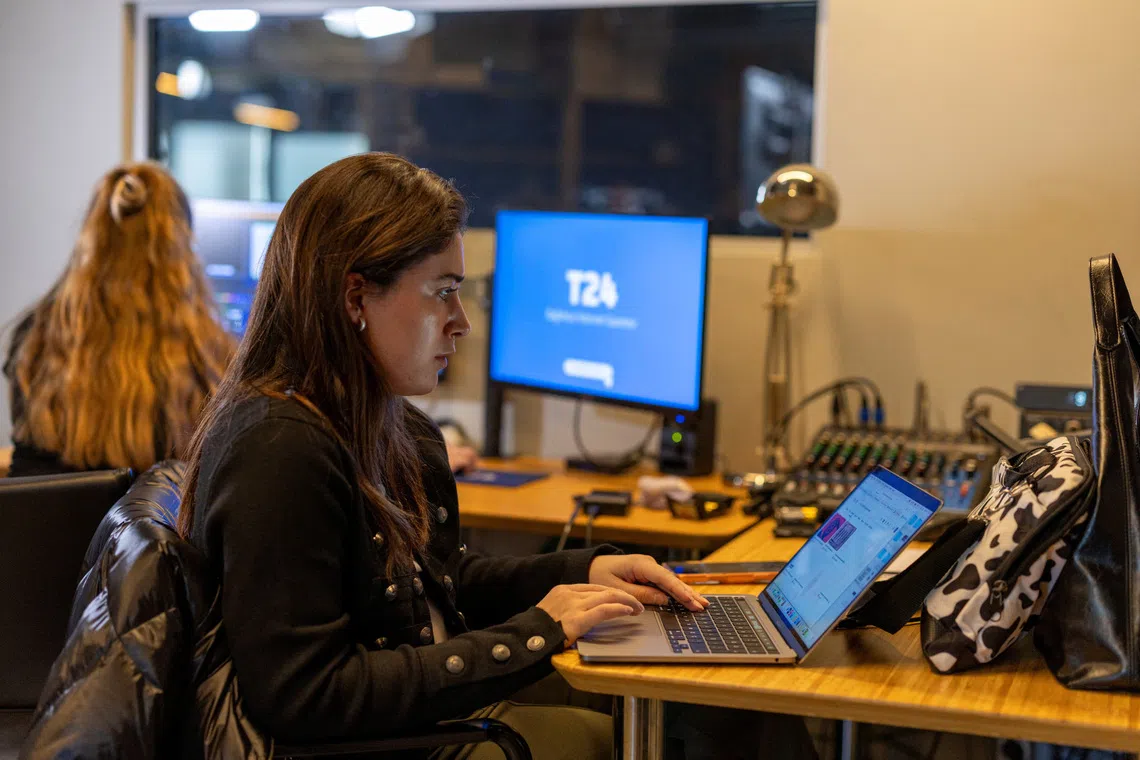
Forget 'coffee badging': 'Calendar stalkers' game return to office - USA Today
As return-to-office mandates tighten, hybrid workers are turning to a new survival tactic: calendar stalking.
Employees are obsessively tracking their bosses' Outlook schedules to maximize face time, coordinating their own office days to match so they can perform strategic walk-bys.
Stanford economist Nick Bloom calls the behavior an outgrowth of "peacocking" – showing up solely to show off. Bloom recalled one national retailer telling him that the carpet beside a key manager’s desk was literally wearing thin from employees constantly strutting past.
“I’m pretty sure the same canny employees that peacock also likely are billboarding – turning up strategically,” Bloom said.
The trend is a direct byproduct of strict attendance policies requiring staff in physical offices three to five days a week.
While executives argue in-person presence fuels innovation and culture, workers facing longer commutes and higher expenses are taking a more pragmatic approach. If they have to be in the office, they are going to make sure the person writing their performance review sees them.
Workplace analytics firm Owl Labs dubs these in-office appearances "billboard days" – an evolution from "coffee badging," the habit of 4 in 10 workers of swiping an ID card, grabbing a coffee and heading home.
According to Owl Labs' latest State of Hybrid Work report, nearly half of workers admit they choose or plan to choose their in-office days based on who will be there to notice them. Managers are leading the charge, with 83% participating in the practice.
The trend is most popular with full-time office workers (34%) followed by hybrid workers (32%). The appeal is cross-generational but has gotten the most traction with Gen Z, with 47% trying it, followed by Millennials (36%). Older workers are more averse. Just 22% of Gen Xers do it and 11% of Boomers.
For many, it is simply career insurance in a volatile job market, ensuring their face is top-of-mind when decisions about promotions or layoffs are made. Research suggests they may be right: Even passive face time – bumping into a manager in the elevator or while grabbing coffee – matters.
“In this new world of attendance tracking, employees need to hit attendance metrics and you can be sure they are using all their smarts to hit those targets,” Bloom said.
Enforcing rigid in-office mandates signals a deeper failure of executive trust – one that prioritizes looking busy over actual performance, Brian Elliot, CEO of Work Forward and an executive advisor, warned.
Employees still find value in coming into the office but only under the right conditions, Elliot said. They seek in-person collaboration, team connection and problem solving. But when managers equate physical presence with productivity, they also show up when company leadership is watching.
It’s not surprising that managers and executives do it even more as they face even more pressure and know that too often attendance is what gets noticed even if their results are strong, Elliot said. He hears that from them all the time.
“The name ‘billboard days’ says it all,” he said. “The message is ‘look at me, I'm here.’”