Flydubai FZ1073: Who were mystery pilots who saved the plane after Smit Machchhar was attacked? - The Indian Express
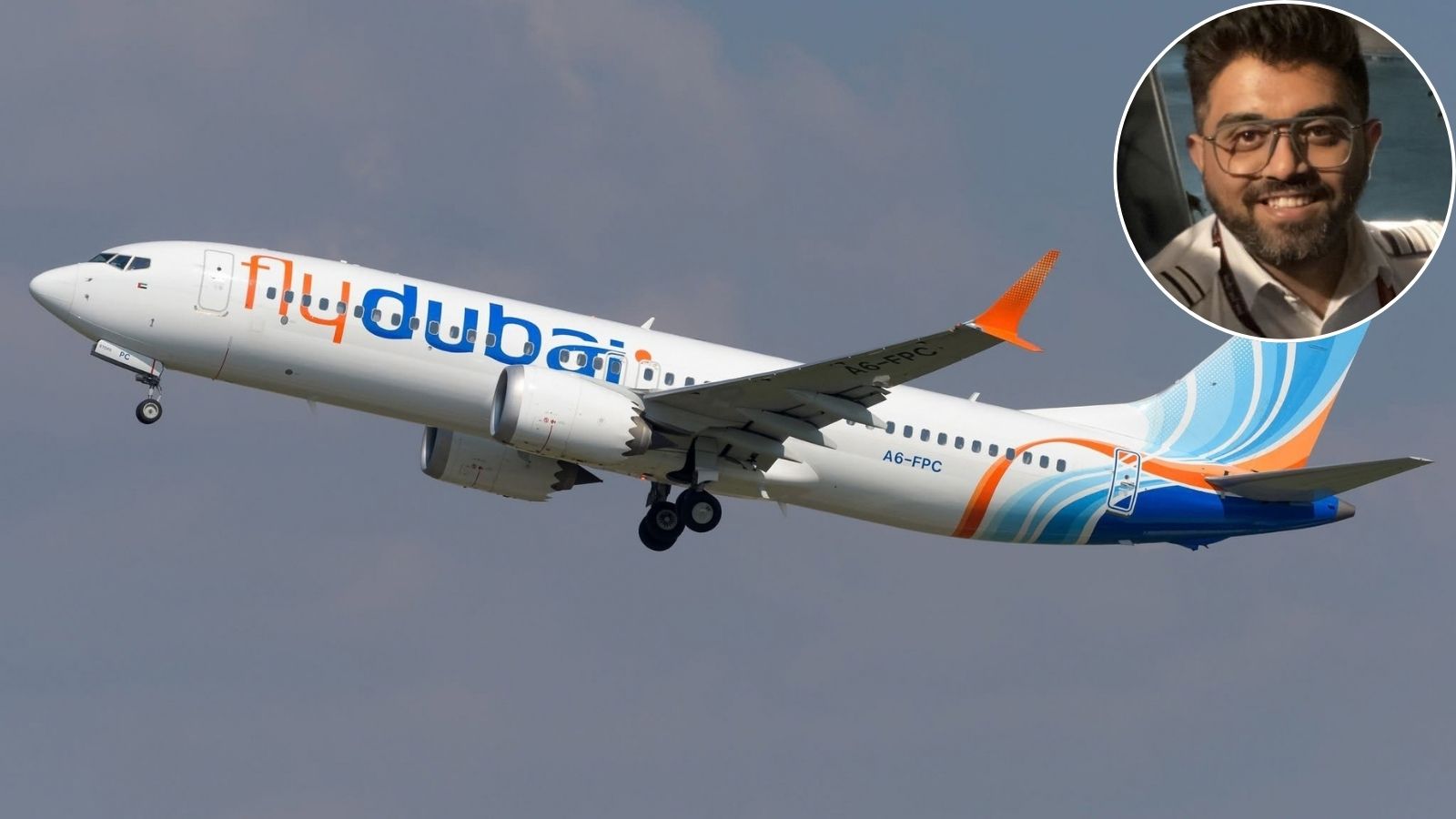
Three days after flydubai flight FZ1073 plunged thousands of feet during an attack on Indian Captain Smit Machchhar, questions are now turning to two pilots who were travelling as passengers and stepped into the cockpit to help stabilise the aircraft.
The two men have not been publicly identified. Flydubai has described them only as on-duty crew members travelling on the plane. Their intervention came after Smit Machchhar, despite being badly wounded, managed to unlock the cockpit door, allowing passengers to enter and subdue the co-pilot.
The two pilots then took control of the aircraft and helped guide it to an emergency landing in Tabuk, Saudi Arabia.
According to an account given to news agency Associated Press by passenger Daniel Schlichter, the two pilots were travelling on the flight because they were supposed to operate the aircraft on its return journey from Tel Aviv to Dubai.
The practice is known in aviation as “deadheading”, when pilots travel as passengers to reposition themselves for a subsequent assignment.
The co-pilot accused of attacking a Flydubai captain has reportedly been identified as Hamam al-Hammami, an Omani national previously barred from flying over alleged extremist views. pic.twitter.com/Od9nNpQ6jI
“This is one of the miracles,” Schlichter, who was seated in the second row, told AP.
“That not in every flight they bring two extra pilots. In this case, they brought them because they should have brought the plane back from Tel Aviv to Dubai, and this is the only reason they were there.”
The presence of the two pilots was crucial because both the operating captain and co-pilot were involved in the cockpit incident.
The Indian Express, citing agencies, had earlier reported that four pilots were aboard the flight, the two operating pilots and the two pilots travelling as passengers, and explained how the routine practice of deadheading helped in the emergency.
The pilots stepped in after passengers realised something was seriously wrong. Schlichter told AP that passengers heard screaming and learned that the co-pilot was repeatedly attacking Machchhar. The captain, despite his injuries, managed to unlock the cockpit door.
Flight data, the captain’s account and passenger footage, in nine chapters.
Flydubai FZ1073, a Boeing 737 MAX 8 with 182 people on board, takes off for Tel Aviv.
Cruising altitude. Everything appears normal
For more than two hours, nothing looks unusual. Then, in about four minutes, the altitude line collapses.
Source: AP, Flightradar24. Climb and final descent are simplified.
05:21:09 GMT. Cruising. The descent begins.
05:22:40 GMT. In about 90 seconds the jet has lost more than half its cruising altitude.
05:24:29 GMT. …then drops again, to the height it holds until landing.
The aircraft lost more than half its cruising altitude in the first descent. Source: AP, Flightradar24
Machchhar, badly injured, reaches the cockpit door.
The door opens. Passengers and crew intervene and restrain the attacker.
The cockpit door is locked. The captain is on the floor, injured. The aircraft is falling.
Tap the cabin to see what passengers saw and heard.
Hears shouting. People can be heard shouting “he tried to crash the plane” and ordering others to “sit down”.
Passengers and crew rush forward through the open cockpit door and restrain the attacker.
Repeated calls for a doctor ring out through the cabin.
Dr Shota Musayev, an Israeli dentist, moves forward to give emergency care.
Crew and passengers keep the co-pilot under guard. “No one will release him,” one says.
A passenger asks if there is “an additional pilot on the flight”. Two off-duty flydubai pilots take control.
Source: Channel 12 passenger footage, via The Times of Israel. Positions in the cabin are illustrative.
Not independently verified by The Indian Express.
Pilots can signal trouble silently with a four-digit transponder code. Tap a code.
7700 tells air traffic control the aircraft has a general emergency.
7500 signals unlawful interference, including a possible hijacking. FZ1073 held it for about an hour.
Nearly four hours after take-off, FZ1073 lands in Tabuk, Saudi Arabia. The passengers, most of them Israeli, later flew home on a separate plane.
Why did the co-pilot attack? How was he vetted? Did he act alone? Why was an Omani pilot flying to Tel Aviv?
A passenger then grabbed the co-pilot and pulled him from the cockpit, while others helped restrain him. One of the two travelling pilots immediately moved through the group and reached the controls.
“He was actually kind of jumping above the guys that were handling the terrorist, and he reached out to the pilot area and started to take over,” Schlichter said.
“And then the other guy, the other pilot, joined in and they closed the door because they didn’t want anybody else to be there.”
The two pilots then worked to stabilise the aircraft. Flydubai has previously said that crew members travelling on the aircraft helped stabilise the plane and land it safely, but the airline has not publicly identified the two pilots. The National reported that the airline declined to comment on the deadheading crew aboard FZ1073.
The aircraft had undergone an extreme descent after the attack in the cockpit. It took the two pilots “quite a lot of minutes”, maybe 10 or more, to stabilise the aircraft. The descent was so severe that part of the plane’s rudder was torn away. The pilots made a mayday call while looking for a suitable place to land.
Reuters has reported that the aircraft had been cruising at around 34,000 feet before plunging more than 16,000 feet in just over 30 seconds. The UAE has said the co-pilot attacked Machchhar with the cockpit’s crash axe and attempted to take control of the aircraft.
The two additional pilots eventually stabilised the aircraft and helped prepare it for an emergency landing at Tabuk in Saudi Arabia.
Even after the two men had taken control of the aircraft, some passengers did not immediately know who they were. Schlichter said the pilots did not communicate with passengers after entering the cockpit and closing the door.
“After they managed to stabilize the airplane, actually they did not have any communication with us, and I have to tell you, I was worried about this,” he said.
Schlichter said he began worrying that the men could themselves be taking control of the aircraft for another purpose. He feared they might be “hijacking the plane into maybe Iran, or I don’t know where, because we’re actually not too far.”
The concern lasted around 45 minutes, according to Schlichter. The pilots eventually announced that they would land in Tabuk, Saudi Arabia, and told passengers that everything would be OK.
At that point, Schlichter said, he decided to trust them. “And it turned out to be true.”
The National reported that deadheading, formally referred to in the international aviation framework as “positioning” crew, is a normal practice in airline operations. Pilots can travel in uniform as passengers when an airline needs to move them to another location for a subsequent assignment.
In this case, Schlichter said, the two pilots were on FZ1073 because they were expected to operate the aircraft on its return journey from Tel Aviv to Dubai.
AP reported that it was not clear why Flydubai had not identified them. Schlichter described the first pilot to reach the controls as a hero. “He acted really like a hero, taking over the plane and reacted like he understood exactly what is going on, and I think we owe him our lives not less than the other heroes that went on the flight,” he said.
The Express Global Desk at indianexpress.com which delivers authoritative, verified, and context-driven coverage of key international developments shaping global politics, policy, and migration trends. The desk focuses on stories with direct relevance for Indian and global audiences, combining breaking news with in-depth explainers and analysis. A major focus area of the desk is US immigration and visa policy, including developments related to student visas, work permits, permanent residency pathways, executive actions, and court rulings. The Global Desk also closely tracks Canada’s immigration, visa, and study policies, covering changes to study permits, post-study work options, permanent residence programmes, and regulatory updates affecting migrants and international students. All reporting from the Global Desk adheres to The Indian Express’ editorial standards, relying on official data, government notifications, court documents, and on-record sources. The desk prioritises clarity, accuracy, and accountability, ensuring readers can navigate complex global systems with confidence. Core Team The Express Global Desk is led by a team of experienced journalists and editors with deep expertise in international affairs and migration policy: Aniruddha Dhar – Senior Assistant Editor with extensive experience in global affairs, international politics, and editorial leadership. Nischai Vats – Deputy Copy Editor specialising in US politics, US visa and immigration policy, and policy-driven international coverage. Mashkoora Khan – Sub-editor focusing on global developments, with a strong emphasis on Canada visa, immigration, and study-related policy coverage. ... Read More