Failed Christa Pike execution prompts resignation of Tennessee prisons chief - Newsweek
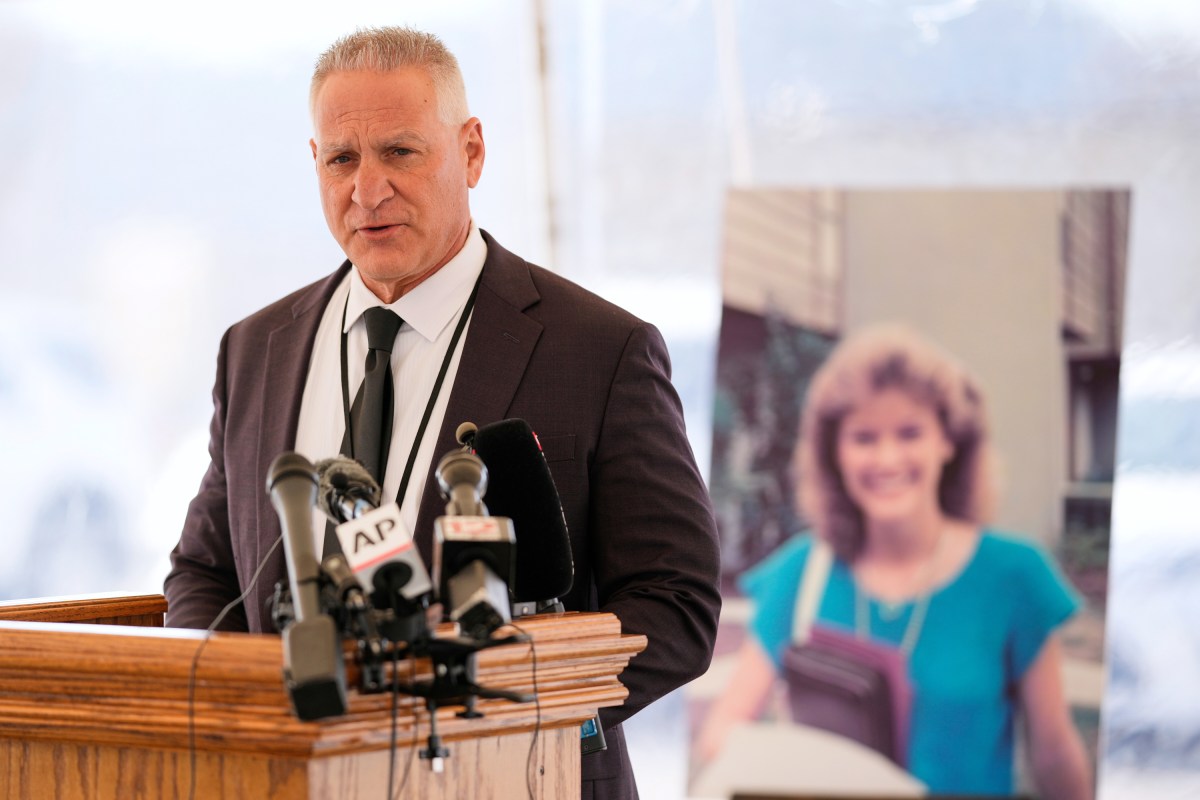
The head of Tennessee's prison system has resigned days after the state's failed execution of death row inmate Christa Pike, as officials face mounting questions about how two doses of a lethal injection drug failed to carry out her death sentence.
Republican Governor Bill Lee announced Saturday that Tennessee Department of Correction Commissioner (TDOC) Frank Strada will step down later this month. Strada took over the department in January 2023 after serving as deputy director of the Arizona Department of Corrections.
The resignation comes as the state launches an independent review into the September 30 execution attempt, which left Pike hospitalized, unconscious and reliant on a ventilator, according to court filings cited by the Associated Press.
Strada said in a statement to the AP that stepping aside was "in the best interests" of Tennessee while investigators determine what went wrong during the execution.
“I believe this review is entirely appropriate and necessary, and I look forward to doing everything I can to help determine exactly what occurred,” he added.
Pike's attorneys told Newsweek in an emailed statement Saturday, "The resignation of Commissioner Strada is justified, but it does nothing to help Christa now."
"What happened to her Wednesday reflects a systemic failure that goes far beyond any one person," Randy Spivey and Kelly Gleason from the TN Office of the Post Conviction Defender, and Stephen Ferrell and Luke Ihnen from Federal Defender Services of Eastern Tennessee, Pike's legal team said. "We hope the Governor’s call for a full, independent review will expose the profound problems within Tennessee’s entire death penalty system."
On Saturday afternoon, Lee's office announced that former U.S. Attorney Ed Stanton would lead the review.
Laura Porter, the executive director at the U.S. Campaign to End the Death Penalty, told Newsweek in emailed statement that "attorneys and community leaders across Tennessee have been trying for some time to get the governor and the administration to take seriously the huge problems with the competency of the state’s execution process," adding that they were ignored.
"Hopefully, this is the beginning of accountability and an end to secrecy that enables these debacles,” Porter said.
When reached via email Saturday, the Communications Director for the TDOC referred Newsweek to the governor's office. Newsweek reached out to Lee’s office as well as Strada by email Saturday for further comment.
The failed execution has reignited debate over lethal injection protocols and the future of capital punishment in the United States.
Tennessee has halted its remaining executions for 2026 following the incident, while legal experts and death penalty advocates have questioned whether the state can attempt to execute Pike a second time.
Pike's case is highly unusual because inmates who receive a full execution protocol but survive are exceedingly rare in modern American capital punishment. Legal scholars previously told Newsweek that historical precedent suggests a second execution attempt could be allowed, though the issue would likely trigger extensive court challenges.
The case has also become a national political issue. President Donald Trump has continued advocating for expanding the death penalty even after Pike's failed execution, saying capital punishment should remain available for major drug traffickers, human traffickers and those convicted of killing police officers.
Corinna Lain, author of Secrets of the Killing State: The Untold Story of Lethal Injection and the George E. Allen Chair in Law at the University of Richmond School of Law, pointed out that this is not the first botched execution incident Strada has been attached out to.
"Frank Strada was the person in charge of Arizona’s department of corrections when it botched three executions in 2022. He left the department shortly after and then was hired to lead Tennessee’s department of corrections," she told Newsweek in an email.
In her book, Lain wrote, "I remember the very same governor, Governor Lee, saying in 2022 that lethal injection was a very important task that needed to be performed correctly, and that that he was showing his commitment to doing it right by changing the leadership at the top—and then finding out that the department of corrections had hired the very same guy who was overseeing botched executions in Arizona.”
During the 2022 execution of Clarence Dixon, officials spent roughly 30 minutes attempting to place an IV before ultimately accessing a vein in his groin. Just a month later, medical personnel struggled to find a suitable vein in Frank Atwood’s his right arm, prompting Atwood to suggest using his hand instead, according to Henry Brean, an Arizona Daily Star reporter who was a witness. There was an unsuccessful attempt to insert an IV line in Murray Hooper's right arm, with the AP reporting that the IV in Hooper's leg was inserted into his femoral artery instead.
The incidents led Arizona Governor Katie Hobbs to pause lethal-injection executions and appoint retired federal Judge David Duncan to conduct an independent review of the state's execution procedures, according to Fox 10 Phoenix. Duncan later said he was removed from the role after concluding that lethal injection was not a viable execution method.
Newsweek reached out to Hobbs and the Arizona DOC by email Saturday for comment.
Pike, now 50, was sentenced to death for the 1995 torture and murder of fellow Job Corps student Colleen Slemmer in Knoxville. She was set to become the first woman executed in Tennessee in more than 200 years.
According to execution attempt witnesses, Pike remained alive after receiving two doses of pentobarbital. During the procedure she reportedly complained of pain in her arm, later lost consciousness and was transported to a hospital rather than being pronounced dead.
Her attorneys later argued that execution personnel may have failed to properly establish intravenous access, resulting in the drug entering tissue rather than her bloodstream.
In a court filing cited by the AP, lawyers alleged that members of the execution team did not recognize that IV lines may have been improperly placed or that veins had "blown" during the process.
Experts previously told Newsweek there were three leading possible explanations for the failure: the drugs may never have properly reached Pike's bloodstream, the pentobarbital may have been ineffective, or Pike may have experienced an uncommon physiological response to the drug.
Corinna Barrett Lain, a University of Richmond law professor and author of Secrets of the Killing State: The Untold Story of Lethal Injection, told Newsweek recently that Pike's case appears to be unprecedented in the modern era of lethal injection executions.
Lain said inmates have previously survived execution attempts when officials were unable to establish IV access, but she was unaware of another case in which executioners successfully administered the drugs and the inmate nonetheless survived, noting, "We've never had someone who has survived their own execution when the drugs are going into them."
She added that earlier execution failures typically occurred because officials could not access a prisoner's veins before the drugs were delivered.
According to Ferrell, his team warned officials that her medical history and blood condition could make IV access difficult for months prior to the execution, which he noted would raise the risk of a prolonged execution attempt.
Pike's legal team said she remained critically ill after the execution attempt, while court filings stated hospital staff were working to remove the pentobarbital from her system.
Questions surrounding Pike's case have drawn renewed attention to Tennessee's troubled history with executions.
Lee halted the execution of Oscar Smith at the last minute after officials discovered the state had failed to follow its own lethal injection protocols. An independent investigation later identified significant flaws in Tennessee's execution procedures.
Tennessee suspended executions while officials reviewed and revised the state's lethal injection procedures following the findings of the independent review. According to NewsNation, executions did not resume until 2025.
Officials halted the execution of death row inmate Tony Carruthers after spending more than an hour unsuccessfully attempting to establish intravenous access.
The state attempted to execute Pike using pentobarbital. Despite two doses being administered, Pike survived and was rushed to a hospital. Witnesses reported that she continued breathing and making sounds after the injections.
Following the failed execution, Lee ordered an independent review and accepted the resignation of prison commissioner Strada.
The state's independent investigation is expected to examine every aspect of Pike's execution attempt, including the placement of IV lines, the administration of pentobarbital and whether protocol was followed.
Meanwhile, Pike's attorneys are seeking preservation of evidence related to the execution and are expected to challenge any effort to schedule a second execution date. Legal experts told Newsweek that while historical precedent exists for retrying an execution after a failed attempt, courts would likely face novel constitutional questions because of the circumstances involved.
Eric Berger, the Earl Dunlap Distinguished Professor of Law at the University of Nebraska who has written extensively on lethal injection litigation, told Newsweek that the strongest precedent favors Tennessee's ability to seek another execution date.
"Probably," Berger said when asked whether Tennessee can legally attempt to execute Pike again. "The Supreme Court in Louisiana ex rel. Francis v. Resweber found that the Eighth Amendment does not categorically bar a state from attempting a second execution after the first execution attempt fails."
The findings of the state's review could determine not only Pike's future but also whether Tennessee's execution system undergoes another major overhaul.
Newsweek’s reporters and editors used Martyn, our AI assistant, to produce this story. Learn more about Martyn here. Contact Newsweek editors for this story: Steve Mollman and Anthony Murray.