Explainer-Five things to know about the college sports bill that passed the US Senate - CNA
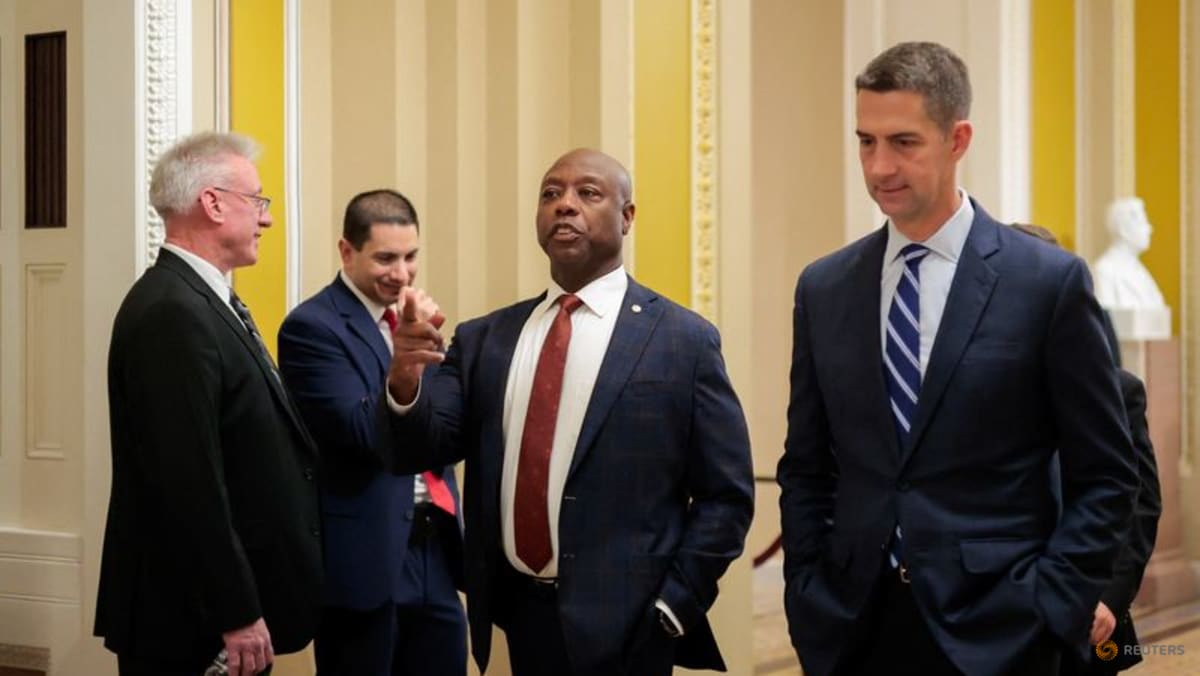
US Senator Tim Scott (R-SC) and Senator Tom Cotton (R-AR) walk through the US Capitol ahead of a Senate vote on the "Protect College Sports Act" on Capitol Hill in Washington, D.C., US, September 28, 2026. REUTERS/Kylie Cooper US Senator Tommy Tuberville (R-AL) looks on, ahead of a Senate vote on the "Protect College Sports Act" on Capitol Hill in Washington, D.C., US, September 28, 2026. REUTERS/Kylie Cooper US Senator Chuck Grassley (R-IA) looks into the Senate Chamber during a Senate vote on the "Protect College Sports Act" on Capitol Hill in Washington, D.C., US, September 28, 2026. REUTERS/Kylie Cooper 30 Sep 2026 02:30AM (Updated: 30 Sep 2026 02:44AM) Bookmark Bookmark Share WhatsApp Telegram Facebook Twitter Email LinkedIn Set CNA as your preferred source on Google Add CNA as a trusted source to help Google better understand and surface our content in search results. Read a summary of this article on FAST. Get bite-sized news via a newcards interface. Give it a try. Click here to return to FAST Tap here to return to FAST FAST WASHINGTON, Sept 29 : The US Senate passed legislation this week to regulate college sports, a multibillion-dollar industry that has been upended in recent years by increased earning opportunities for student athletes.
The Senate voted 77-22 on Monday evening to pass the proposal, which now heads to the US House of Representatives.
CNA Games Guess Word Crack the word, one row at a time Buzzword Create words using the given letters Mini Sudoku Tiny puzzle, mighty brain teaser Mini Crossword Small grid, big challenge Word Search Spot as many words as you can Show More Show Less HOW WOULD IT CHANGE COLLEGE SPORTS?
The proposal would create national standards around student athlete transfers, eligibility and compensation for name, image and likeness use.
It would permit one school transfer "without losing or delaying eligibility to participate." A student athlete who transferred institutions a second time would be ineligible for one year aside from four exceptions including the departure of a head coach, sexual assault or harassment and the discontinuation of a sport.
Student athletes would also be limited to five years of eligibility with exceptions for pregnancy, religious missions, active-duty military service and a "serious athletic injury or medical condition."
The measure would protect student athletes' rights to NIL compensation and require disclosure of NIL deals that exceed $600.
The legislation includes several controversial components. For example, its national standards on transfers, eligibility and name, image and likeness deals would preempt state laws. More than 30 states have already enacted their own name, image and likeness laws.
The bill sidesteps one of college sports' biggest legal battles: whether the athletes should be classified as employees rather than students participating in extracurricular activities.
The proposal allows athletes to sue to enforce its provisions, rather than requiring arbitration, though critics say lawsuits are burdensome to individuals.
"Student-athletes often have limited time, resources, and legal expertise," Senator Lisa Blunt Rochester, a Delaware Democrat, said in a statement. "They should not bear primary responsibility for identifying violations and suing their schools or athletic programs to secure the protections provided by the bill."
Blunt Rochester also warned that Congress should not lock in terms "that could limit student-athletes' ability to negotiate or collectively bargain over them in the future."
Fifty of the chamber's 53 Republicans supported the legislation. Senator Dan Sullivan of Alaska did not vote. Senators Rick Scott of Florida and Rand Paul of Kentucky opposed it. Paul proposed an amendment that would have gutted the bill. Paul's amendment was overwhelmingly rejected, failing 1-94 with only Paul voting in favor of it.
Twenty-seven members of the Democratic Caucus backed the legislation.
Opponents said the measure could limit athletes' leverage in future labor and antitrust disputes, even as it created new health, safety and compensation protections.
The measure now moves to the House, which has recessed until after November 3's midterm elections. A majority of the 433-member House — two seats are vacant — would have to approve the bill to send it to President Donald Trump's desk to be signed into law.
A single handpicked story that we think you shouldn't miss. Just one a day.