Exclusive: US Marines’ Boots Fell Apart During Arctic NATO Exercise
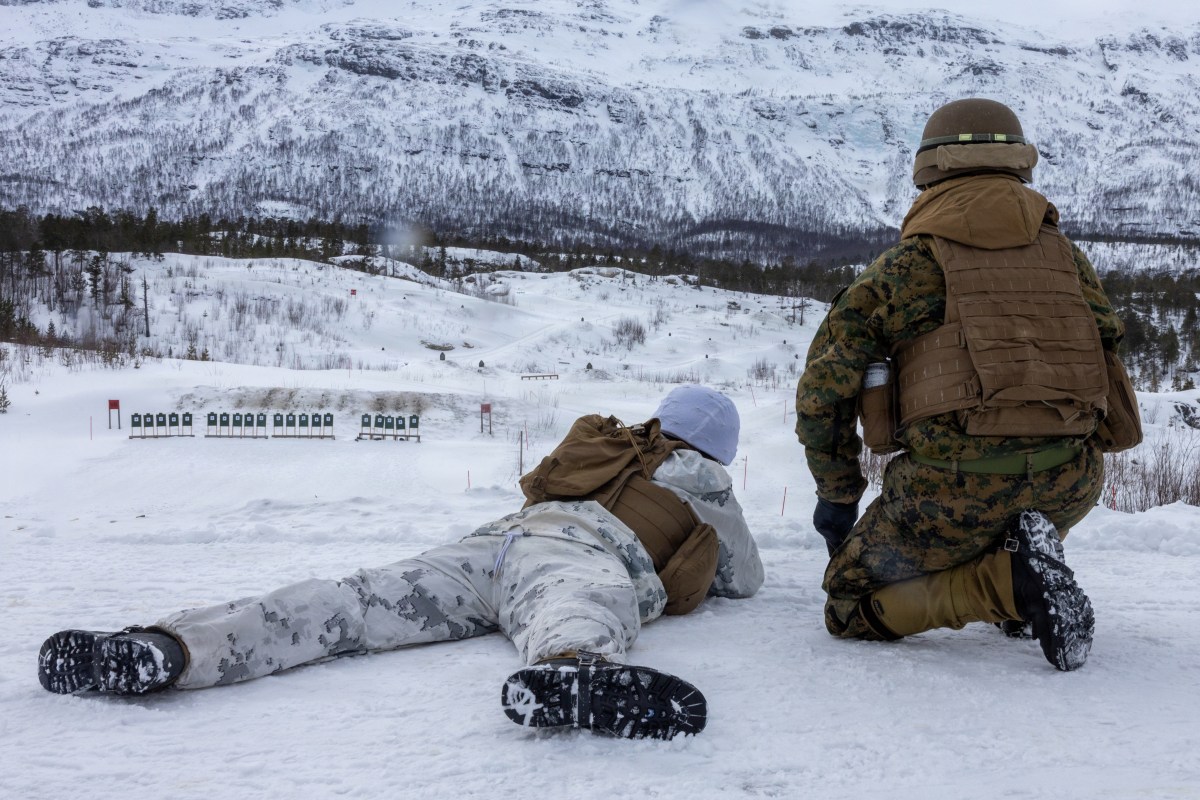
It took only a few frigid February days for several United States Marines trudging through Norwegian snow and ice to notice something was wrong.
First, they found holes yawning in the leather of their often brand-new boots. Next, gaps opened up in the soles of the shoes, freezing water slipping in as they hiked and skied, weighed down by the packs strapped to their backs, according to a Pentagon official and U.S. military records reviewed by Newsweek.
The failures occurred during pre-exercise training for Cold Response 2026, a Norwegian-led NATO exercise involving more than 25,000 personnel in the Nordic country, and more than 7,000 others in Finland. They have raised questions about the quality of military-issued footwear and about a congressional push that would further restrict the boots U.S. service members may wear to models made entirely in the United States.
Among those taking part were roughly 3,000 U.S. Marines, most of them deployed with the II Marine Expeditionary Force (MEF), from Camp Lejeune, North Carolina, according to the Marine Corps, to Norwegian training grounds above the Arctic Circle in early 2026.
The exercise was intended to showcase how U.S. forces could operate alongside other NATO countries in some of the toughest conditions they could face.
And in many ways, they did. U.S. forces obtained locally available cold-weather footwear in Norway when replacements were needed, according to the Pentagon official and a joint statement from U.S. Marine Corps Forces Europe and Africa and Marine Corps Systems Command.
Under U.S. law, Pentagon funds can't be used to buy military boots unless they're made in the U.S. (subject to certain limited exceptions). The intention was to give U.S. companies a boost and pull down dependence on foreign supply chains, but critics say service members are suffering because they're being forced to don poor quality, domestically-made footwear, ultimately racking up costs when they have to buy replacements.
This raises tough questions for lawmakers and lobbyists now pushing for manufacturing rules to become even stricter, at a moment when the U.S. military is stretched by operations around the globe, from strikes on Latin America to the months of war with Iran in the Middle East, with demand for these boots likely to swell.
More Marines were later pulled off the ice-slicked Norwegian fields during Cold Response, with their boot soles peeling away from the rest of the shoe, or part of the plastic heel digging into their tendons, the Pentagon official, who was granted anonymity because they were not authorized to speak publicly, told Newsweek. For others, the heel cup wore quickly through the lining or the eyelets become loose.
The Norwegian military, according to the official, helped the U.S. Marines source M77 boots manufactured by the Nordic country's Alfa company, which developed the footwear with Norway's army back in the 1970s.
Some pairs of replacement boots were bought directly from nearby stores. Critical provisions had to be taken off a U.S. resupply ship so the vessel could be reloaded with more American-made boots and re-routed to Norway, the Pentagon official said.
"Enormous sets of issues started coming up," with the U.S.-made footwear, they said.
The joint statement provided to Newsweek by Lieutenant Colonel Kurt Stahl, a spokesperson for the U.S. Marine Corps Forces, Europe and Africa, said U.S. forces had used an established Host Nation Support mechanism to procure locally available footwear with U.S. funds.
"Commanders and logisticians took action to meet Marines’ equipment needs and sustain training during the exercise," the statement said. "We are not aware of any Norwegian forces purchasing or donating boots on behalf of U.S. Marines."
The statement described Host Nation Support as a standard sustainment process that enables U.S. forces to obtain specialized or locally available equipment without requiring every item to be shipped from the U.S.
Stahl disputed the Pentagon official’s account of the resupply ship, saying there was no rerouted ship that provided replacement boots to the Marines.
A U.S. military assessment from early 2026, seen by Newsweek, described "significant defects" in the specialist cold weather boot worn by the Marines, and said the problems were discovered during this training in Norway from late February.
The Marine Corps has confirmed that the reported concerns involved Intense Cold Weather Boots manufactured by Belleville Boot Co. It said Portfolio Acquisition Executive Marine Corps personnel observed the problems firsthand in Norway.
The assessment listed the same malfunctions described by the Pentagon official and referenced an unplanned shipment of more boots to Norway as one of the "corrective actions taken." The Marines bought new boots from local sellers "at a higher and unanticipated cost."
Failures in cold-weather clothing and footwear can expose service members to frostbite, hypothermia and, in severe cases, life-threatening conditions, particularly during prolonged operations in the depths of Arctic winter.
This comes as NATO turns its attention to the Arctic, wary of Russia's expanding presence, blossoming Chinese interest, and President Donald Trump's previous threats to claim the Arctic island of Greenland from fellow alliance member Denmark at any cost.
The Cold Response exercises were part of the "Arctic Sentry" drills NATO unveiled in February, through which the alliance says it's making its footprint known in the austere Arctic, getting its soldiers and Marines accustomed to the unforgiving climate where Moscow is far more comfortable.
The early 2026 military assessment referenced a brief given in fall 2025 which said an unspecified vendor "did not identify poor craftsmanship and unacceptable materials" before shipping boots to the Marines. Two photos beneath these judgments show boots overlaid with the Belleville logo.
There were "ongoing quality failures" between fall 2025 and spring 2026 with the boots approved for the U.S. Marines to hand to their service members, including Belleville, the briefing says.
The problem did not end when the Marines left Norway. After the failures emerged, the Marines returned to their warehouses and inspected additional stockpiles, finding more examples of faulty boots at Camp Lejeune, the Pentagon official said.
The Marine Corps said Portfolio Acquisition Executive Marine Corps personnel subsequently conducted three inspections of Intense Cold Weather Boots at the base. The initial inspection took place one week after the team returned to the U.S., with subsequent inspections conducted in April and July this year, with Belleville and Defense Logistics Agency (DLA) representatives present.
A spokesperson for the DLA—which is responsible for buying clothes, shoes and equipment for service members—separately confirmed that it supplied the Belleville Intense Cold Weather Boots through what they described as a commercial, off-the-shelf contract vehicle to meet a Marine Corps requirement.
"We are aware of the issues with the boots and have been assisting the Marine Corps with inspections," the spokesperson told Newsweek.
The early 2026 assessment said the vendor, which wasn't explicitly named, was scheduled to inspect 5,000 pairs of boots at Camp Lejeune because "initial sampling" at the warehouse found a roughly 50 percent defect rate at the base. This statement came directly under a description of defects in Belleville Intense Cold Weather Boots (ICWB).
Faulty boots were later identified in other Marine Corps bases, including in Hawaii and Okinawa, Japan, the Pentagon official said. It's not clear how many boots in total were affected. Newsweek did not view records detailing the number or type of defective boots identified at those additional locations.
A separate presentation from summer 2026, seen by Newsweek, said the inspection had taken place "following widespread failures during Cold Response 2026." The information on the slide also said Marines had been pulled from the field because of faulty boots that had all been worn for less than 30 days and then had "to buy replacements from the local economy."
The presentation called the April findings "an alarming rate of defective pairs." It said the follow-up inspection in July "revealed a substantially higher incidence of defects, indicating a notable deterioration in product quality between the two inspection periods."
According to the presentation, inspectors examined 2,642 Belleville Intense Cold Weather Boots at Camp Lejeune in April and found 183 with defects, a failure rate of 6.93 percent. In July, 1,781 boots were inspected and 355 were found to have defects, a failure rate of 19.93 percent. Combined, 4,423 boots were inspected and 538 were found to have defects, an overall defect rate of 12.17 percent.
The Marine Corps confirmed that the inspections identified 538 "out-of-the-box workmanship failures." It said the findings produced a corrective action plan for Belleville to replace affected Intense Cold Weather Boots on a one-for-one basis.
The briefing said the industry norm was between a 2 and 3 percent failure rate.
Belleville describes its military footwear as "built with the uncompromised craftsmanship, quality and dependability required by warfighters around the globe."
In a statement to Newsweek, the company said it had been working directly with the Marines to address their concerns and ensure it delivered the quality of combat footwear the service required.
"Belleville is committed to continuous quality improvements and works to quickly resolve any issues," the company said.
Belleville said it consistently exceeds DLA performance expectations and receives the highest ratings under the agency’s Supplier Risk Performance System, which it said measures on-time delivery and product quality.
The company, founded in 1904, described itself as the country’s oldest and largest manufacturer of American-made military boots and said it had supplied footwear to the U.S. military since World War I.
The defective Belleville Intense Cold Weather Boots were military-issued footwear. The Better Outfitting Our Troops (BOOTS) Act addresses a related but distinct category: optional combat boots that service members acquire themselves and are permitted to wear with their uniforms. Because of the decades-old Berry Amendment, Pentagon funds generally cannot be used to buy foreign-made footwear or other covered clothing unless an exemption applies.
The rules include exemptions for purchases not exceeding $200,000, certain emergencies and cases in which American-made products cannot be obtained when needed in satisfactory quality and sufficient quantity at U.S. market prices.
The BOOTS Act would go further. The House version would require the defense secretary to prohibit service members from wearing optional combat boots as part of a required uniform unless the boots were manufactured entirely in the U.S. from American-grown, reprocessed, reused or produced materials and domestically manufactured components.
The legislation would limit the Marine Corps’ Optional Boot Program, which allows service members to wear approved models that are not manufactured in the U.S. as long as they comply with applicable trade rules.
One of the favored options among service members is footwear made in Cambodia by U.S.-registered company, OTB. Three types of boots made by OTB can be worn by Marines.
But prospect of closing this loophole makes many Marines shudder. Not because they oppose the idea of wearing only U.S.-made boots—but because they think the change will harm U.S. Marines and shoemakers won't be able to keep up with the demand.
"The U.S. manufacturers aren't keeping up with quality or quantity," the Pentagon official said. "Just because it is American-made, doesn't mean we're seeing quality."
There's concern even among the current manufacturers about what the BOOTS Act could mean. Chris Perrotti, the head of manufacturing tasked with overseeing quality control and production at Danner—a Belleville competitor—said there was "frustration" among Berry-compliant bootmakers for the U.S. military that the descriptions handed down by the DLA are not based on what will work best, but on using certain types of products to build the boots.
"The result is that the war fighter doesn’t get the best product," Perrotti said in an email seen by Newsweek that was sent to another major U.S. military contractor in November 2025.
It's too expensive for U.S.-based suppliers to scale up their manufacturing to a point where they could support more boots being made, Perrotti said, meaning American companies "can't support a military ramp up."
Newsweek emailed Perrotti for further comment.
In mid-2024, the Washington-based CNA think tank published its results of a report commissioned by the DLA. The point, the report said, was to work out what the vulnerabilities and problems with the U.S.'s production of items like Marines' boots were, and how it could change during wartime.
In this scenario, the DLA would need to buy an additional 456,000 boots for its service members each year, putting annual production at 981,000 boots each year. Industry participants in this war game said this would only be possible with significant investment before a conflict started and caused demand for footwear to surge, as they can only produce a maximum of 525,000 boots currently each year.
A separate internal U.S. military examination concluded in April this year that U.S.-based vendors could not keep up with demand for boots for U.S. service members, with up to 4.2 million pairs of boots needed across the branches each year in peacetime, Newsweek understands.
The average life span of U.S. military boots is assessed within the armed forces to be between one and two years. Each service member is required to have at least two pairs at any one time.
The BOOTS Act was ultimately struck from the House version of the National Defense Authorization Act outlining the Pentagon’s priorities for the 2027 fiscal year, according to information reviewed by Newsweek. Language from the proposal was reintroduced in the Senate in July, meaning the issue could return as lawmakers resume work on the legislation.
Its backers hope its scope could ultimately extend beyond the U.S. military to the Department of Homeland Security (DHS), the Pentagon official said.
That could add millions of pairs of boots to the order books of a limited number of authorized manufacturers. DHS includes Immigration and Customs Enforcement (ICE), the U.S. Coast Guard and U.S. Customs and Border Protection. ICE said its ranks had grown by more than 120 percent to 22,000 officers and agents in one year.
The question facing lawmakers is therefore larger than whether one model of boot failed inspection. They must decide whether stricter domestic-manufacturing rules would encourage the investment needed to strengthen the American footwear industry, as supporters contend, or restrict access to alternative boots before U.S. companies can reliably supply the necessary quality, performance and volume.