
Exclusive / Tim Scott to Senate Republicans: We’re still in this - Semafor
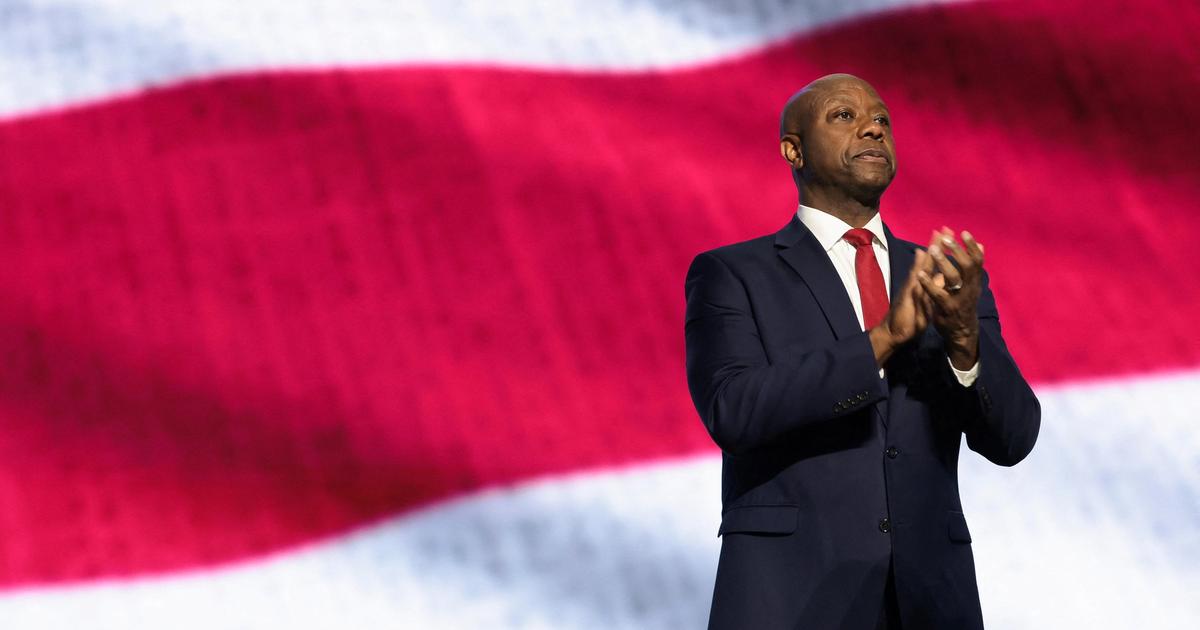
As the midterm battleground map expands deep into red territory and Republicans fret about the deteriorating national mood, Sen. Tim Scott, R-S.C., is reassuring GOP senators that they can still outperform the environment and hold onto the Senate.
The National Republican Senatorial Committee chairman gathered Senate Republicans on Wednesday for a final meeting before they scatter across the country to fight for their political lives. He likened their potential fortunes to those of Democrats in 2022, when then-President Joe Biden was deeply unpopular but Democrats ended up gaining a Senate seat even as they lost the House, according to a person in the room.
“We’re in the fight for our lives with a record number of toss-up races,” Scott told his colleagues.
Scott also argued that Republicans’ position on the general ballot is improving and that GOP voter enthusiasm for the election has increased 20% in the past two months, citing new polling from Peak Insights, the person said.
He also told Republicans up for reelection in deep red states to run like they are behind, explaining that the NRSC’s spending on Senate races will focus on the surplus of toss-up races across the country. He singled out contests over Democratic-held seats in New Hampshire and Michigan and GOP-held seats in Maine, Iowa, Ohio, Texas, and Alaska.
At this pivotal moment ahead of the midterms, Senate Republicans are increasingly breaking with an unpopular President Donald Trump with the fight for the Senate majority hanging in the balance in such unlikely places as Texas and Iowa. Republicans can afford to lose up to three Senate seats and keep control of the chamber, but doing so will require the party to shore up its position in a number of battleground states. Republicans have some offensive opportunities, but they have to balance those with all the states they’re defending.
Scott said the party’s polling showed the gap narrowing in North Carolina while Minnesota is also tight. One Republican super PAC cut some of its ad reservations in North Carolina; the party is debating whether to scale back investments in Georgia, where Democratic Sen. Jon Ossoff is favored to win re-election.
NRSC staff also told senators that the party is capitalizing on the Supreme Court rulings that loosened restrictions on coordinated spending between candidates and campaign committees and allows those coordinated ad buys at discounted candidate rates. Republican committees ramped up their coordinated spending in August and further accelerated that practice in September, essentially matching well-funded Democratic candidates.
Democratic candidates are set to outspend Republicans $32.8 million to $2.3 million on TV September in six key states, but Republicans are set to augment that with $29.3 million in coordinated spending, according to the data presented to the GOP. That’s important because GOP super PACs that are pouring money into the Senate battlegrounds receive worse ad rates. Democratic candidates have enjoyed a persistent fundraising advantage this cycle.
