EXCLUSIVE | End of the road for RAF looters: Incoming boss lays down the law - IOL
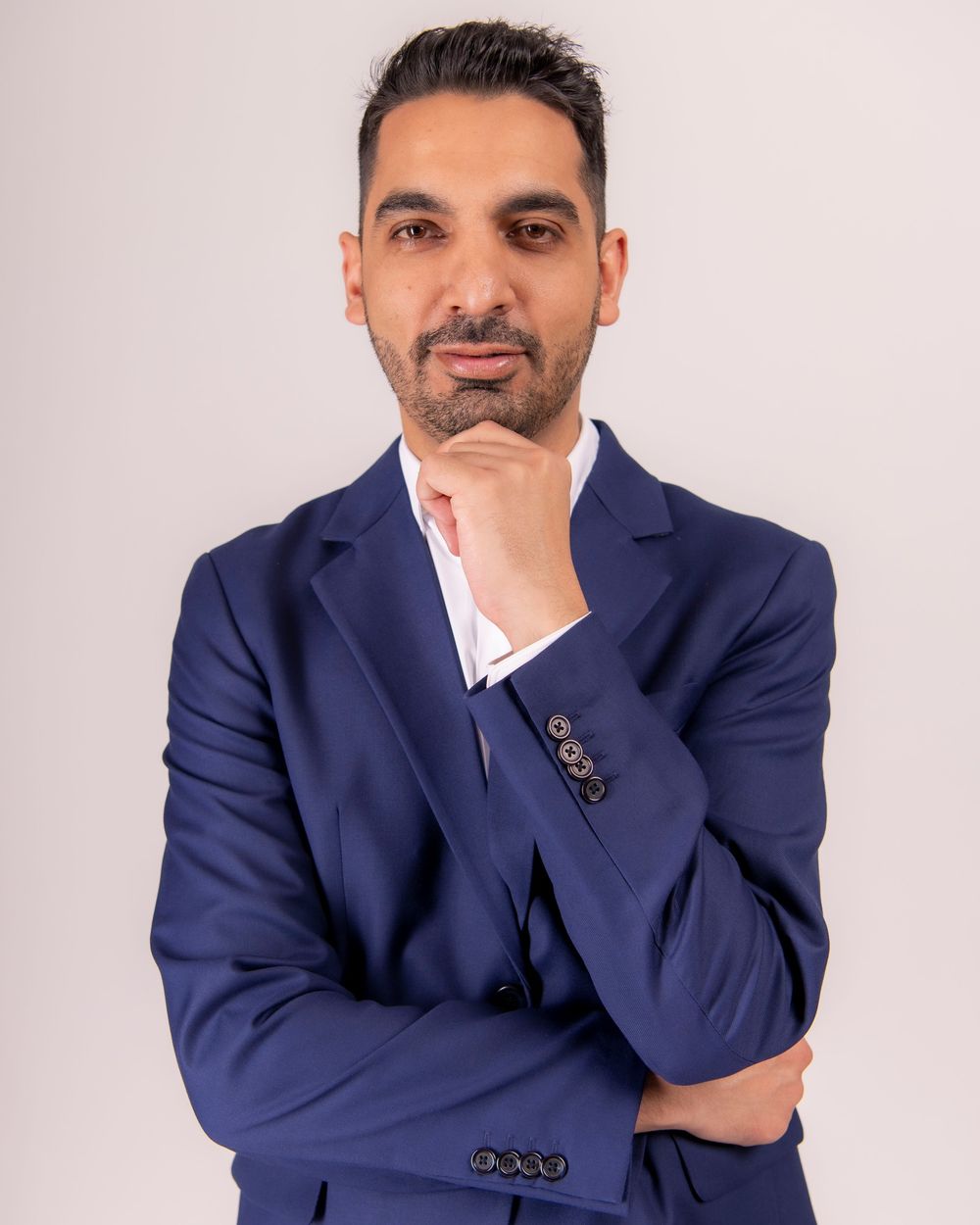
Incoming RAF boss Waseem Carrim says fraud and corruption will face consequences as he prepares to take over the embattled fund.
It could be the end of the road for those caught with their fingers in the Road Accident Fund's cookie jar if its incoming boss gets his way.
Waseem Carrim, who takes over as chief executive of the embattled RAF on November 1, said the axe would fall on anyone at the fund involved in fraud or corruption, no matter how senior they are.
"Citizens, the private sector and NGOs who are also willing to do wrong things should be aware that we will pursue them," Carrim told IOL.
"Our culture has led to a lack of consequences, and I think we have to be very strong on consequences."
Carrim, 38, who led the National Youth Development Agency, or NYDA, for seven and a half years, was announced by Cabinet as the fund's new chief executive last Wednesday.
He comes to the RAF from the National Student Financial Aid Scheme, or NSFAS, where he served as acting chief executive and said he was leaving with regrets.
He takes over a fund whose board was dissolved by transport minister Barbara Creecy in July 2025, after she found it had failed to act in the RAF's best interests and had not fulfilled its fiduciary duties.
The Auditor-General told Parliament's standing committee on public accounts, or Scopa, that the RAF's clean audit in 2019/20 was followed by two audits in which its financial records could not be verified and three adverse opinions.
The RAF had long relied on outside law firms to defend it in court, but after the panel was scrapped, the Special Investigating Unit said the fund had racked up R4.7bn in default judgments – court orders made when it failed to defend claims against it – in a letter disclosed in court papers last year.
In November 2025, the fund placed four senior executives on precautionary suspension pending an investigation into administrative and governance matters.
Carrim was born in 1988 and grew up in Nirvana, a small Indian township in Polokwane, Limpopo.
He described his family as working class, with a father who was a medical doctor, a mother who was an accountant, and one sister.
His grandparents were anti-apartheid activists, and Carrim said that gave him an early understanding of social justice.
His favourite childhood memory was staying up late with his family, all crammed into the living room watching sport together.
"Sports events were a big thing in our family," he said.
"The games used to be late, and I used to beg my parents to let me stay up.
"There wasn't enough space on the couch, so you'd be seated on the floor.
"It's that idea of being in this full house and experiencing moments you look back on, which were very rich."
Carrim said his grandfather had the biggest influence on him, and that watching him later develop Parkinson's disease was difficult.
"He taught us a lot about independence and working hard and discipline," Carrim said.
"It wasn't always a lot of hugs and love, but we learned what independence is about."
Carrim said he was shy and introverted at school, and that sport was what brought him out of his shell.
He moved to Gauteng in Grade 11 to finish school there.
He admitted he was not always the brightest student, but said a strict maths teacher taught him that deciding something was too hard before trying was already setting himself up to fail.
"He was a very harsh disciplinarian, but I always remember he used to say one thing to us," Carrim said.
"If you keep telling yourself in life that something is hard, your body, your mind, your soul, everything will make it hard.
"If you tell yourself something is hard before you start it, you've already made no effort to resolve it."
Accounting was never his first choice.
"I definitely didn't want to be a chartered accountant," he said.
"I really wanted to be a journalist, but my dad said 'absolutely not'.
"He said I can go study accounting and then write for the newspapers later, which I actually ended up doing."
Carrim said he went on to write a column for Independent Media for a while.
He studied accounting at the University of Pretoria, where the university asked him to stay on and serve part of his articles in its accounting department.
He said lecturing and tutoring there forced the shy student out of his comfort zone.
"It helped me build a lot of confidence," he said.
"I think it was really there that I developed a love for working with young people, because I had to work with young people from very different walks of life."
He completed his articles at KPMG, where many of his clients were public bodies, including the CSIR and the NYDA.
He later earned a master's degree in taxation from the University of Pretoria, and completed an MBA in 2019.
When the NYDA, then trying to clean up its governance, asked him to join as chief financial officer in 2014, he was 26.
"A lot of people said, you're committing absolute career suicide," Carrim said.
"But the idea of public service was appealing to me.
"When you work in the private sector, you're there to make money, and a career should have more than that."
After Khathu Ramukumba resigned in 2017, Carrim stepped in as his replacement on an acting basis.
"He said, just six months," Carrim said.
"I ended up being CEO for seven and a half years."
When NSFAS announced his appointment in March 2025, it said that under his leadership the NYDA had achieved nine consecutive clean audits and grown its budget from R400m to R1.5bn.
Carrim was careful not to overstate his record.
"There were a lot of successes, and a lot of failures as well," he said.
"I don't want to paint it as just a positive picture, because SA still has that nagging sense of the high levels of youth unemployment."
He was named one of the SA Institute of Chartered Accountants' top 35 under 35 in 2016 and one of the Mail & Guardian 200 Young South Africans in 2018.
"I've never been in it for the awards," he said.
"I appreciate that my work was recognised, but that's never been the basis of what you do."
In March 2025, he became acting chief executive of NSFAS, which had just come out of administration.
"It was chaotic when I got there," he said.
"Disbursements were not on time, and students were protesting all over the place."
Carrim said that over his 18 months there the scheme was stabilised, and that the start of the 2026 academic year was widely seen as the best in years, with few protests.
Two months into the job, in May 2025, Carrim appeared before Parliament's portfolio committee on higher education, which heard that students had gone months without their allowances and faced eviction, and that some landlords were still owed money going back to 2023.
The committee was also told that only about 34,000 of more than 70,000 appeals from students who had been refused funding had been finalised.
Carrim told MPs that NSFAS was not operating in a perfect system, and asked for six months to turn the scheme around.
On May 3, the NSFAS board appointed Carrim permanent chief executive, hours after two board members resigned.
Higher education minister Buti Manamela said the board no longer had a quorum and could not take lawful decisions, and he placed the scheme under administration the next day.
On August 14, the Pretoria High Court suspended the administrator's appointment and reinstated the board.
Earlier this year, UCT students marched to the NSFAS offices in Cape Town and then to Parliament, calling for the R55,000 accommodation cap to be scrapped, saying it had left some of them in debt and unable to register or graduate.
Carrim, who accepted their memorandum, told the students that the state did not have unlimited money and that NSFAS now spent more on student accommodation than on tuition.
Carrim said the constant upheaval at NSFAS made it hard to get the job done and left him wondering whether the scheme would ever have the stability it needed.
"There were a lot of unfulfilled promises and a lot of dreams deferred from my tenure there," he said.
"The decision to put it under administration again, and the court judgment which then restored the board, gave me a negative sense that there would never be stability at NSFAS.
"That makes it quite difficult to do your work as the acting CEO or the CEO.
"When I was approached about other opportunities, I decided it would be the better thing to take them up."
He still defended the scheme's existence, though he said it had to be reformed.
"The institutions can't be both referee and player," he said.
"There has to be a recognition that NSFAS has to be reformed, and there needs to be strong political will to execute on that reform programme."
At home Carrim is married with three children, two girls and a boy.
He said he and his wife had decided she would stay at home with the children, so that the family could balance the demands of his work.
"She's been an incredible part of the support in my life," he said.
"Having children humbles you quite a bit.
"It gives you a lot of empathy and it adds a lot of value to how you lead people and organisations."
He switches off by reading, playing tennis and going to the gym every morning, with his phone kept well out of reach.
"I've given up football, and I'm much slower than I was 10 years ago," he said.
"Keeping a healthy body and a healthy mind is something that's quite important to me."
Carrim said he took the RAF job because he believed the wider transport sector was finally getting back on track, pointing to the changes under way at Transnet and Prasa.
"The RAF has always been an organisation that has had issues," he said.
"I'm very interested in the theory of change and reform, and I think the organisation does need some of that."
Asked whether he had inherited a fund in crisis, Carrim said the word was sometimes overused.
"I don't think everything is bad in the organisation, but there are fundamental challenges," he said.
"When you enter an organisation, you listen to what those challenges are and focus on the things that are working, because you don't want to start breaking things that are working."
He said he believed the fund could be saved.
"I believe anything can be saved in SA," he said.
"I remember when we used to be in stage six, and it looked dystopian.
"Today we have a constant energy supply.
"It's not perfect, but in SA there is nothing that is beyond redemption."
Carrim said his first task would be to meet the fund's staff, so that they knew who he was and felt free to talk to him.
"Your people are your most important thing," he said.
"One man cannot do it alone. If you are able to bring the team with you, that's how you build momentum for change."
He did not say whether he would bring back the panel of outside law firms, but said he was open to working with business through the Government and Business Partnership, which the Presidency and business leaders set up in 2023 to tackle power cuts, logistics and crime.
"Government alone can't be expected to fix all of the issues," he said.
"We have to use the goodwill that exists in the private sector and civil society to address the challenges."
RAF officials told Scopa in October last year that the fund was structurally insolvent and could not clear its backlog of unpaid claims, some dating back to 2014, the way it was currently run.
Carrim asked accident victims who had waited years for payouts to give him time to settle into the fund, and said he would announce a plan to help those hit by long delays.
"Fix the fund, and ensure that there's timely processing of claims," he said.
"Allow me to get into the institution."
He said South Africans should hold him to building a strong culture of ethics at the RAF and making it an effective and efficient organisation.
"I want to be remembered as somebody who was given the opportunity to lead, and led with humility and took people with me wherever I went," he said.
"I want to be remembered as somebody who treated people with respect and dignity, and allowed them to grow in their professional and personal lives."