Enough is Enough! - IOL
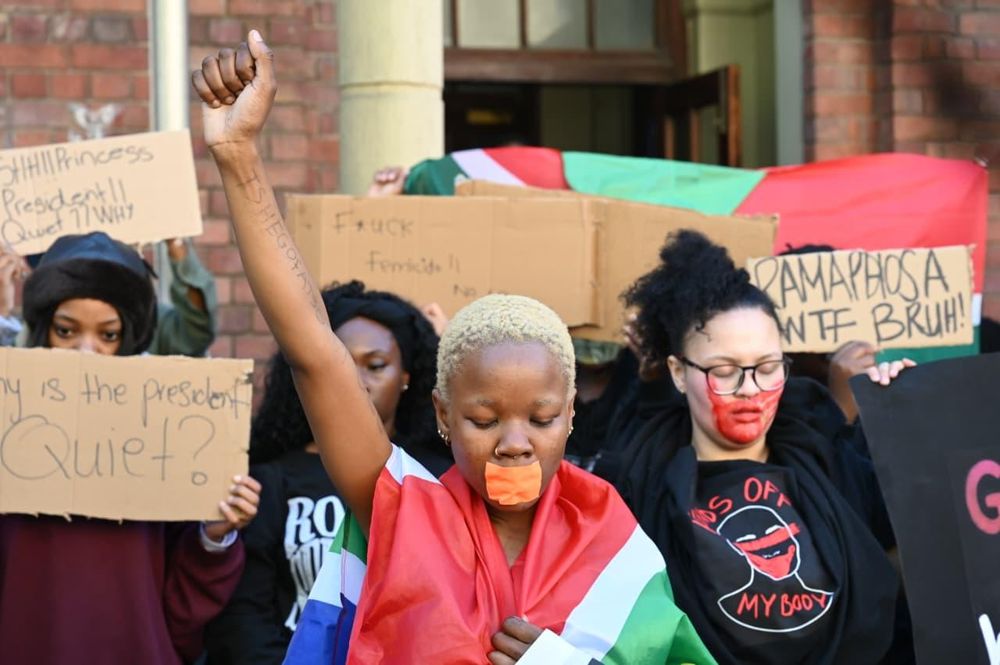
South Africans take to the streets in tribute to women killed in Ekurhuleni, with growing calls for action against GBV. Dr Iqbal Survé argues that preventing femicide requires action from men, stronger public services and greater accountability from government.
I write this today not as a businessman, not on behalf of an organisation and not in any official capacity.
I write as a South African. I write as a man. I write as a father, a brother. And I write as someone deeply disturbed by what is happening to the women of our country.
Over recent weeks, South Africans have once again been confronted with the horrific discovery of the bodies of women in Ekurhuleni. By September 17, a ninth woman's body had reportedly been discovered in the area in approximately two months.
Police must establish what happened in each case and whether these deaths are connected. We should not prejudge those investigations. But we do not need another investigation to tell us that South Africa has a femicide crisis.
Femicide, the gender-related killing of women and girls, is the most brutal endpoint of violence against women. There is no survivor to counsel and no second opportunity to intervene. There is a body, a grieving family and another woman whose future has been taken from her.
South Africa's statistics are devastating. Parliament reported earlier this year that the country's femicide rate is approximately nine women per 100,000, around five times the global average.
Research also tells us that many women are killed by intimate partners. For these women, danger can be someone they know, trust or love, someone who claims to love them.
But we must also confront another reality: women killed by men they do not know.
A woman cannot recognise the warning signs of a stranger she has never met. She cannot obtain a protection order against him or report threats he never made to her. When the predator is a stranger, responsibility for prevention shifts even more heavily towards the systems around her, visible policing, functioning public infrastructure, effective investigation and the ability to identify patterns between crimes.
Preventing femicide cannot become another responsibility placed upon potential victims.
Of course not all men kill or abuse women. But that cannot be the end of our contribution to this conversation.
If men are overwhelmingly the perpetrators of violence against women, men must become a much greater part of preventing it. We cannot leave women to fight femicide alone.
For decades, women have marched, protested and demanded stronger laws. Women share their locations and send the familiar message: "Let me know when you get home."
As men, we should ask: Why have women had to change so much about how they live while violent men have been allowed to change so little about how they behave?
Being able to say, "I have never harmed a woman" is no longer enough. We must be willing to challenge the man who does. Friendship, family loyalty and silence cannot become shields behind which violent men are allowed to operate.
If your friend beats his girlfriend, it is not simply a "relationship problem". If your brother threatens his wife, it is not merely a "family matter". Threats, stalking and escalating violence must be taken seriously.
Sometimes the warning signs are there long before the funeral.
If we are serious about ending femicide, prevention must begin long before a man becomes a perpetrator. It must begin with our boys.
As fathers and as men, we cannot abandon responsibility for raising the boy child to mothers, teachers or society and then ask what went wrong. It takes a village to raise a child, and that village cannot neglect its boys.
We must teach our sons that strength is not aggression, rejection is not humiliation, women are not possessions, and empathy, respect and self-control are qualities of manhood.
The mind is powerful. Children learn from what they see, hear and repeatedly experience. Upbringing alone does not cause femicide, but prevention cannot begin only after violent behaviour has taken root.
Men who hold influence today must act in government, business, communities, schools, religious institutions and homes. Fathers must act. Brothers must act. Friends must act.
If we want to eradicate femicide, we must help shape the boy before society is forced to confront the violent man.
We must ask ourselves an uncomfortable question: Have we allowed parts of South Africa to become a playground and safe haven for criminals and femicide perpetrators, places where predators believe they can hunt women, disappear into neglected communities and act without fear of being caught?
Government has a responsibility that cannot be avoided. In November 2025, Gender-Based Violence and Femicide was formally classified as a national disaster, an extraordinary acknowledgement of the severity of this crisis.
Almost a year later, South Africans are entitled to ask: What has materially changed?
Prevention must mean more than responding after a woman has been killed. The Government and municipalities must create environments in which predators have fewer opportunities to act. Overgrown public spaces, broken streetlights, dark pedestrian routes and too little visible policing make communities more vulnerable. Police stations need sufficient personnel, operational vehicles and resources to patrol communities and respond quickly.
Equally concerning are accounts from women who say they have reported attempted abductions or frightening encounters and provided potentially valuable evidence, including video footage, vehicle descriptions and registration details, yet felt their complaints were not pursued with the seriousness they deserved. These accounts must be properly examined. SAPS cannot afford to disregard credible information that could identify a potential predator.
A report dismissed today may contain the warning that could save another woman's life tomorrow.
We cannot tell women to report suspicious behaviour if they have no confidence that their reports will be acted upon. Nor can we tell them to avoid dark streets while accepting that streetlights do not work.
These failures do not cause femicide, responsibility always rests with the perpetrator, but the government has a duty to reduce opportunities for predatory violence and ensure credible warnings are investigated.
The government cannot only become visible once a woman's body has been found. By then, prevention has already failed.
Perhaps what concerns me most is the danger that South Africa becomes numb.
We know the cycle. A woman disappears. Her photograph is shared. Her family pleads for help. Then comes the terrible announcement: her body has been found.
There is outrage, a call for justice and eventually a funeral.
We cannot allow this to become the rhythm of South African life. Femicide is not a women's problem. It is a South African crisis.
Wathint' Abafazi, Wathint' Imbokodo.
You strike a woman, you strike a rock.
But why must our women continuously have to be rocks?
Women should be able to walk home, go to work, run alone, go on a date, leave a relationship, reject a man and say no without fearing that exercising those freedoms may cost them their lives.
South Africa has asked for too long: How many more women must die?
Perhaps that is the wrong question, because every time we ask it, another family has already paid the price.
What are we going to do differently before another woman is killed?
Prevention must begin with the boy, continue with the man, and be reinforced by the society and state around him.
Women have fought this battle for too long. Men must stand alongside them, challenge other men and raise the next generation differently.
As a South African man and father, I cannot accept that fear and femicide should become normal features of life for the women with whom we share this country.
Dr Iqbal Survé is a businessman, entrepreneur and philanthropist.
* Dr Iqbal Survé is a businessman, entrepreneur and philanthropist.
** The views expressed do not necessarily reflect the views of IOL.