Electric scooter battery fire destroys university bus in Faisalabad
Direct Source Verification:
This story is aggregated from The Express Tribune (tribune.com.pk). Full reporting rights and copyright belong to the primary publisher.
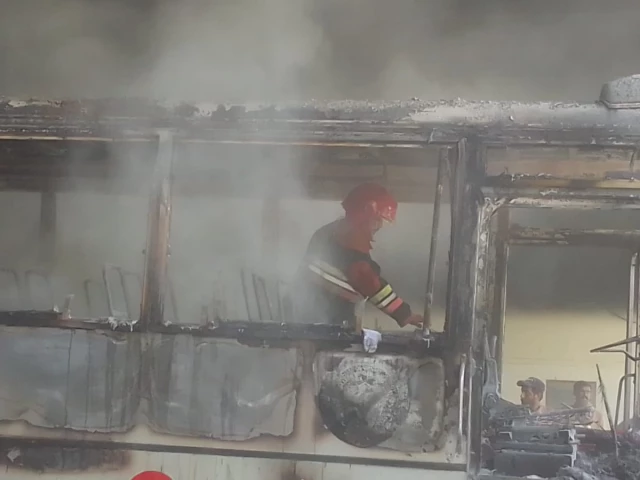
Rescue 1122 contains blaze after a scooter caught fire while charging at GCWUF, with no casualties reported
A fire broke out in the parking area of Government College Women University Faisalabad on Wednesday after the battery of an electric scooter reportedly exploded while charging, destroying a parked university bus and seven other electric scooters.
Rescue 1122 teams brought the blaze under control, and no injuries or casualties were reported.
According to Faisalabad Rescue 1122 spokesperson Faisal Anwar, the university’s fire safety system was activated during the incident, alerting security officials on duty. “The support staff evacuated the area,” he said, adding that Rescue 1122 teams reached the scene and contained the fire.
The incident, however, raised questions about the safety of charging electric scooters on university premises, particularly the location of charging points and the proximity of vehicles and other combustible assets.
The university’s communication officer, Dr Ammara Javed, said the prompt response helped prevent casualties. “It is fortunate that no casualty occurred due to the speedy response of the university administration. However, the complete destruction of a university bus and some other scooters is a matter of concern. University students and staff remained safe in this unfortunate incident,” she said.
The cause of the fire had not been established, and it was too early to assign responsibility. Battery fires can result from several factors, including physical damage, manufacturing defects, electrical faults, incompatible chargers, overheating or problems with battery management systems.
Research published in the Fire Safety Journal in 2026 highlighted the risks associated with thermal runaway in lithium-ion batteries, a process that can cause rapid heat generation, gas release and ignition, with burning particles potentially being projected beyond the battery itself.
The incident also comes as Punjab expands its electric mobility infrastructure. Under the provincial government’s electric mobility policy, efforts are under way to develop charging infrastructure, while the Higher Education Department and Energy Department have been working on solarisation and electric vehicle charging facilities at 355 colleges, including 179 women’s colleges.
The growing use of electric vehicles on campuses makes the establishment of clear and uniform charging and fire-safety protocols increasingly important.
Safety measures generally include using compatible, manufacturer-approved chargers; avoiding the use of damaged, swollen or modified batteries; keeping charging points away from heat sources and combustible materials; and ensuring that charging areas can be monitored.
A recent academic study on electric mopeds in Lahore also identified battery damage, overcharging and exposure to heat among potential fire risks.
A technical inquiry into the Faisalabad incident could determine whether the battery, charger or electrical connection malfunctioned and whether the scooter was being charged at a designated facility. It could also examine the separation between charging areas and parked buses, the availability of appropriate firefighting equipment, staff training and access for emergency responders.
While the absence of casualties was a positive outcome, the incident highlighted the need for fire safety to keep pace with the growing use of electric scooters and other battery-powered vehicles on educational campuses.
Original Source
https://tribune.com.pk/story/2632276/electric-scooter-battery-fire-destroys-university-bus-in-faisalabad