
Election Commission is a 3-member constitutional body, not another name for its Chairman - The Indian Express
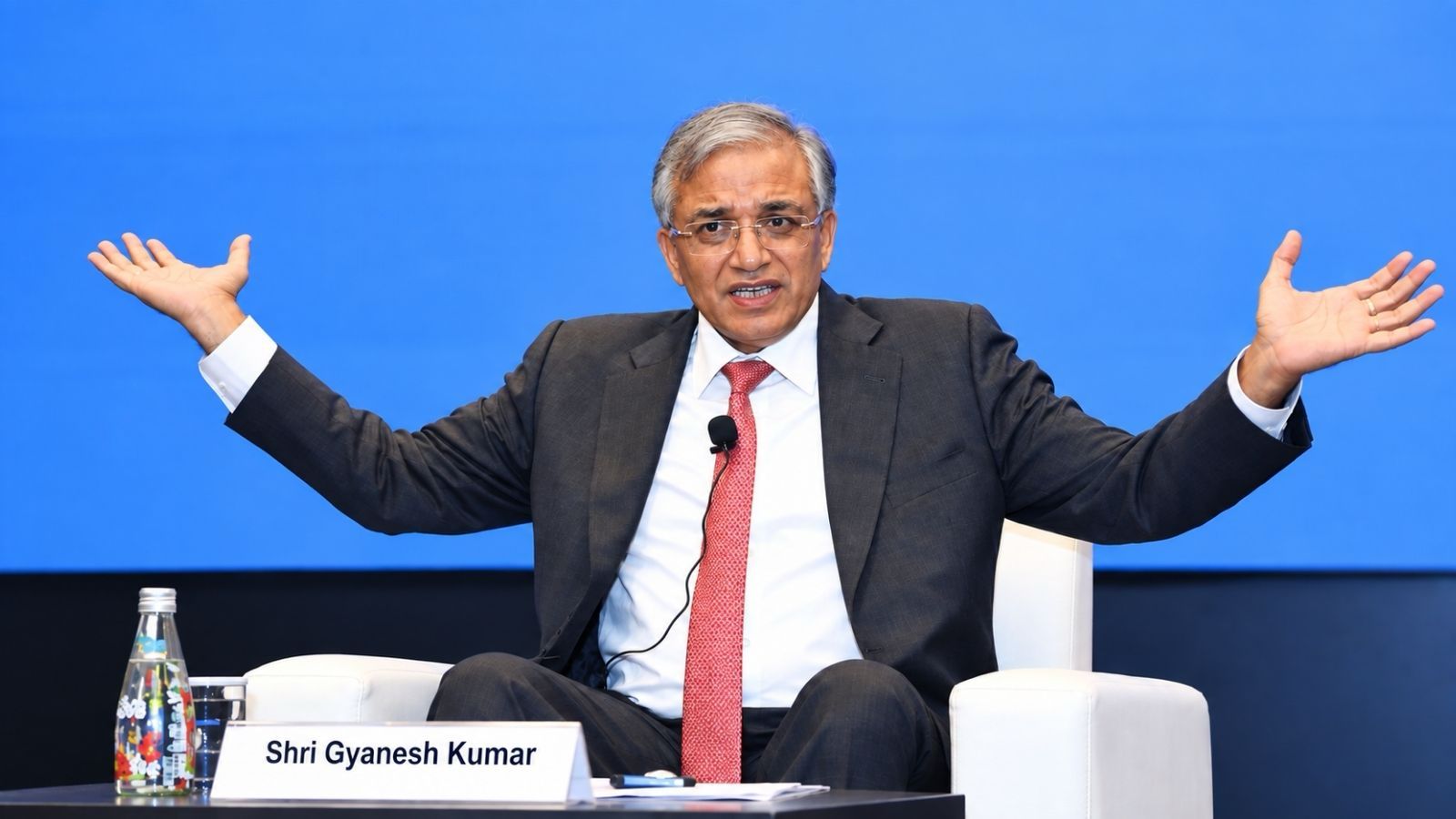
For more than a year, I have written critically about the Special Intensive Revision (SIR) of electoral rolls: Its de novo character, its documentary burdens, its treatment of EPIC, its emphasis on deletion, and the shocking numbers left out of draft rolls. I did so with some diffidence. The Election Commission is an institution I served for many years. I know its strengths, and I have often called it one of the great gifts of our Constitution.
After today’s disclosures in The Indian Express, I wonder whether I was critical enough. The investigation reports that Election Commissioners Sukhbir Singh Sandhu and Vivek Joshi recorded objections at least 14 times in 10 months to decisions and orders which, they said, were taken without their knowledge. Their concerns went to the core of the Commission’s work:
If the record is as reported, the controversy changes fundamentally. The question is no longer only whether SIR was wise, fair or administratively sound. A real question arises: Were decisions being taken by the Election Commission at all? If not, can these be held legal?
The law is unusually clear. Section 18(2) of the Chief Election Commissioner and other Election Commissioners (Appointment, Conditions of Service and Term of Office) Act, 2023 provides that all business of the Commission shall, as far as possible, be transacted unanimously. If the CEC and Election Commissioners differ, the matter “shall be decided according to the opinion of the majority”. Section 18(1) goes further: Even the procedure for transaction and allocation of business may be regulated only by unanimous decision.
Unanimity is the statutory norm. Where unanimity fails, the majority decides. Unilateralism has no place.
The principle is older than this statute. In T N Seshan v Union of India (1995), the Supreme Court stressed that Article 324 entrusts elections to the Election Commission, not to an individual. Its warning seems written for the present moment: “It would be wrong to project the individual and eclipse the Election Commission.”
That sentence deserves to be framed in Nirvachan Sadan.
This is not the familiar case of one Commissioner dissenting from two colleagues. Here, two of the three members, a majority of the Commission, say decisions were taken without their knowledge. They were not outvoted. They were apparently bypassed. A majority cannot be a dissenting minority. If two Commissioners differ from the CEC, Section 18 tells us whose view prevails.
The legal consequences are serious. Consider any substantive decision which the law vests in “the Election Commission” but which was taken in its name without being placed before the Commission, or without cover from a lawfully adopted allocation of business. Such a decision, prima facie, is ultra vires. A letterhead cannot supply authority that the statute withholds. The Commission is a three-member constitutional body. It is not another name for its Chairman.
The Form 6 episode illustrates the problem starkly. Joshi reportedly recorded in May that Form 6, prescribed under the Registration of Electors Rules, could not be altered by an SIR direction without amending the Rules. Sandhu concurred. Yet the altered form appeared on ECINet. In August, Sandhu called the change “unauthorised/illegal” and sought its immediate removal. There was not merely an absence of consensus here. There was already a recorded majority view against the change.
More troubling still are the disclosures about ECINet. The Electoral Registration Officer is the statutory authority for additions, deletions and corrections. Yet the two Commissioners repeatedly warned that access to the electoral-roll database was being centralised in Delhi, and they sought safeguards, including an independent technical audit. In Goa, 97 people were reportedly found eligible by their EROs after producing documents, but the software did not permit their restoration.
Technology cannot rewrite a statute. A computer programme cannot overrule a statutory officer.
Then there is West Bengal. Of 38.31 lakh appeals filed before tribunals, 22.21 lakh were filed by deleted voters seeking restoration. Another 16.10 lakh were reportedly EC seeking deletion of voters. Sandhu asked who had authorised appeals “on behalf of ECI”, recording that neither he nor Joshi had been informed. When a majority of a constitutional body asks who authorised litigation in that body’s name, the question is not procedural trivia.
I owe Sandhu and Joshi an apology. It is not for anything I said publicly but for thoughts I privately entertained. Watching the Commission keep an almost monolithic public face during the SIR controversy, I sometimes wondered whether the two Commissioners were being too timid, and whether their silence meant acquiescence.
Today’s report suggests otherwise. They were putting objections on file, questioning decisions, seeking safeguards around the electoral database, and even approaching the Cabinet Secretary when they believed institutional processes had been breached. One may still ask whether they should have spoken publicly. But conscience recorded on file is conscience nevertheless.
There is little satisfaction in feeling vindicated. Since the Bihar SIR began, I have questioned several things:
Those concerns were sometimes dismissed as criticism from outside. We now know that strikingly similar questions were being asked inside the Commission itself.
That is the real significance of these revelations.
The response should be institutional, not partisan. The Commission, meeting as a Commission, should do the following:
Where the Commission will not act, the Supreme Court will have to step in.
For years, the central question about the Election Commission has been whether it is independent of the executive. Today another question is unavoidable: Is the Election Commission functioning as an Election Commission?
The Constitution created a Commission. Parliament prescribed collective decision-making. The Supreme Court warned against allowing an individual to eclipse the institution.
A constitutional authority that demands strict compliance with electoral law from nearly a billion voters must begin by complying strictly with the law governing itself.

