EC calls objection notes ‘part of decision-making’, skips key concerns raised - The Indian Express
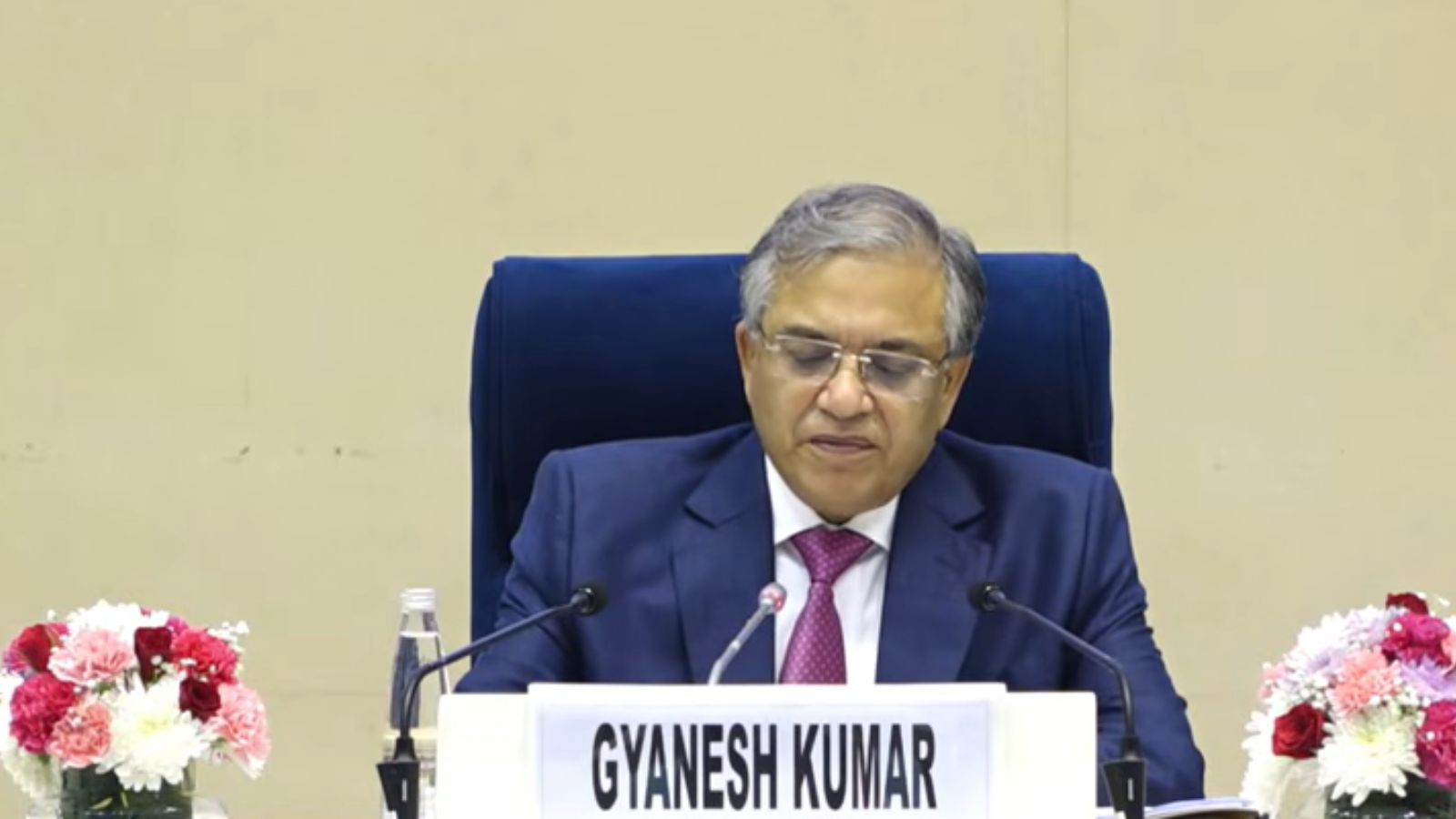
A day after The Indian Express reported that two of its three members had objected, on record, at least 14 times in 10 months to decisions taken without their knowledge, the Election Commission of India (ECI) on Wednesday acknowledged the notes, but described them as part of its “decision-making process”. It did not respond to the specific concerns raised by the two Commissioners.
“Differing views and observations are a normal part of deliberation in any institution,” the Commission said in a press note. “They are a part of the decision-making process before a final decision is taken.” The “written notes, observations, technical suggestions and internal checks-and-balances” by its members, it said, were “standard, ongoing practices”, and “the suggestions given by the Commissioners were for further improving the electoral processes”.
In recent months, the note said, the Commission “has taken numerous decisions, issued instructions, introduced around 40 new initiatives and undertaken many electoral reforms including the conduct of Electoral roll revision (including SIR) across the country. All these decisions are an outcome of the unanimous decisions of the full Commission in the past one year.” It said that highlighting “certain specific internal notes/observations spread over the period of 10 months while overlooking the much larger body of approvals, decisions, instructions and initiatives give only one part of the picture”.
The Commission did not dispute the existence, dates or contents of any of the 14 notes. It did not say who approved the change to Form 6, who authorised the lakhs of appeals filed on behalf of the ECI against restored voters in West Bengal, why the two Commissioners’ proposal for an audit of ECINet went unanswered, or why the full Commission did not meet between May and August. It also did not respond to the questionnaire sent by The Indian Express on September 21.
On the electoral-roll software, the Commission said its digital platforms “operate under strict data security protocols to prevent unauthorized tampering” and that Electoral Registration Officers and District Election Officers “function as per statutory powers for registration and deletion under law”. Election Commissioner Sukhbir Singh Sandhu’s August 14 note, however, recorded that officers were reporting they “don’t have proper and complete access to the ERONet portal”, and that the Director General of IT “doesn’t have any legal authority to restrict” them.
The Commission’s assertion that decisions were unanimous leaves unanswered how the objections recorded by the two Commissioners fit into that process.
One example is Form 6. On May 16, Election Commissioner Vivek Joshi recorded on file that the form “cannot be altered without making amendments in the Registration of Electors Rules, 1960” and advised sending the proposal to the Government. Sandhu concurred on May 19.
In July, the SIR declaration appeared on the online form anyway. Sandhu learnt of it from The Indian Express’s July 12 report. On August 13, he wrote that the change had been made “in spite of these very clear views expressed by two Election Commissioners”, called it “unauthorised/illegal” and directed that it “must be removed immediately”. As of Tuesday, the question remained on the form.
A second example is the work-allocation order of July 28. It was issued within hours of a Senior Deputy Election Commissioner being given temporary charge of the Administration Division and changed, in the two Commissioners’ words, the allocation “especially with regard to IT/ICT”.
Joshi wrote that it was issued “without discussing or informing the revised allocation of work with the Commission or the undersigned”. When he asked for the file, he wrote, “it was not provided”.
On July 29, both Commissioners wrote separately to the Cabinet Secretary, calling the order a “clear violation of Section 18(1) and 18(2)” of the 2023 Act and seeking action against the officer. On July 30, they jointly set aside the new allocation.
The Commission’s press note does not mention the order, the two letters to the Cabinet Secretary or the subsequent reversal.
The Express investigation, published Tuesday, was based on internal notes and letters from October 2025 to August 2026 in which Election Commissioners Sukhbir Singh Sandhu and Vivek Joshi recorded that a statutory voter registration form was changed against their written advice, that control of the electoral roll software had been centralised in the Commission’s IT division over their objections, that lakhs of appeals had been filed in West Bengal without their knowledge of who authorised them, and that a work-allocation order had been issued without the Commission’s approval, prompting both to write to the Cabinet Secretary. Their most serious notes were copied to Chief Election Commissioner Gyanesh Kumar.
An award-winning journalist with 19 years of experience reporting on politics, governance, and public policy, Ritika Chopra is currently Resident Editor of The Indian Express, Mumbai. She oversees the edition’s editorial coverage and reporting on the city and the wider region. Previously, she has served as Chief of the National Bureau (Government) and National Education Editor in New Delhi, leading coverage of government policy and education. Ritika has closely tracked the Union Government, with a focus on politically sensitive institutions such as the Election Commission of India and the Education Ministry, and has authored investigative reports that have prompted official responses. Ritika joined The Indian Express in 2015. Previously, she was part of the political bureau at The Economic Times, India’s largest financial daily. Her journalism career began in Kolkata, her birthplace, with the Hindustan Times in 2006 as an intern, before moving to Delhi in 2007. Since then, she has been reporting from the capital on politics, education, social sectors, and the Election Commission of India. ... Read More