Durban film workshop creates pathways for Deaf and Blind storytellers - IOL
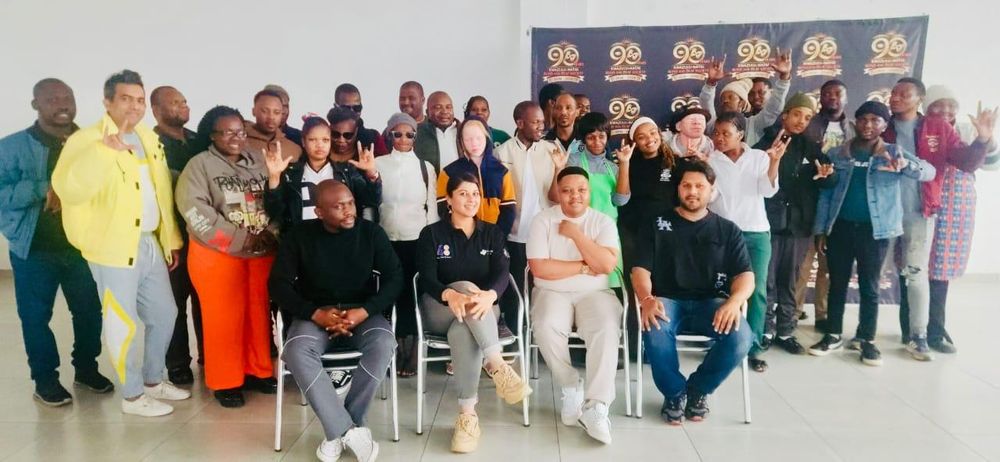
Creating together: Participants and organizers of the inclusive filmmaking workshop hosted by the KZN Blind and Deaf Society in Durban Central during Deaf Awareness Month. The initiative gave Deaf and Blind participants an opportunity to explore filmmaking, create short films using mobile phones and learn about opportunities within the wider film industry.
Thirty Deaf and Blind clients took on the roles of filmmakers rather than spectators when the KZN Blind and Deaf Society hosted an inclusive filmmaking workshop in Durban Central on Thursday, September 17, as part of Deaf Awareness Month.
Held at the society’s premises in Ismail C Meer Street in partnership with the Durban 48 Hour Film Project, the one-day workshop exposed participants to filmmaking skills and career paths while creating opportunities for authentic Deaf and Blind representation in the industry.
Leading the practical session was Deaf filmmaker Cinatemba Mthati of Scara Green Films, who has written, directed, and screened a short film in the 48 Hour Film Project for three consecutive years.
This local drive for inclusion mirrors a dramatic evolution in screen history. While early silent cinema offered natural accessibility through visual mime, the arrival of synchronised sound in the late 1920s effectively shut Deaf audiences out for decades.
Since then, accessibility for both Deaf and visually impaired viewers has undergone a remarkable shift—evolving from unassisted viewing and technological exclusion to open captions, descriptive audio, and immersive multi-sensory experiences. Today, accessible mobile technology allows Deaf and Blind creators to move beyond passive consumption and step directly behind the camera.
During the Durban session, participants were divided into groups and challenged to create short films using their mobile phones, with two groups successfully writing, directing, and performing their own stories.
For Deaf participant Zanele Ntsebesha, the workshop offered an engaging introduction to performance and advocacy.
“I feel great about the film workshop. I enjoyed my character very much and the person teaching made me enjoy participating. I enjoy raising awareness about acting as Deaf and Blind. I wish I can explore more in acting,” Ntsebesha said.
Fellow Deaf participant Mondli Ncane echoed those sentiments, welcoming the exposure to creative production.
“I felt great about the filmmaking workshop. I learned new things about acting and I really enjoyed participating. It made me feel excited and interested in learning more about filmmaking,” Ncane said.
Nerusha Maharaj Sadapal, City Producer for the Durban 48 Hour Film Project, provided insight into the broader film industry, outlining career opportunities beyond acting, including producing and location monetisation.
“It was a fun day of celebration and learning. I went in as a facilitator, but I walked out as a student,” Sadapal said, noting that participants challenged conventional ideas about inclusion.
“One of the lessons they taught me was – don’t try to be normal or fit in. Normal is scary. They don’t want to be seen for their disability, but for their extraordinary vision.”
The workshop also doubled as an audition platform for The Night Watcher, an upcoming inclusive short film funded by the National Film and Video Foundation (NFVF), which is actively seeking a Deaf actress for its lead role.
With South African Sign Language (SASL) recognised as the country's 12th official language, organisers hope the Durban initiative will establish ongoing training and development pathways for Deaf and Blind creatives across KwaZulu-Natal.