Dorothy movie review: Karthik Subbaraj’s film will make everyone uncomfortable
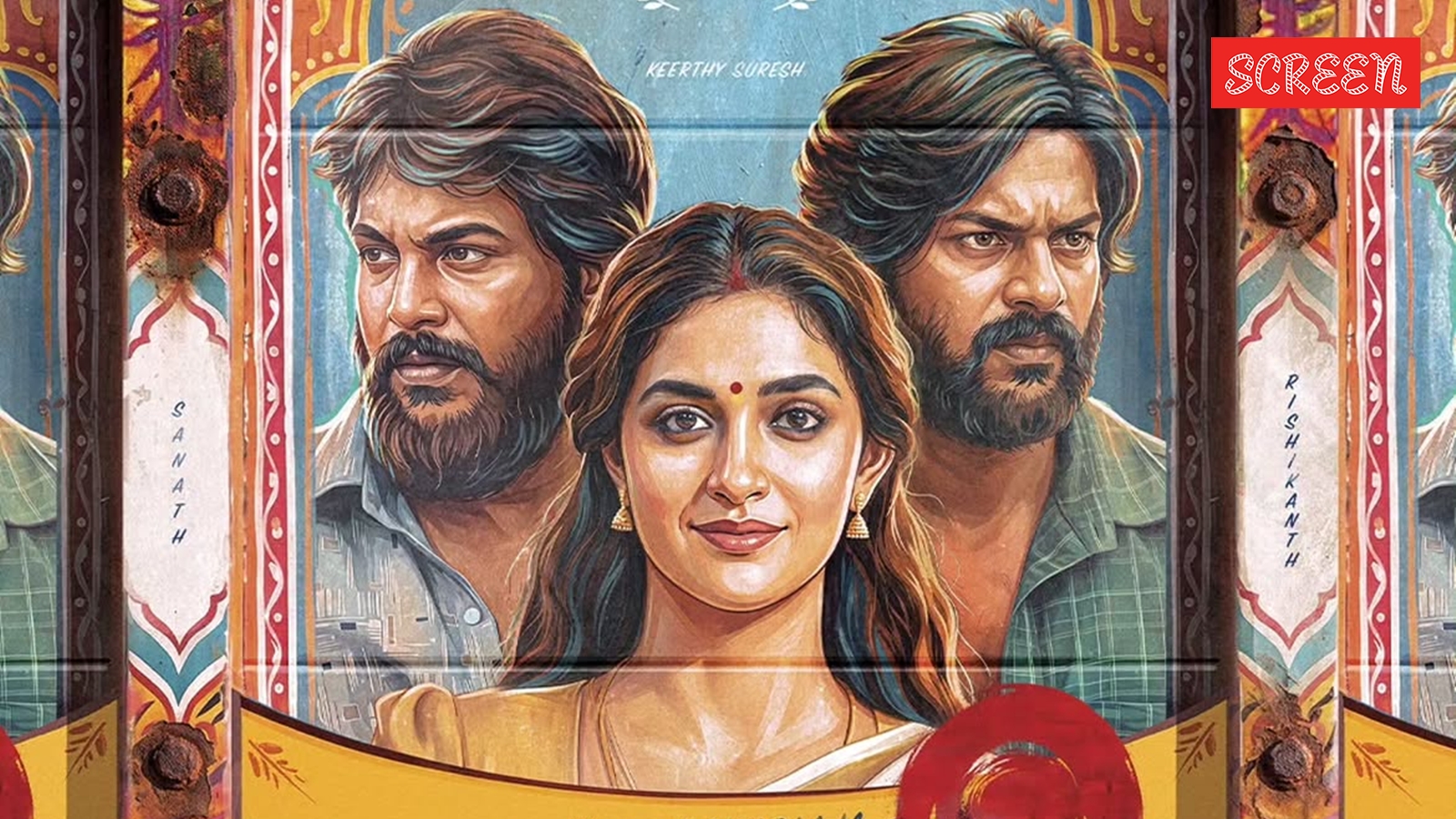
Dorothy movie review: Dorothy is raw. In fact, it may be the rawest film director Karthik Subbaraj has ever made. It could even be described as one of the most rustic Tamil movies in recent times. The only thing cinematic about Dorothy is probably that it features music. But even Ilaiyaraaja’s spellbinding score is so raw that it only accentuates the film’s essence.
Set in the 1990s in a village where caste, class, toxic masculinity, and violence reign supreme — a literal dog-eat-dog world — two youngsters grow up as exact replicas of the men who preceded them. Best friends since childhood, Karthi (Rishikanth) and Subbu (Sananth) find happiness in stereotypical masculine activities: drinking, fighting, watching softcore adult films, eating their favourite food, and spending quality time with friends doing nothing.
However, their lives take a sudden turn when Dorothy (Keerthy Suresh), a Malayali, enters Subbu’s house as his sister-in-law. Not only does her arrival unknowingly create a rift between Karthi and Subbu, but Dorothy ultimately changes their lives forever, even challenging the foundations of a society blinded by norms of masculinity and savarna-ism.
Although Karthik Subbaraj has almost always addressed relevant topics through his movies, making them more than mere entertainers, Dorothy is by far the loudest expression of his politics. The drama doesn’t focus on just one theme while conveniently overlooking everything else. Dorothy touches upon a wide range of topics, and Karthik stays true to his feelings about all of them.
That’s why the movie easily comes across as the director’s most personal yet. He emphasises this not just in his writing but also in the visual language, including the way shots are composed.
From casteism and patriarchy to violence and gender politics, Karthik directly addresses all of them and calls out the social evils that segregate, discriminate, and oppress people on various grounds. Prior to Dorothy’s release, Karthik noted on social media, “The days I have spent making this film have changed me as a person, as a filmmaker, as an artiste, and as a human. This film is the closest-to-reality film I have made, and it’s the most emotional story I have told so far.”
While his intent may be noble, it’s impossible to say the same about its impact. Sure, his heart might have been in the right place, but the portrayals reek of an evident male and savarna gaze, which makes Dorothy as harmful as any other movie that propagates problematic notions.
One major issue with the drama is that it problematises and vilifies something only after a lengthy, graphic portrayal that normalises it — even if it is not glorified. For instance, Dorothy unabashedly bats for trans and queer inclusivity. The drama advocates for boys/men having the autonomy to cry whenever they need to. It challenges gender roles and exposes the politics of violence.
However, Dorothy achieves each of these goals after a normalised portrayal of the exact opposite. From graphic depictions of a trans woman and a cisgender woman being physically assaulted (in separate scenes) to the constant emphasis on patriarchal codes for boys and men, and even slightly aestheticised portrayals of violence, the drama also exploits the very things it wants to dismantle. Although it claims to challenge casteism, it more often shows its functioning and the mentality of casteist people rather than confronting it head-on.
Even while advocating for trans inclusivity, Dorothy resorts to almost every stereotype associated with the community, failing to give them the dignity they deserve on screen until the very end. Much like director Sudha Kongara’s segment Thangam from the anthology film Paava Kadhaigal (2020), Dorothy also often comes across as trans-tragedy porn.
The strong subversion in the film, where Subbu — who taught Karthi how to be a man in their childhood — eventually makes him understand the depth and expansiveness of femininity, is laudable and emphasises the writer-director’s true intention. After all, aren’t Karthi and Subbu part of the director’s name? He, in fact, slips in such quiet subversions and subtle details throughout the movie that add to its charm.
Dorothy is also technically extraordinary, showcasing Karthik’s filmmaking mastery even more so than Jigarthanda DoubleX (2023). From the brilliantly choreographed sequence in which a body is found hanging in Subbu’s house, with S Thirunavukkarasu’s camera stunningly tracking the reactions of various characters, to the chillingly raw fight sequence in an earthy field, further amplified by Ilaiyaraaja’s score, Dorothy sets a fresh benchmark for impactful visual storytelling.
While the flashback scenes are rendered in colour, the present-day sequences are in black and white — or, more accurately, colourless. In a way, this emphasises that even the last ounce of colour is gone after the chilling incident revealed at the start of the movie. With such techniques, Karthik, Thirunavukkarasu, and editor Ganesh Siva create an immersive and evocative experience.
However, after a certain point, the writing becomes quite preachy, and the film is further weighed down by its problematic elements. While Dorothy is sure to irk transphobic, patriarchal, and casteist viewers, it will also frustrate LGBTQIA+ allies and intersectional feminists due to its reprehensible depictions.
Even though Keerthy Suresh doesn’t have much screen time, she and her character breathe life into the visuals, splashing colours across an otherwise soulless world. Although her first scene — featuring her in a white Kerala saree and jasmine flowers in her hair — adheres to the Malayali stereotype often found in non-Malayalam films, her look reminded me of Kunjathol (Chanchal), the benevolent yakshi from director Hariharan’s Ennu Swantham Janakikutty (1998), adding to Dorothy’s charm, especially since the name means “God’s gift.”
Both Rishikanth and Sananth fully commit to their respective characters, and both actors deserve extra commendation for taking on roles that not many would have the courage to portray on screen.
Anandu Suresh is a distinguished Deputy Copy Editor at The Indian Express Online, where he serves as a leading voice in cinematic critique and industry analysis. He is a Tomatometer-approved film critic and a Golden Globes voter. With over seven years of rigorous experience in the media landscape, he has established a reputation for incisive, long-form commentary that bridges the gap between commercial cinema and arthouse narratives. Experience & Career Anandu’s professional journey is rooted in a deep academic and practical foundation in the humanities and communication. He holds a Bachelor's degree in English Language and Literature and a PG Diploma in Journalism and Communication. Before ascending to his current editorial leadership role at The Indian Express, he honed his skills on the news desk of The New Indian Express in Hyderabad. His career is marked by a transition from core news operations to specialised cultural journalism, allowing him to bring a structured, news-oriented rigour to the entertainment beat. Expertise & Focus Areas While Anandu’s portfolio spans the global cinematic landscape, he is widely regarded as an expert in Malayalam Cinema. His unique approach to film criticism is defined by: Cinema Anatomy: A dedicated column where he deconstructs the structural layers of films to uncover deeper sociopolitical meanings. Marginalised Narratives: A commitment to on-ground and analytical reporting on how cinema represents or fails marginalised communities. Critiquing "Performative Wokeness": Rigorous analysis of modern filmmaking trends, identifying the difference between authentic representation and superficial social commentary. Multimedia Discourse: Actively fostering continuous public dialogue on cinema through digital platforms and archival research. Authoritativeness & Trust Anandu Suresh is a trusted authority in the film journalism circuit, frequently providing exclusive coverage from major international festivals like the International Film Festival of Kerala (IFFK). His work goes beyond standard reviews; he is known for holding the industry accountable, as seen in his extensive reporting on sensitive issues like the 2017 Kerala actress assault case and the legal complexities surrounding film credits. By prioritising "Journalism of Courage," Anandu ensures his readers receive commentary that is not only intellectually stimulating but also ethically grounded and factually robust. ... Read More