
Do I want to be a homeowner or have my morning Vietnamese coffee? - The Indian Express
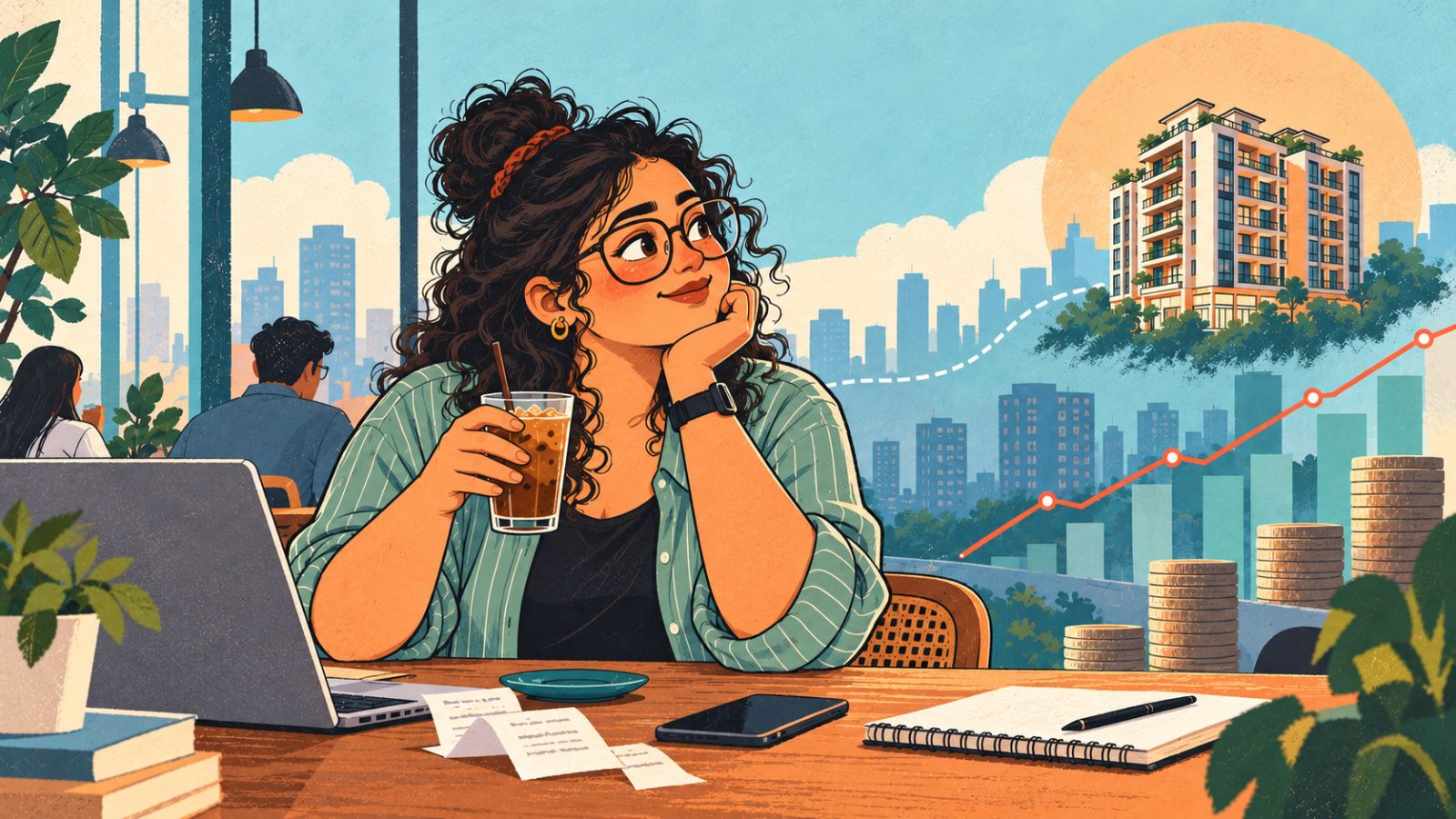
Our summers in the newsroom, especially during the early morning shift, often came with a ritual: an early morning roundtable order of Vietnamese coffee and whatever breakfast munchies we were craving that day. Nothing extravagant. At best, it happened twice a week, and we usually shelled out less than Rs 200 per order.
Who knew this was the making of our financial ruin?
We joke about it now. About how our parents, at our age, were working fewer hours than we are, earning a fraction of what we make in 2026, and somehow still managed to become homeowners. Some of them bought houses in neighbourhoods that are now considered prime real estate. Many also managed to own cars, raise children, support extended families and, somehow, have savings left over.
Meanwhile, we are staring at a Rs 200 coffee like it is Exhibit A in the case against our financial future.
Our parents routinely remind us that these “small” expenses add up. Stop ordering food. Make coffee at home. Take the Metro. Save more. Invest early. Don’t waste money on things you don’t need. And, most importantly, start thinking about buying a house and a car because one day you will need both.
The advice is sensible. The problem is that the definition of “sensible” seems to belong to a completely different economy.
Because what exactly are we saving for when the thing we are supposed to save for keeps getting more expensive—faster than our salaries? A house that once represented a few years of disciplined saving can now feel like a decades-long financial project. A car comes with EMIs, insurance and maintenance. Rent eats into salaries before the month has properly begun. And somewhere between paying bills, helping family, travelling occasionally and trying to enjoy the life we are working so hard for, there is very little left over.
So, yes, perhaps I could skip the Vietnamese coffee.
But will that Rs 200 really bring me any closer to owning a home?
Maybe Gen Z does spend differently. But perhaps we should first ask what we are spending for.
A good pair of earbuds, an OTT subscription, the occasional overpriced coffee, a concert ticket, a decent phone, a dinner after work—these are not exactly the stuff of generational wealth. They are, however, tangible things we can actually afford.
And in the corporate capitalist ecosystem most of us are employed in, optics matter. A lot. Your phone, your clothes, the restaurant you suggest for team dinner, the coffee you carry into the office, even the headphones sitting on your desk can quietly become part of how you present yourself. Trends move at terrifying speed and being “out of touch” can sometimes feel more socially expensive than being financially irresponsible.
It is also difficult to lecture a 28-year-old about foregoing every small pleasure for a house they might own at 48, when the job they have today may not exist in the same form five years from now.
We have watched companies lay off thousands of people overnight. We have watched experienced professionals apply for jobs meant for people half their age. We have been told to constantly upskill, outperform, network, be visible and remain “relevant” because there is always someone younger, cheaper and more willing to work longer hours waiting outside the door.
So yes, perhaps I could put that Rs 200 coffee into an SIP.
But I could also spend it on something that makes waking up at 5.30 am for a shift slightly less miserable.
The bigger problem is that the dream we are being asked to sacrifice for keeps moving further away. Save aggressively in your twenties, apparently, and perhaps by your forties you can own a home—provided you are comfortable spending the next 20 years paying an EMI for it.
Meanwhile, the earbuds are here. They work. The coffee tastes good. The Netflix subscription actually gives us something this month.
A house is an investment. But sometimes, when your entire working life already feels like an investment in a future you cannot see, a little bit of enjoyment in the present starts looking less like financial irresponsibility and more like proof that you are actually living in it.
I consider myself fairly financially frugal. I rarely shop for clothes, makeup or accessories. I will very happily wear my mother’s and aunts’ hand-me-downs and call them vintage. I invest in SIPs, pay for life insurance and medicare, and grudgingly do the other mandatory adult-money things that nobody warned us would be this boring. I don’t own ridiculously expensive gadgets and, barring the occasional impulse purchase, I rarely spend more than Rs 3,000 on myself.
So why does being financially responsible still feel like being financially screwed?
Maybe because the way we earn has changed just as much as the way we spend.
People my age stay back at work, answer messages on weekends and take calls while supposedly on leave—not necessarily because we are desperate to become CEOs, but because we would quite like to remain employed. We work longer hours for salaries that often don’t keep pace with inflation, while constantly being reminded that there are 200 other people who would happily do our jobs.
We book the holiday after six months of working without breathing. We buy the one slightly ridiculous bag because, after spending an entire year being professionally miserable, perhaps we deserve one thing that isn’t an Excel sheet.
Maybe these little splurges aren’t about being bad with money. Maybe they’re how we bribe our brains into tolerating the lives we’re working so hard to afford.
Because if the reward for being financially prudent, professionally exhausted and permanently employable is simply more work, I can understand why sometimes we choose the coffee.
There is an existential question lurking underneath all this that has very little to do with coffee.
What if I don’t buy a house? What if I don’t buy a car? What if I spend the next 20 years renting, travelling when I can, changing jobs, buying little things that make my life nicer and never accumulate the kind of assets my parents spent their lives building?
For a certain section of the urban working class—people who aren’t rich, but aren’t exactly living hand-to-mouth either—the definition of a “stable life” seems to be changing.
I hear people around me make the same calculation all the time: Why put Rs 10-20 lakh into a down payment and then spend the next 20 or 30 years paying a Rs 30,000-40,000 EMI, when I can pay Rs 20,000-30,000 in rent and keep the rest of my money, mobility and sanity?
There is also something else at play. We spend most of our waking lives at work. We want to earn more, climb faster and, increasingly, make enough money to retire early—not because we are obsessed with the corporate ladder, but because we would quite like to get off it before it breaks our backs.
The traditional milestones—house, car, marriage, children—all require us to sacrifice the present for a future that feels increasingly uncertain. And perhaps that’s why some of us are quietly opting out of them. Not because we don’t want stability, but because we have started questioning whether stability has to look like an EMI, a school admission and a second-hand SUV.
Maybe our generation isn’t financially irresponsible.
Maybe we are simply refusing to spend our entire youth proving that we deserve to have a life later.
And if that means a Vietnamese coffee today, a rented house tomorrow and no 20-year EMI hanging over our heads, perhaps that’s not a failure to build a future.
Perhaps that’s the future we are choosing to build.
Vaishnawi Sinha is a Deputy Copy Editor with indianexpress.com, with an experience of over 6 years in the media industry. She writes about culture, identity, and the shifting contradictions of modern India - from music and memory to politics and belonging. ... Read More
