Divorce Lawyer Has a Warning for Stay-at-Home Spouses - Newsweek
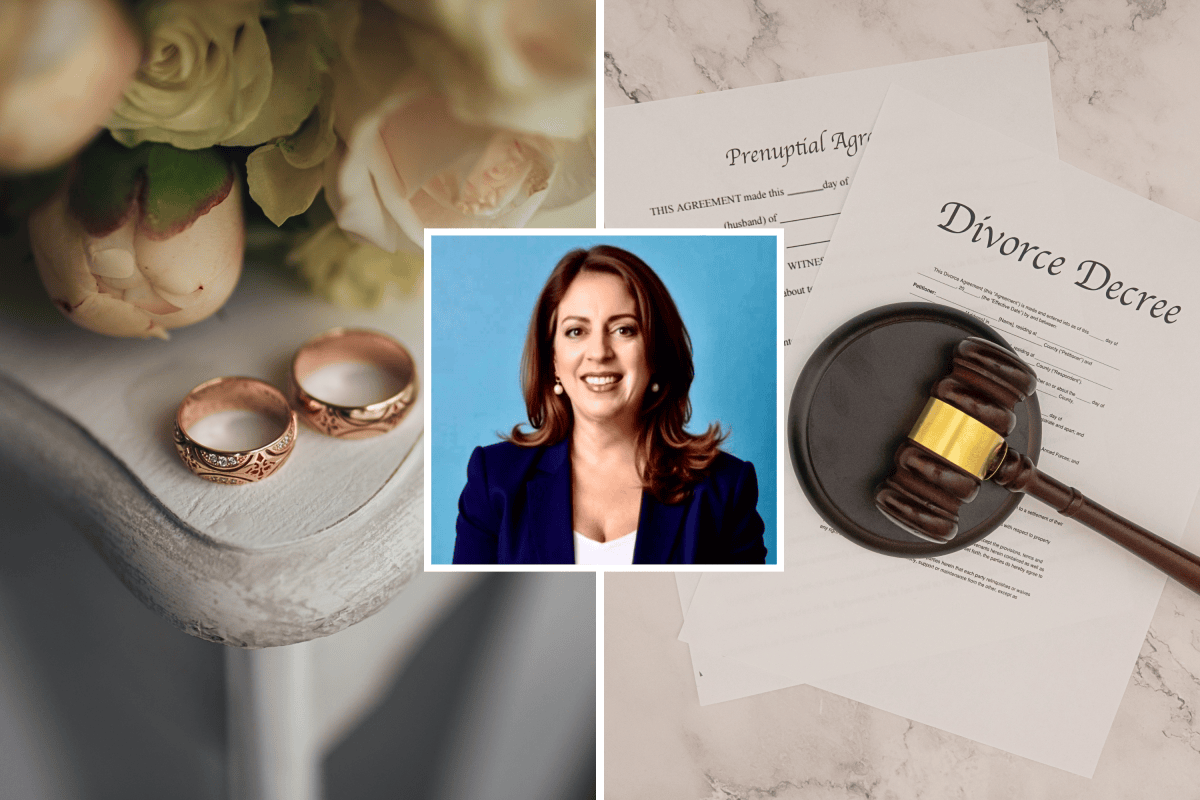
Divorce in the U.S. is changing right before our eyes, one family law attorney says. Her primary concern? Spouses who are not in employment and otherwise depend on their partner financially.
New York-based Jacqueline Harounian, the managing partner of Wisselman Harounian Family Law, told Newsweek that the great American divorce, for years, has followed a predictable pattern—until now.
In previous decades, typically one spouse, usually the husband, earned the money, while the other, usually the wife, raised children and managed the home, with courts stepping in to provide long-term financial protection for the latter if the marriage ended.
That binary reality is being phased out.
"The laws are changing, the earners are going to get to keep their money, and the spouses that are dependent will get support, for a short period of time," Harounian, 56, said. "Approximately 15 years ago, New York became the last state to enact no-fault divorce laws, and since then, the laws are becoming more gender neutral. Fathers are taking a more active role in raising children, and as a result, many are seeking 50-50 custody. On the other hand, mothers are surging in career and income power."
She continued: "All while stay-at-home mothers are receiving less in spousal support, payment of their legal fees, and equitable shares of marital property, including businesses and other assets."
The broader reality, some legal experts say, is more nuanced.
While Harounian says that family courts are increasingly reflecting social changes that reward individual earning power, another family law attorney consulted by Newsweek cautions that divorce outcomes remain highly dependent on state law—a fact that Harounian also flags—and that financial dependence is the issue families should be thinking about.
Harounian was admitted to practice before the U.S. Supreme Court in 2013, and drawing on years of experience, believes the legal landscape has evolved significantly since New York enacted no-fault divorce laws.
The result, she said, is a system that increasingly treats spouses as individual economic actors rather than members of a traditional household structure. In her view, stay-at-home spouses are securing less spousal support, receiving fewer legal-fee awards and obtaining smaller shares of marital assets than in previous decades.
"Earners are walking away with more money, and dependents are ending up with much less," she said.
That shift, Harounian believes, cuts across political and ideological lines. She said reactions to her views, which she shares online under @ny_divorce_lawyer, have resonated with both men and women, particularly against what she describes as a deeply polarized gender landscape.
For spouses considering divorce, her advice is simple.
"They must understand all of their rights and responsibilities before they make a decision," she said. "They also need to know what their spouse is expecting in terms of custody rights.
"A lot of the expectations people have do not match reality."
One common misconception, she said, is that prenuptial agreements provide a comprehensive safety net.
"That is not true," Harounian said. "Prenuptial agreements mostly safeguard inheritance rights and separate assets that existed before marriage.
"They don't protect the stay-at-home spouse in a meaningful way."
Indeed, her starkest warning is directed toward people who leave the workforce entirely to raise children or maintain the home. While she emphasized that such arrangements can work during a marriage, she said many spouses underestimate how dramatically financial circumstances can change after divorce.
"There really is no such thing as lifetime maintenance anymore," she said. "A wife who stays home might get spousal support, but it's not a guarantee.
"She has to fight for it in most cases. She has to have a plan to figure out how to support herself."
Owners of businesses, Harounian added, are also increasingly retaining most of the value they create, while dependent spouses may receive less than once expected.
"You might have the ability to pay for groceries, food and lifestyle while you're married," she said. "But once there is divorce you are not going to have that same level of support, at least not for long."
Yet not all family law practitioners think that Harounian's observations reflect a total nationwide trend.
Hannah Hembree Bell, founder of Hembree Bell Law Firm in Texas, told Newsweek that divorce law varies widely across the U.S. and cautions against treating one state's experience as representative of the entire country.
"There isn't one American divorce system," Bell said. "Divorce law is state-specific, and what may be happening in New York can look different from what families experience in Texas."
Bell noted that Texas has never broadly operated under an expectation that a stay-at-home spouse would be financially supported indefinitely following divorce. Court-ordered spousal maintenance, she said, is generally limited and designed to help a spouse meet minimum reasonable needs for the shortest appropriate period.
Eligibility for court-ordered post-divorce support in Texas is restrictive, and the amount is capped at $5,000 per month or 20 percent of the paying spouse's average monthly income.
Bell also pushed back against the notion that the higher earner can simply walk away with everything.
"Texas is a community-property state," she said. "Generally speaking, income earned and property acquired during the marriage are part of the community-property analysis, regardless of which spouse earned the paycheck."
Where Bell and Harounian find more common ground is on the question of financial dependence. Whatever the state, Bell believes couples should fully understand the economic implications of one spouse leaving the workforce.
"Being financially dependent on another adult carries real risk," she said. "Women deserve to understand the financial arrangement they're entering."
The lesson emerging from both lawyers is not necessarily that marriage has become less secure, but that divorce has become less forgiving for some. Where caregiving, earning power and family structures are rapidly evolving, the assumptions that guided previous generations no longer apply.
Contact Newsweek editors on this story: Kara Dolman and Tony Phillips.