Dichotomy in Xi’s China: Discipline vs efficiency | Hindustan Times
The Fifth Plenum of the Communist Party of China (CPC)’s 20th Central Committee concluded on October 29 by deciding to strengthen comprehensive and rigorous party self-governance. It reaffirmed President Xi Jinping’s commitment to political discipline while also calling for greater administrative competence, effective governance, and initiative among officials. Can a more extensively supervised CPC also become a more effective and adaptable governing institution?
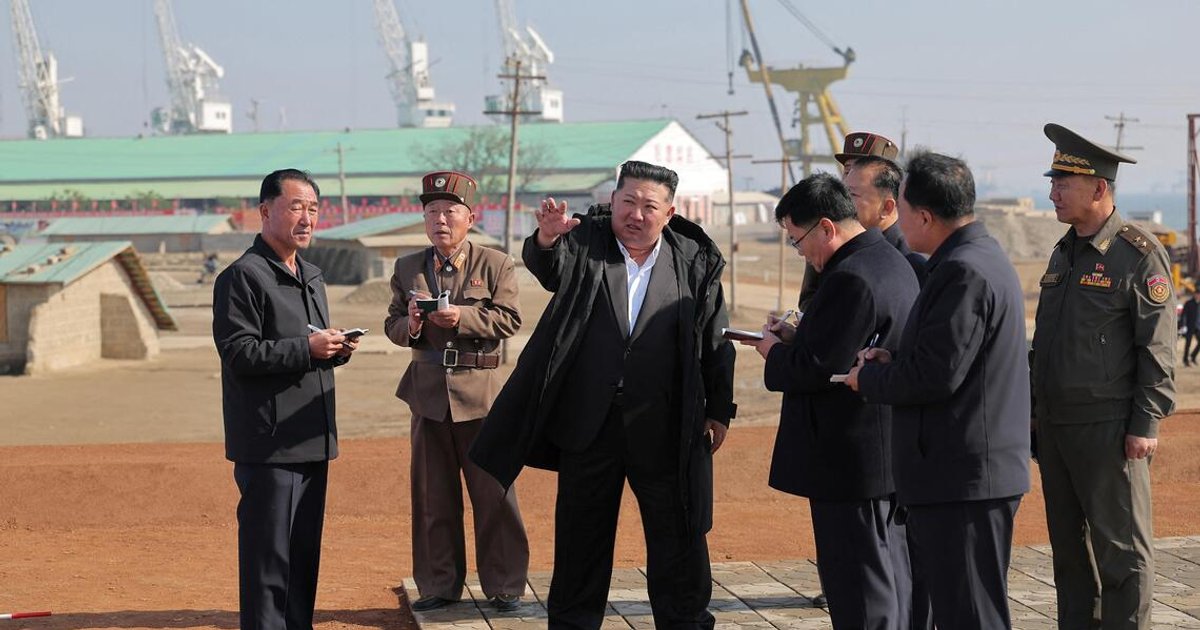
Xi Jinping has warned against institutional rules becoming hollow exercises. Excessive paperwork, bureaucratic formalism, and officials’ reluctance to assume responsibility have also been critiqued (Xinhua via AP)For Xi, this addresses a longstanding problem in Chinese governance — the gap between Beijing’s decisions and their implementation across provinces, municipalities, and local administrations. Corruption, bureaucratic formalism, selective enforcement, and local protectionism have historically compromised central policymaking. Stronger supervision can expose misconduct, constrain arbitrary authority, and improve policy coordination. The CPC has always believed that political discipline can strengthen governing capacity through more consistent implementation and greater accountability. Institutionalising these is intended to make political and administrative processes more predictable and reduce uncertainty.
The Plenum’s communiqué, however, reveals a dichotomy: Alongside reaffirming centralised party leadership and democratic centralism, it also calls for professional competence, performance evaluation, and greater initiative and creativity among officials. The emphasis on a correct understanding of official performance suggests that Beijing recognises the limits of political loyalty as a measure of administrative effectiveness. Officials must not only follow directives but also exercise judgment, solve problems and deliver substantive results.
China’s governing system has historically depended on local experimentation and administrative flexibility. Yet, when adherence to central directives becomes the dominant measure of political accountability, officials may become reluctant to exercise discretion or undertake initiatives that carry political risks. Under such circumstances, bureaucratic caution may become more rewarding than initiative, even when local conditions demand innovative responses.
The leadership is not unaware of this: Xi has warned against institutional rules becoming hollow exercises. Excessive paperwork, bureaucratic formalism, and officials’ reluctance to assume responsibility have also been critiqued. The principle of the “three distinctions” seeks to distinguish mistakes made during legitimate experimentation from deliberate violations and misconduct. The more demanding question is whether these safeguards are applied consistently enough for officials to exercise judgment and experiment without fearing disciplinary consequences.
Recently, China has highlighted efforts to reduce administrative burdens at the grassroots and improve the business environment. Such measures suggest that stronger supervision can improve administrative responsiveness alongside enforcing compliance. Nevertheless, this doesn’t establish whether the wider supervisory system encourages initiative or reinforces bureaucratic conformity.
The personnel decisions taken at the Plenum add another dimension. The meeting confirmed 33 expulsions, including senior civilian and military officials, while 279 full and alternate Central Committee members were in attendance. Zhang Shengmin, a senior military disciplinary official, was elevated to the Politburo, and ten alternate members were promoted to full membership. While the promotions indicate efforts to replenish the leadership, the removals raise questions about institutional continuity, the retention of administrative and military expertise, and the rebuilding of experienced leadership teams.
The Plenum reaffirmed Xi’s position at the core of CPC leadership. Yet, this concentration of authority raises a longer-term institutional question: How effectively can the CPC sustain collective deliberation, encourage credible policy feedback, and ensure leadership continuity within an increasingly centralised political system?
China’s industrial and technological capabilities depend on coordination among central institutions, provincial governments, research organisations and enterprises, as well as the ability to adapt to changing conditions. Centralisation can facilitate large-scale mobilisation and strategic direction, but innovation and economic adaptability also need credible information, local discretion, and opportunities to correct mistakes. For India, this distinction matters when assessing China’s strategic capabilities. Changes in China’s military leadership should not automatically be equated with diminished operational effectiveness, just as industrial strength alone cannot establish the adaptability of its governing institutions.
The Plenum has reaffirmed Xi’s determination to make rigorous CPC discipline a permanent feature of Chinese governance. Yet, the effectiveness of this project cannot be judged solely by the reach of political supervision or the number of officials disciplined. Its real test is whether centralised authority can coexist with professional judgment, credible policy feedback and the flexibility to correct mistakes. Ultimately, Xi’s challenge is to ensure that greater political control translates into better governance without undermining the initiative on which China’s long-term capabilities depend.
G Venkat Raman is professor, Humanities and Social Sciences, Indian Institute of Management, Indore. The views expressed are personal