Democrats win control of Congress - Toronto Star

In today's First Up: why people feel unsafe despite crime trending down and a hot new pasta place to check out.
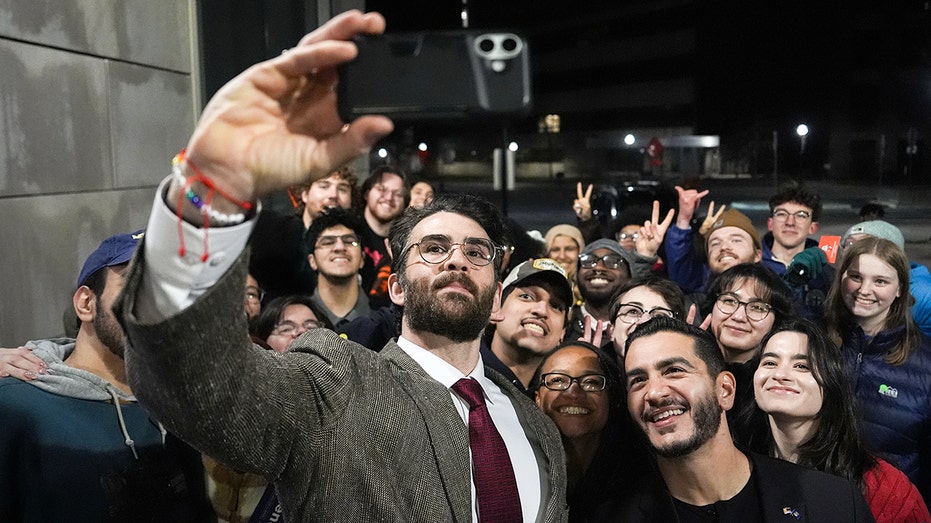
Supporters of South Carolina Democratic Senate candidate Dr. Annie Andrews cheer during her election night watch party.
Good morning. This is the Wednesday, Nov. 4 edition of First Up, the Star’s daily morning digest. Sign up to get it earlier each day, in your inbox.
The U.S. midterm election results are still being finalized, but Wednesday morning showed a Democratic Party landslide that will reshape the power balance in Washington. The party will take control of the House of Representatives. They will also have control of the Senate after flipping seats in Republican strongholds including North Carolina, South Carolina, Texas and Kansas (which sent a Democrat to the Senate for the first time since 1932). Democrats also flipped several governor’s offices, including wins by women in Ohio, Georgia and Texas. “Americans used the last real election of (President Donald) Trump’s career to deal him an embarrassing, emphatic defeat,” Richard Warnica writes in summing up the results. Find the latest updates on the election here, and follow thestar.com for more reaction and analysis throughout the day.
Children are comforted as they play at the Blessed Chiara Badano Child Care Centre in Stouffville, Ont. on May 2, 2025.
In a move one observer called “heartless and foolish,” an Ontario Ministry of Education memo says a planned $1 per hour raise for child-care workers next year will be cancelled. The memo, which arrived after the province signed on for another four years of the national child-care plan, indicates that despite the wage freeze, parents will get no relief. While the program’s objective is to bring rates down to $10 a day, they will remain where they are set now (between $19 and $22) in 2027. Kristin Rushowy has all the details.
Toronto Police walk amongst the yellow evidence cards at the Salsa on St. Clair street festival Sunday. On Saturday night two men, were seriously wounded four others
Crime in Toronto is down — in some of the most serious categories, it’s way down. Murders last year reached a 50-year low, and this year’s number is on track to be even lower. The reasons behind this, which Raju Mudhar explores today, are a bit mysterious, but the possibilities, including young folks drinking less alcohol and staying home more, are fascinating to consider.
But it’s equally fascinating that people don’t necessarily feel safer. We just went through an election in which one candidate was accused of portraying the city as “Gotham” in need of a batman to save it. The fear wasn’t just coming from his campaign: In an Ipsos poll commissioned by the Star on election issues, crime and safety ranked third highest on people’s list of concerns, and a majority said they felt the city had got less safe over the past two years. In a different poll by Liaison Strategies, 57 per cent of Canadians said they thought Toronto was an unsafe city (the second-worst reputation — after Winnipeg — among all Canadian cities).
The gap between the stats and the perception may be as tricky to explain as the reason crime is down. Possible reasons could include media coverage and political gamesmanship. A rise in one kind of very visible high-profile crime could even explain a less-visible drop in another — Mudhar considers whether headline-grabbing gun-for-hire networks that have typically targeted vehicles or buildings are a factor in the decrease in homicides and actual shootings. And increases in particularly scary forms of crime —especially carjackings and home invasions — could offset any emotional reassurance from the homicide or armed robbery numbers.
Another explanation could be high-profile incidents warping perceptions, such as the Salsa on St. Clair shooting earlier this year. But I’ve been covering the city long enough to know there has often been a scary, notable incident driving fear: the Danzig Street shooting in 2012, the Eaton Centre mass shooting the same year, the Yonge Street van attack in 2018, the rampage on the Danforth that summer, the Just Desserts shooting in 1994, the Jane Creba Boxing Day shooting in 2005 — each was an isolated incident. Each, over the course of decades, seemed to indicate a city falling to new lows of disorder.
My own theory is that visible disorder itself is a big part of the explanation. I have seen studies from the U.S. suggesting that people’s perception of neighbourhood safety correlates more with the presence of a homeless encampment than with actual crime statistics. The presence of visible homeless people makes us feel unsafe, even when they pose no real threat to us. Open drug use near safe-consumption sites almost certainly leads to the same perception of anarchy. Downtrodden people sleeping on the TTC make us feel unsafe, even if those people are mostly a threat to themselves. We see these things as signs of disorder, which makes us feel unsafe, as if our very sense of civilization is collapsing.
What do you think: Is Toronto getting safer? Does it feel safer? Do you, like Rosie DiManno, think the “it could have been me” factor guides our fear regardless of statistics? What do you think is behind Toronto’s safety “reputation gap”? Let us know in the comments section here.
Our interactive map on when your home delivery for mail might end had readers expressing reservations about the move. Those who already use a community mailbox said it isn’t the end of the world:
“I bought my first house back in 1985 in Northeast Scarborough. It came with a super mailbox and no home delivery. Since then, I’ve lived in three different parts of the GTA and never had home delivery. If I and my neighbours have been okay for the past 41 years, I’m pretty sure the rest of you will be okay too.” – Bruce
“Once-a-week home delivery for people with accessibility issues is way below any reasonable standard. It is just another way of penalizing those with disabilities.” – Rosa
The word of the day is “mogging.” If you need a definition, you can find it in the Collins Dictionary, which recently named it word of the year: It means “to outshine someone or something,” usually used in a playful or ironic way. Other new additions include “firewaves,” “carspreading,” and “friendslop.” Personally, I try to avoid mogging my pals too much if we’re playing friendslop. I think. Maybe I’ll stick to the old words.
Thanks for starting your day with us. If you enjoy First Up, please share it with a friend. And let us know what you think of the changes we’ve made, and what you’d like to see. Email firstup@thestar.ca. I’ll see you back here tomorrow morning.