Data centers drive a surge in climate tech funding - Semafor
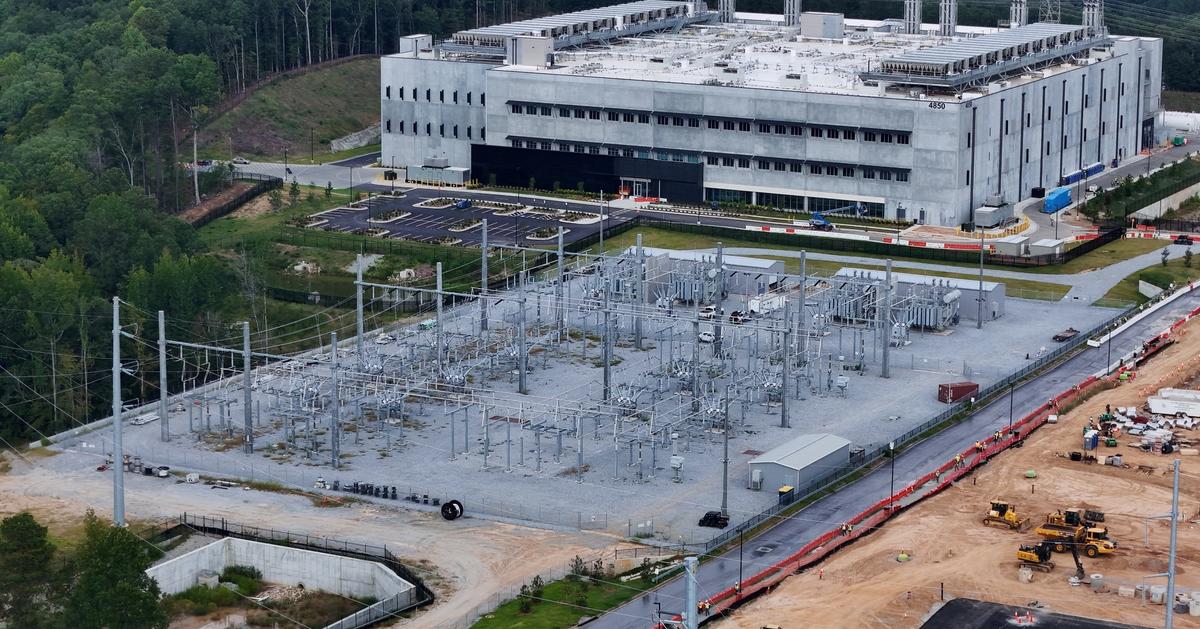
The data center buildout is driving a rush of venture capital investment in clean tech, breathing new life into startups that were at risk of being steamrolled by the Trump administration’s pullback on climate policy.
Global climate tech venture investment hit $26 billion in the first half of this year, 55% above the previous year, according to climate tech finance tracker Currence.ai. Data centers and the products and services that help them operate are in particularly high demand, with startups in the sector seeing their fundraising and valuations jump. It’s an opportunity to push some new carbon-cutting tech across the “valley of death” between pilot and commercial scale, to the benefit of the global energy transition at large — but also links clean tech’s fortunes to a digital infrastructure buildout whose ultimate scale remains uncertain.
“Venture capital sees the data center opportunity, and is focused on it,” Frank O’Sullivan, managing director for energy at VC firm S2G Investments, told Semafor. “There’s an opportunity over the next little while to see a lot more clean tech success stories emerge. The risk is that the driver of all of this — the data center bubble — might pop.”
This week, climate tech investors will descend en masse on New York for Climate Week, a forum for a vast range of cutting-edge firms to show off and find money. As political support for decarbonizing the existing energy system has dried up, data centers have emerged as a new center of financial gravity, drawing in unprecedented billions from the biggest tech and Wall Street firms. Much, perhaps most, of that investment is going into conventional energy assets that are not necessarily climate-friendly. But with AI companies under intense pressure to reduce their resource consumption — for reasons of cost, if nothing else — a lot is trickling down to tech originally conceived for the energy transition.
“We’re experiencing a very hot time for a bunch of the stuff we were already in,” said Tom Chi, founding partner of clean tech investor At One Ventures, which focuses on deep tech innovations with environmental benefits. That’s setting up potential new windfalls for shops like his: One company in Chi’s portfolio, Blue Energy, a startup building low-cost modular components for advanced nuclear plants aimed at drastically cutting the amount of time needed to build them for data centers, has seen its pre-IPO valuation shoot up by orders of magnitude. That type of growth acts like a beacon to other non-energy investors, and suddenly Chi has found his companies’ funding rounds increasingly crowded.
“It’s a really weird moment because we’re having a bunch of tourists come in,” he said. “We’re investing alongside firms that have spent their entire history doing enterprise SaaS, and now they’re sitting here trying to understand desiccants for cooling systems.”
Conversely, the focus on AI-relevant technologies is pushing climate tech VCs to look in unusual directions: S2G recently invested in Alliance North America, which makes high-end, low-emissions diesel generators. A technology that facilitates fossil fuel consumption “doesn’t seem like it would be in our bailiwick,” O’Sullivan said. But because of its use for powering data centers more efficiently, “that has mushroomed into an enormous opportunity, and suddenly you’re decarbonizing by stealth” relative to conventional generators.
More capital is usually welcome, Chi said. But firms with less experience, and less in-house engineering expertise, can have unrealistic expectations about the time, capital, and skill required to bring a novel hard tech to scale and profitability compared to software — which could ultimately lead to disappointment and cutbacks. It’s also likely that as the space becomes more crowded, more mistakes will be made, inflating the valuations of companies that don’t really have a strong business model when you get down to the nuts and bolts, and creating conditions for spectacular failures.
And if clean tech startups are only valuable when they have data centers as primary customers, some technologies that are important for emissions reduction will fall through the cracks: VC investment in carbon management tech and low-carbon fuels both plummeted this year, according to Currence.ai.