Cornell rape allegations fuel calls for safer US campuses
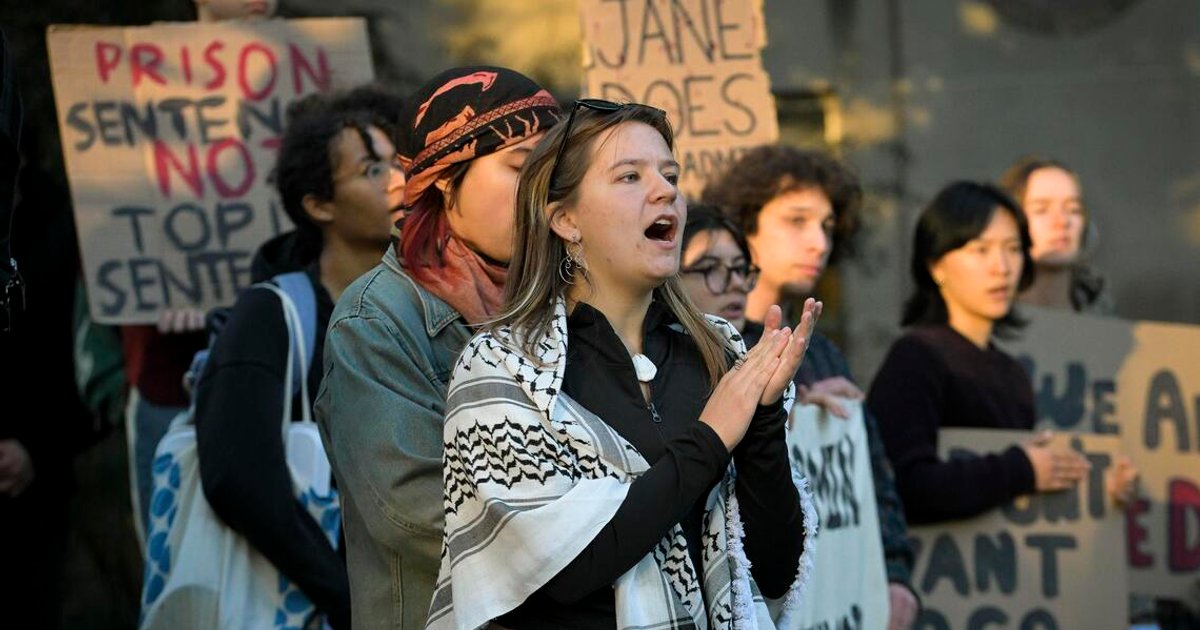
Demonstrators protesting on the Cornell campus in Ithaca, New York, on Oct 5.
As 19-year-old Jane Wang read a lawsuit accusing seven men of gang-raping a former Cornell University student in 2024, she felt a chilling sense of recognition.
The lawsuit’s account of how the university handled the case mirrored her own experience in reporting sexual assault at the Ivy League institution.
“It literally felt like a carbon copy, like a copy-and-paste version of something I had gone through with the administration,” said Wang.
In the lawsuit, the student, identified anonymously as Jane Doe, said she was coerced into consuming drugs before being gang-raped at a fraternity house on campus in 2024.
After campus police made no arrests and the district attorney declined to pursue criminal charges, Doe filed a civil lawsuit against the men and the university. All the men deny wrongdoing. Four said their sexual contact with Doe was consensual; the others denied participating, according to The New York Times.
Doe said Cornell failed to protect her and did not enforce policies to keep students safe, even though it knew sexual violence was prevalent in its fraternity houses.
The case has ignited outrage at the Ivy League institution and fuelled calls across the United States for safer campuses.
In Jane Doe’s frustration with the university’s administration, Wang saw her own experience.
Wang, whose family immigrated to the US from China, initially feared that reporting the assault would jeopardise her scholarship or alert her professors to what had happened.
She reported it anyway. Six months later, she said, her case had gone nowhere.
During repeated follow-ups, Wang said Cornell’s Title IX office, which handles sexual misconduct complaints, told her it was backed up and would contact her when it could.
“Every single time I was more and more discouraged to continue following up to continue trying to see through this case and pursue it to the end.”
The cases reflect a national pattern: One in five female students in the US says she was assaulted during college, yet most cases go unreported. Those who come forward can face lengthy university procedures and difficulties proving what happened, particularly when drugs or alcohol are involved.
But the outcry over Doe’s case has intensified demands for universities to investigate complaints promptly and hold those responsible accountable.
The frustration reflects broader distrust among the Cornell student body. Just 5% of students said they trusted the university to handle sexual assault reports fairly, while the same proportion believed a report would lead to meaningful action, according to a survey by the campus newspaper, The Cornell Daily Sun.
Jane Doe’s case has drawn national political attention, with New York Representative Alexandria Ocasio-Cortez condemning what she called a “culture of rape” at elite institutions during a Sept 27 town hall event attended by more than 1,200 people in Ithaca, close to Cornell University’s campus.
Ocasio-Cortez recalled her own experience with sexual harassment during her time at university in the US. “Within maybe 10 seconds of me walking into a party, at a gym, at a school facility, someone had touched me inappropriately,” she said.
“Jane Doe, that survivor, lost her education because you can’t stay in school when something like that happens to you.
“She had to lose her education, and those men were protected by an institution and granted an Ivy League degree as a reward. Never again.”
Cornell did not respond to requests for comment. In a video sent to the campus community on Oct 3, president Michael Kotlikoff said the university “must do better”, pledging to improve support for survivors and investigate allegations “rigorously and fairly”. He also said that Cornell would examine the role of fraternities and sororities on campus.
“We must do everything we can to prevent what happened to Jane Doe – and everyone before her and anyone after her – from ever happening again.”
By Oct 5, anger had reached the university’s administrative building, where activists smashed a door and painted messages in red on the walls, including “at Cornell rapists are protected”.
Protesters called for Kotlikoff to resign, urged the university to restore an independent judicial system and demanded mandatory sexual assault prevention training for students.
“We are known as the rape school,” Saya Taylor, a member of Students for a Democratic Cornell, told protesters. “We can be known as leading a nationwide reform movement.”
The uproar reflects frustration with a persistent problem at US universities. Women attending university face a 74 per cent higher risk of sexual violence than women who do not, according to an analysis of national crime data by Washington State University researchers. Women living on campus were especially vulnerable.
Many blame a culture of coercion, barriers to reporting and uneven accountability. But some experts hope universities will heed the students’ demands.
“I’m heartened by the outcry,” said Jane Stapleton, a sexual violence prevention specialist who has worked in the field for four decades.
“Yes, there are people who are continuing to support this culture. But there are a lot more people who are saying ‘This is not okay’. And there are a lot of men who are saying ‘I don’t want to be part of this club’.”
Stapleton is president of Soteria Solutions, which trains bystanders to intervene to prevent sexual violence. She urges universities to teach students how to recognise coercion and challenge their peers. First-year students can be especially reluctant to speak up as they build friendships far from home, she said.
“You’re not living in your family’s home or a caregiver’s home. You’re in a peer group, particularly as a first-year student where you don’t have a lot of social capital,” she said.
In Doe’s case, she said, any of the men present could have intervened. “At any point in time, any of those seven men who were close to the nucleus could have said, ‘OK, stop… this is not what she consented to, and we need to stop.’ But they don’t have the training and the courage to say, ‘Hey, this is not OK.’”
Katie Koestner helped bring national attention to campus rape when she spoke publicly about being raped by a fellow student at the College of William and Mary four decades ago. Now head of the Take Back The Night Foundation, which works to prevent sexual violence and support survivors, she said universities must examine where assaults happen and who controls those spaces.
Fraternities and sororities are student social organisations with houses on and off campus that often serve as hubs of campus life. Koestner argues that parties, alcohol and pressure to fit in can enable sexual violence and discourage intervention, while financial ties to wealthy alumni and donors can complicate oversight.
“The locations of rape and sexual assault are some of the most important parts of the problem. For the most part, the fraternity houses are owned, operated and controlled by some of the wealthiest and most privileged men and alumni,” she said.
“There’s a major conflict of interest that no one’s willing to address.”
For students like Wang, delays in investigating an assault can compound a sense of powerlessness. Discouraged by months of waiting for the university to take action, she eventually withdrew her complaint.
“Cases of sexual assault and sexual violence cannot be treated with urgency and seriousness only when Cornell’s reputation is on the line,” Wang said.
“The investigations need to happen as quickly as we can possibly make them happen... That’s the only way we can change the rhetoric on campus to one where sexual assault is not tolerated.”
Marina Lopes is a journalist based in Washington, covering American politics, culture, and foreign policy.