Congress wants to spread anarchy in the name of democracy: Bhupender Yadav

You don’t have any Active Subscription.
Account subscription benefits alongside Premium Stories, Editorials, Opinions and more. Unlock these with Subscription
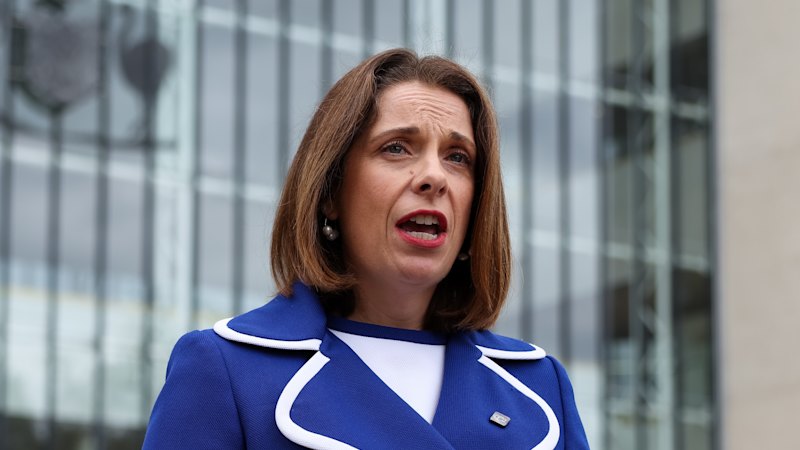
Union Minister Bhupender Yadav addresses a press conference in Patna on November 5, 2026. | Photo Credit: ANI
Union Minister and senior Bharatiya Janata Party (BJP) leader Bhupender Yadav on Thursday (November 5, 2026) accused the Congress and other opposition parties of spreading confusion and creating anarchy in the name of democracy.
He explained that the special intensive revision (SIR) of electoral rolls is a routine constitutional process, yet the opposition is attempting to mislead the public by turning it into a political issue. Mr. Yadav added that the BJP’s ‘Save Democracy, End Anarchy’ campaign is aimed at dispelling this confusion and raising public awareness regarding democracy.
Mr. Yadav said this during a press conference at the party office in Patna in the presence of BJP State President Sanjay Saraogi and Media Coordinator Danish Iqbal.
“The land of Bihar has served as an inspiration for democracy. Bihar has made a significant contribution to India’s democratic history. When the Congress attempted to crush democracy by imposing the Emergency, it was from Bihar—under the leadership of Jayaprakash Narayan—that the resolve and struggle to protect democracy began,” Mr. Yadav said.
He added that his work in Bihar has taught him the importance of democratic traditions, deliberation, and public participation. Mr. Yadav mentioned that under Article 324 of the Constitution and the provisions of the Representation of the People Act, the Election Commission of India (ECI) is empowered to conduct the revision of electoral rolls.
ALSO WATCH What did The Hindu’s investigation find in Mustafabad’s voter deletion requests?
“The objective of the SIR is to rectify the electoral rolls by removing the names of deceased or permanently relocated individuals and those with duplicate entries, while also ensuring that eligible citizens are included. Since 1950, such intensive revisions have been conducted eight times. Previously, no political party had ever opposed this standard democratic process,”Mr. Yadav said,
He pointed out that a door-to-door verification process was carried out for approximately 7.89 crore voters in Bihar and draft electoral rolls were made available to the ‘Booth Level Agents’ (BLAs) of various political parties.
Mr. Yadav asserted that during a hearing in the Supreme Court, it was revealed that out of 160,000 BLAs, only two objections were formally raised.
He alleged that while the Congress party claimed that 89 lakh names had been removed from the electoral rolls, they failed to file formal objections, despite the ECI’s instruction to submit ‘Form-7’ for such purposes. Mr. Yadav Yadav remarked that if the Opposition had genuine concerns regarding the electoral rolls, they should have addressed them through the established constitutional process as democracy cannot be strengthened merely through political rhetoric.
He alleged that Opposition leaders often sow confusion in the name of democracy to further their own political agendas, a trend that undermines democratic discourse and public trust.
Mr. Yadav further observed that the opposition tends to frame their own electoral victories as a triumph for democracy, yet questions the entire electoral process whenever they face defeat.
“Parties that celebrate their wins in Kerala as a victory for democracy, for instance, are quick to blame the electoral system or Electronic Voting Machines (EVMs) when they lose in Bihar or other states. Electoral outcomes are linked to the trust of the people. The opposition’s weakening connection with the public is the reason they seek excuses following election results,”Mr. Yadav said,
Reacting to a question on air pollution in Delhi, the Union Minister of Environment, Forest and Climate Change said that the government is sensitive to the situation and is taking measures such as halting construction activities, implementing “work from home” arrangements, and executing an integrated action plan for the NCR.
Comments have to be in English, and in full sentences. They cannot be abusive or personal. Please abide by our community guidelines for posting your comments.
We have migrated to a new commenting platform. If you are already a registered user of The Hindu and logged in, you may continue to engage with our articles. If you do not have an account please register and login to post comments. Users can access their older comments by logging into their accounts on Vuukle.