Committee formed to review child safeguards in Islamic religious settings after sexual assault case - CNA
This comes after a religious influencer sexually abused two young brothers, including one at a mosque, while on bail for another offence.
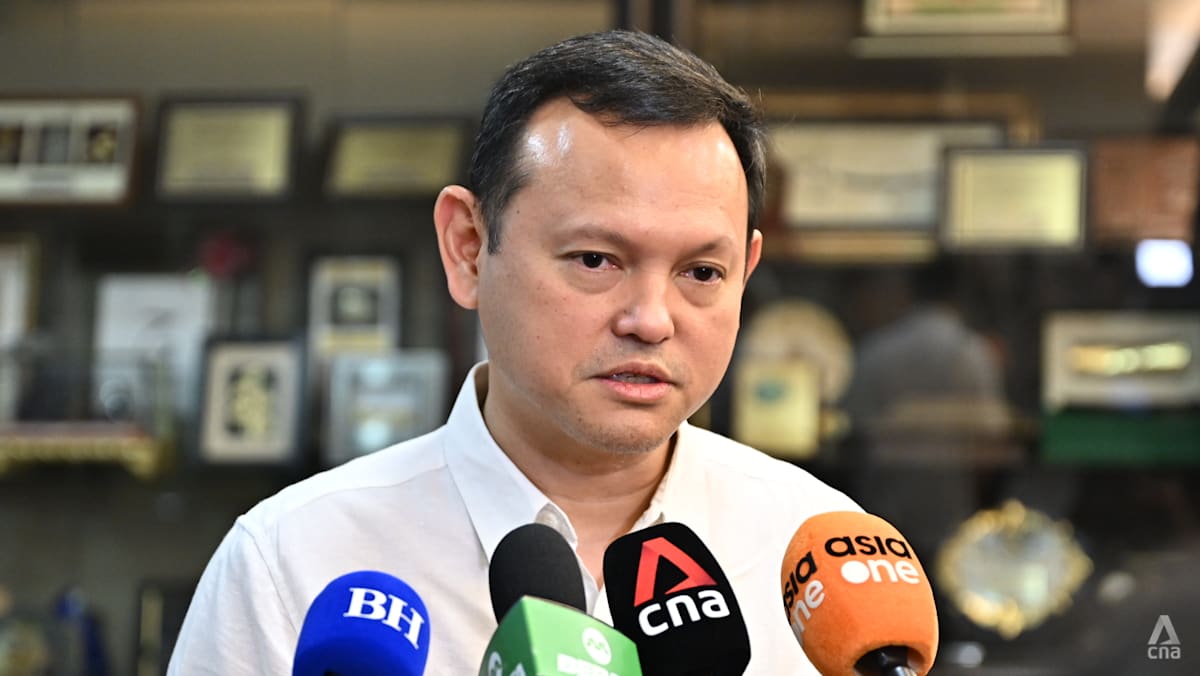
Acting Minister-in-charge of Muslim Affairs Zaqy Mohamad speaking to the media at MUIS on Sep 30, 2026. (Photo: CNA/Raydza Rahman)
This audio is generated by an AI tool.
Natasha Ganesan 30 Sep 2026 07:06PM (Updated: 30 Sep 2026 07:48PM) Bookmark Bookmark Share WhatsApp Telegram Facebook Twitter Email LinkedIn Set CNA as your preferred source on Google Add CNA as a trusted source to help Google better understand and surface our content in search results. Read a summary of this article on FAST. Get bite-sized news via a newcards interface. Give it a try. Click here to return to FAST Tap here to return to FAST FAST SINGAPORE: A committee has been formed to review safeguards for children and young people in Islamic religious settings after a self-styled religious mentor sexually abused two young brothers, with some offences taking place in a mosque.
The committee will also review frameworks governing the provision of religious instruction, so that the community, especially children and young people, can access credible religious guidance safely, the Ministry of Culture, Community and Youth (MCCY) and Islamic Religious Council of Singapore (MUIS) said on Wednesday (Sep 30).
The committee was announced in parliament on Sep 8 by Acting Minister-in-charge of Muslim Affairs Zaqy Mohamad, who said it would examine safeguards across Islamic religious institutions and propose ways to strengthen them.
It comes after the offender, who is a religious influencer and not an accredited religious teacher, raped and sexually assaulted the boys. He was convicted and sentenced in August.
CNA Games Guess Word Crack the word, one row at a time Buzzword Create words using the given letters Mini Sudoku Tiny puzzle, mighty brain teaser Mini Crossword Small grid, big challenge Word Search Spot as many words as you can Show More Show Less The man cannot be named due to gag orders protecting the victims' identities.
The new committee will work with relevant community stakeholders and agencies to make practical recommendations to strengthen safeguards and child protection in religious settings, while maintaining the "open and welcoming" nature of religious institutions.
"The review will take a preventive and community-centric approach, looking at the systems, culture and practices that prevent harm, surface concerns early, and promote the safety and wellbeing of children and young persons," the ministry and MUIS said in a joint media factsheet.
Speaking to reporters at the Singapore Islamic Hub on Wednesday, Mr Zaqy said the committee will conduct its review in an independent and objective manner.
“We want to give them space and latitude to review with independence and objectivity – how we can better improve, how we deliver religious classes guidance, both in the physical space, online space, formal classes, informal classes,” he said.
The committee will be co-chaired by Associate Professor Razwana Begum and Ustaz Fathurrahman Dawoed.
Assoc Prof Razwana is the head of the global security and strategy programme at the Singapore University of Social Sciences and is also the president of the non-profit organisation PPIS, or Singapore Muslim Women's Association.
Mr Fathurrahman is the executive director for the education division at Islamic education centre Andalus Corporation, and the chairman of the Association of Muslim Professionals (AMP), a non-profit organisation.
Over the next few months, the members will be reviewing and talking to various mosque boards and institutions to better understand the challenges on the ground and gaps, as well as how processes and guidelines can be improved, Mr Zaqy said.
The committee is expected to submit its recommendations on two key areas around the end of the year, said MCCY and MUIS. The findings and recommendations will also be shared with the community.
First, the committee will review governance and safeguarding frameworks in mosques, madrasahs and Islamic education centres and providers to better protect the safety and well-being of children and young people.
This includes screening and oversight of individuals who work or volunteer with children and young people, as well as establishing professional boundaries around interactions and activities with children and young people, including organisational practices that promote safe and child-centred environments.
The committee will also look into protocols to report, escalate or respond to incidents, as well as to share information within and across institutions.
The review will cover how institutions respond to an incident on the ground, such as the immediate response, victim support and case management protocols.
Another area of focus is ensuring accessible channels for children, young people and adults to raise concerns, including whistleblowing arrangements and appropriate protections for those who report.
Members of the committee will also look at equipping leaders, staff and volunteers with skills to recognise and respond to safeguarding concerns and uphold safeguarding standards and practices.
Second, the committee will review safeguards and oversight for religious instruction in formal and informal settings, as well as a code of conduct and penalties for religious teachers.
This includes precautionary measures while serious concerns or allegations are investigated, and disciplinary action where misconduct is established.
It will look at educating children, young people and parents on appropriate boundaries, raising concerns and seeking help. This includes teaching them about barriers that may discourage or prevent concerns from being raised.
It will also take into account emerging risks, such as online religious influence, digital communications and interactions involving children and young people.
The committee will seek to strengthen the systems, culture and practices that prevent harm and surface concerns early, alongside child protection measures where harm has occurred or a child or young person may be at risk, said MCCY and MUIS.
It will also consider how frameworks and protocols tie in with the broader national child safeguarding and protection system.
The committee will seek views from children, young people and parents to understand their experiences and inform its recommendations.
"Recommendations should be practical and proportionate to institutions' differing contexts and capacities. Relevant lessons and good practices may also be considered for wider application across other religious settings," they added.
Members of the public can also share their views and suggestions through an online feedback form.
Assoc Prof Razwana said the committee will look at existing practices and how they can be strengthened further.
It will also look at how safeguarding measures can be put in place "within the context of being a bit more culturally sensitive" and applicable within a religious setup.
On emerging risks, she added that society needs to find ways to build the resilience of children and young people, so they can protect themselves from threats online.
She said the committee would like to "go in and really hear the perspectives" of what is happening in the institution.
"We want to understand the ground first before we can come in and give our recommendation," she added.
While the committee looks at strengthening safeguards, it should not come at the cost of making religious institutions less open or less welcoming to the public, Mr Fathurrahman stressed.
The committee has nine members, including the two co-chairs, who bring diverse professional and community experience across areas such as child protection and well-being, law enforcement, governance and risk, Islamic education and religious guidance, as well as online and digital spaces, said MCCY and MUIS.
"This mix of expertise will enable the committee to consider safeguards to prevent harm to children and young persons, and decisive response protocols when they happen," they said, adding that more members and people with relevant expertise may be brought on board as the committee’s work progresses.