
Commentary: Hyrox needs to remember who its customers are - CNA
A fast-growing global franchise needs rules designed not just to protect the integrity of competition, but also the overall experience of entrants, says Juliana Liu for Bloomberg Opinion.
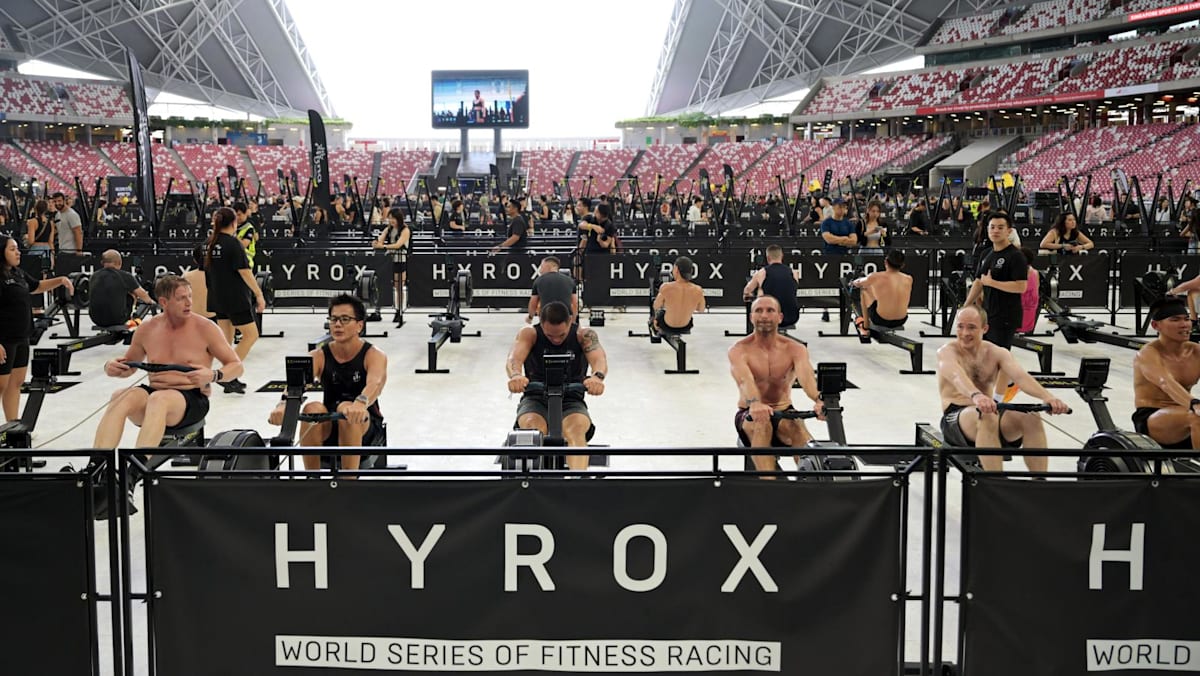
File photo of a Hyrox event held in Singapore in 2024. (Photo: CNA/Marcus Mark Ramos) Juliana Liu Juliana Liu 19 Sep 2026 06:00AM Bookmark Bookmark Share WhatsApp Telegram Facebook Twitter Email LinkedIn Set CNA as your preferred source on Google Add CNA as a trusted source to help Google better understand and surface our content in search results. Read a summary of this article on FAST. Get bite-sized news via a newcards interface. Give it a try. Click here to return to FAST Tap here to return to FAST FAST HONG KONG: Hyrox takes its sporting credentials seriously - it was, after all, co-founded by an Olympian. But the commercial success of the high-endurance fitness race isn’t built on the backs of elite athletes. It comes from attracting overachieving gym junkies.
Which is why the competition must now make amends to its core group of devotees after mishandling a hygiene controversy in Beijing over the weekend, especially as it sets its sights on becoming an even bigger force in global fitness. The women's world record holder, Australia’s Joanna Wietrzyk, was allowed to complete (and win) despite experiencing bowel incontinence partway through the race.
The viral episode caused an uproar among participants upset about the prospect of having to share dirty equipment, a reaction that quickly reverberated through the international community.
There was also the issue of fairness. Existing rules penalise behaviors that can affect the cleanliness and safety of communal spaces, such as spitting. Allowing a competitor to continue after soiling herself struck many as a glaring inconsistency.
CNA Games Guess Word Crack the word, one row at a time Buzzword Create words using the given letters Mini Sudoku Tiny puzzle, mighty brain teaser Mini Crossword Small grid, big challenge Word Search Spot as many words as you can Show More Show Less WHY HYROX IS DIFFERENTOrganisers treated the event as a serious championship, where the overriding concern is preserving the integrity of the tournament by ensuring an athlete’s right to finish. Elite endurance sports have plenty of precedents of athletes pushing on through deeply uncomfortable - and potentially embarrassing - circumstances. Chinese runner Li Meizhen continued the Hengshui Lake Marathon in 2024 after unexpectedly getting her period, with blood visibly running down her legs. And in 2005, Paula Radcliffe had to relieve herself in public during the London marathon, which she won. Both were lauded for their determination.
But Hyrox is different. Racers complete eight rounds of a one-kilometre run, each followed by a functional workout station. Unlike a marathon or triathlon, the format requires competitors to cycle through stations with everyone using the same equipment. What might be treated as an individual athlete’s decision in a road race can become a hygiene issue in an indoor contest.
That distinction matters as the fitness brand founded in Germany nine years ago is gearing up to become an even bigger global player. Hyrox needs stricter rules for handling incidents involving bodily fluids. Hyrox co-founder Moritz Fürste, who won a gold medal for Germany in field hockey at the 2008 Summer Olympics, apologised for “not reacting immediately” during the race. With 1.4 million people taking part in more than 100 events in the last season, its policies and standards must reflect its growing ambition.
Investors are already buying into the hype. A group led by private equity firm L Catterton, backed by LVMH Moet Hennessy Louis Vuitton, bought a majority stake in the company last week from Infront Sports & Media, backed by Dalian Wanda. The deal reportedly valued Hyrox at about 600 million euros (US$700 million) with a price-to-sales ratio of about 2.6 times this year’s expected revenue. At that multiple, the deal was roughly on par with the 2020 sale of the Ironman triathlon franchise by Wanda Sports to Advance Publications.
There’s already evidence that Hyrox’s growing popularity is starting to pay off. Puma, its longtime sneaker and apparel partner, launched a dedicated fitness racing shoe last year and has characterised the relationship as a strategic tie-up involving sportswear and community building (Wietrzyk is a sponsored athlete).
Puma Chief Executive Officer Arthur Hoeld said during the firm’s latest earnings call that Hyrox-related products helped contribute “strong growth” to the footwear segment. Rivals Nike and Adidas have also entered the racing category with shoes like the Hybrid RN and Adizero Dropset Elite, respectively.
Other companies are piling in. Amazon.com became a global partner in August, launching dedicated Hyrox storefronts selling everything from sports nutrition to training equipment, while AirAsia Group became an airline partner earlier this year. Continuing this commercial momentum depends on keeping racers coming back.
After the Beijing controversy gained traction online, Hyrox offered refunds and the rulebook has been updated, giving race officials the power to withdraw athletes if bodily fluids present a safety risk. These were the correct responses, but the episode offers a broader lesson.
A fast-growing global franchise needs rules designed not just to protect the integrity of competition, but also the overall experience of entrants. Consistency, hygiene and consideration for fellow participants aren't peripheral concerns.
Hyrox has successfully persuaded mainstream gym-goers to train like serious athletes. But the competitive instincts of people at the front of the race shouldn’t ruin the experience of those behind them. For Hyrox to go the distance, it needs to do better in catering to the masses.
