China Power: Chinese retirees reshape Southeast Asia’s retirement landscape, and perceptions of the superpower too - CNA
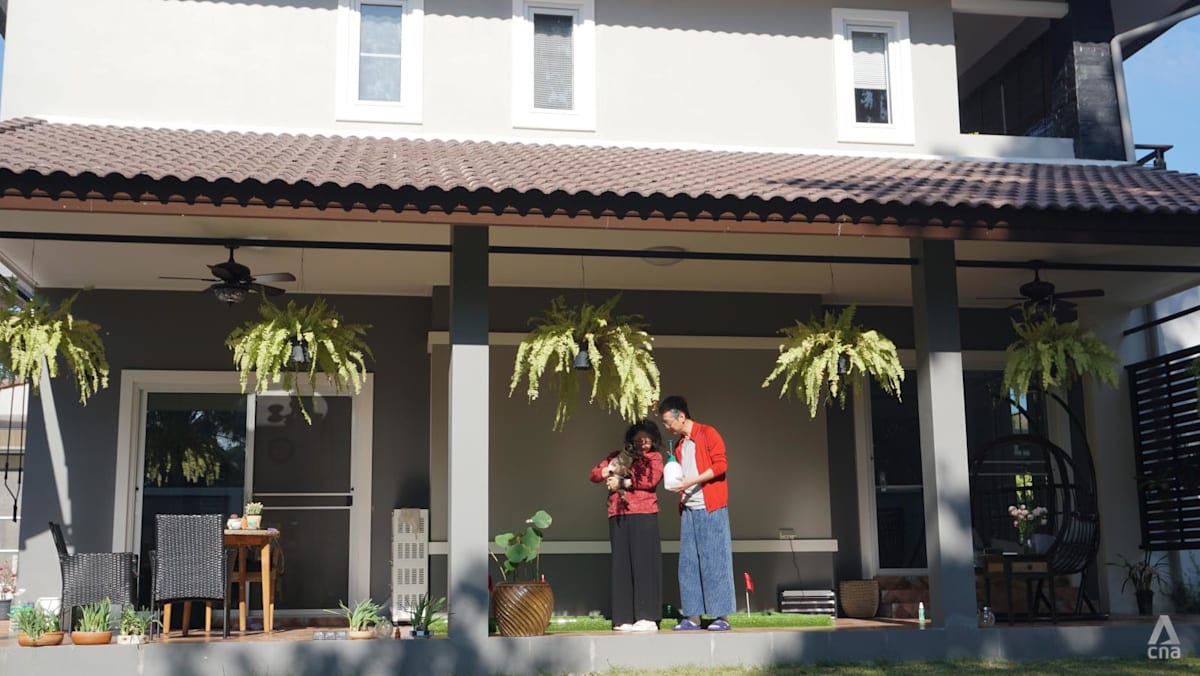
As part of a series on China’s regional influence, CNA speaks with Chinese retirees in Thailand, Malaysia and the Philippines about life overseas and how locals have been responding.
Shanghainese retiree Xu Weihong with her husband at their home in Chiang Mai’s Hang Dong district. (Photo: CNA/Melody Chan)
This audio is generated by an AI tool.
Melody Chan 15 Apr 2025 06:00AM (Updated: 10 Nov 2025 09:55AM) Bookmark Bookmark Share WhatsApp Telegram Facebook Threads Email LinkedIn Set CNA as your preferred source on Google Add CNA as a trusted source to help Google better understand and surface our content in search results. Read a summary of this article on FAST. Get bite-sized news via a newcards interface. Give it a try. Click here to return to FAST Tap here to return to FAST FAST CHIANG MAI: Before she decided to retire in Thailand, Chinese national Xu Weihong, 57, spent a year living and travelling in China’s southwestern Yunnan province and ran a successful traditional Chinese medicine business in Shanghai.
These days, she is learning Thai and enjoying life in Chiang Mai with her husband and elderly parents, both in their 80s.
Home is a spacious two-storey house in Chiang Mai’s scenic Hang Dong district, a favourite among expats and increasingly, hundreds of Chinese retirees.
“We were impressed by the internationalisation here as well as the relaxed, laid‐back vibe,” Xu told CNA, adding that northern Thailand’s milder weather was also a draw.
CNA Games Guess Word Crack the word, one row at a time Buzzword Create words using the given letters Mini Sudoku Tiny puzzle, mighty brain teaser Mini Crossword Small grid, big challenge Word Search Spot as many words as you can Show More Show Less Part of Xu’s daily routine involves helping her mother, who is in her 80s, with an electronic moxibustion treatment for her feet. (Photo: CNA/Melody Chan) Chinese retirees are also settling down in other parts of the region like the Philippines, where flights to and from mainland Chinese cities are cheap, regular and just a few hours.
Nelson Chua, a Fujian native in his 60s, runs a thriving business in Davao City - handling imports of trucks from China and exporting local tropical fruits like bananas and pineapples to several Chinese cities.
After more than 40 years in the business, he is finally ready to retire and put down roots in Davao. “Of course I’d retire in the Philippines. All my family is here,” Chua told CNA, referring to his wife and two children.
“We love Davao because it isn’t like Manila or big cities in China, which are crowded and polluted. Here we are close to nature, the mountains and beaches.”
In rapidly ageing China, a growing movement has been taking shape.
Chinese retirees, who have been traditionally known to move in with their children or live out their remaining years in nursing homes and elder care facilities, are now looking abroad and settling down in nearby Southeast Asian countries.
Better weather, lower costs and the region’s close proximity to mainland Chinese cities have been big draws for Chinese seniors, industry players said.
They added that flexible long-stay visas and insurance schemes also go a long way in attracting Chinese seniors, who are becoming increasingly known for their growing spending power.
While the growing Chinese retiree diaspora has brought much-needed business to local vendors and driven demand for senior-friendly services, eldercare, property, and tourism, their presence has also been stirring debate.
Locals across the the region have voiced concerns over rising prices, overstretched healthcare systems and the need for tighter visa controls - sentiments likely to shape how China is viewed in the region as the number of Chinese retirees continues to rise.
Perceptions of China remain divided in the region, according to the latest annual survey published by the ISEAS-Yusof Ishak Institute on Apr 3, which named China as Southeast Asia’s most influential economic and political power.
However, more than 60 per cent of Southeast Asian respondents who chose China as the most influential economic power said they were worried about its growing economic influence.
"ASEAN-10 countries are divided in their trust toward China," ISEAS said, adding that distrust exceeded trust levels in six countries, which included respondents from Vietnam, Indonesia and the Philippines."These evolving perceptions reflect a mix of optimism about China’s economic prospects and pessimism surrounding geopolitical tensions which are important factors that will continue to shape ASEAN’s long-term perceptions of China."