Cesar Virata, Marcos-era prime minister and finance chief, dies at 95 - Rappler
Already have Rappler+? Sign in to listen to groundbreaking journalism.
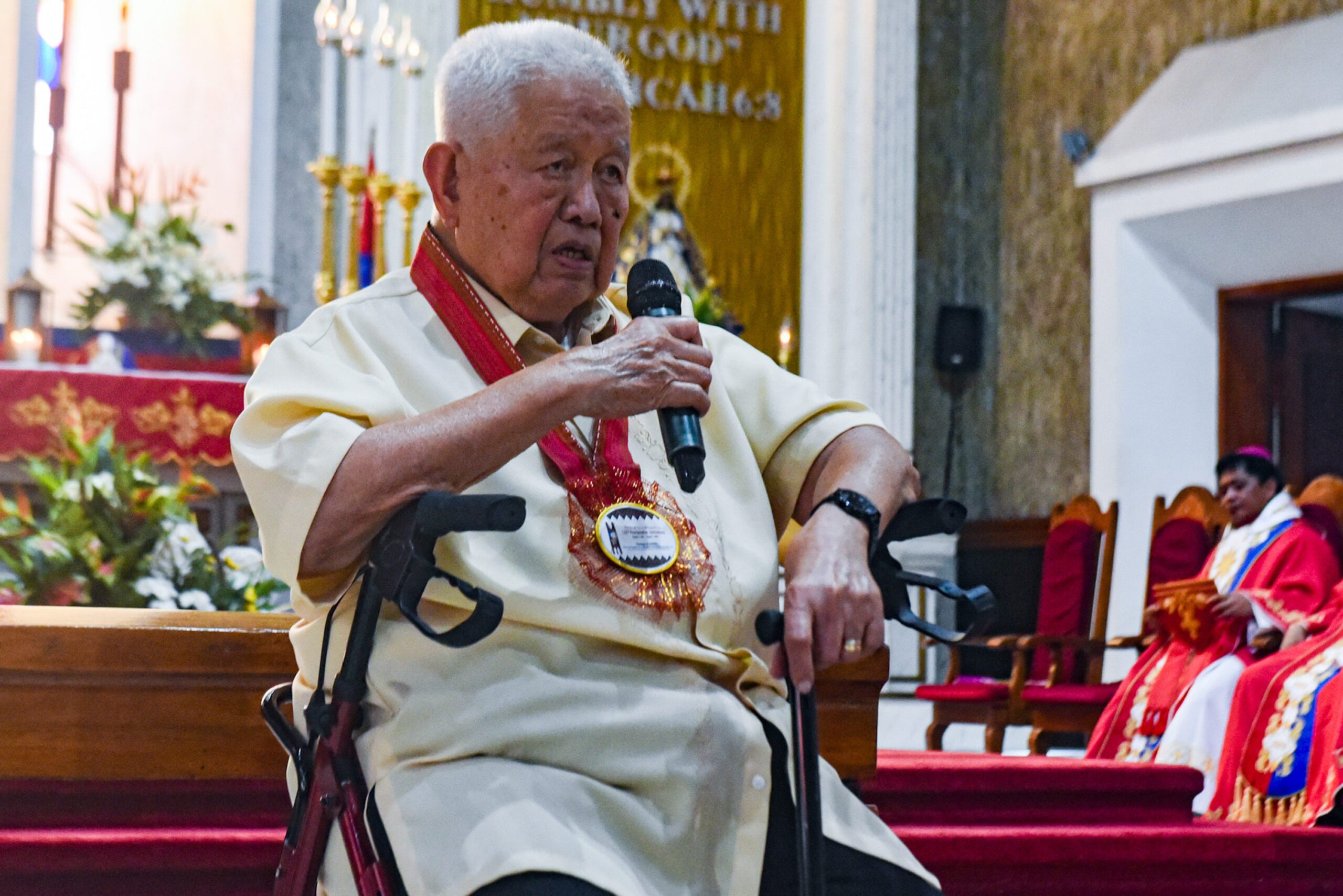
FORMER PRIME MINISTER. Cesar Virata speaks before the congregation at the 122nd proclamation anniversary of the Iglesia Filipina Independiente, also known as the Aglipayan Church, at the National Cathedral of the Holy Child in Manila on August 3, 2024.
This is AI-generated. Read the article for full context. Report any errors.
MANILA, Philippines – Former prime minister and longtime finance chief Cesar Virata died on Friday, October 2. He was 95.
Virata was one of the Philippines’ most prominent economic technocrats and a central figure in economic policymaking during the Marcos dictatorship. He served as secretary and later minister of finance from 1970 until the fall of Ferdinand E. Marcos in 1986, making him one of the longest-serving finance chiefs in Philippine history.
He was also prime minister from 1981 to 1986 and held senior positions in economic planning, the Board of Investments, Monetary Board, Land Bank of the Philippines, and Philippine National Bank. He represented the Philippines at the World Bank and Asian Development Bank, and chaired the joint World Bank-International Monetary Fund (IMF) Development Committee from 1976 to 1980.
The Department of Finance also paid tribute to Virata, its longest-serving chief, saying: “We honor his service to the nation and extend our deepest condolences to his family and loved ones. May he rest in peace.”
Securities and Exchange Commission Chairperson Francis Lim remembered Virata’s role in developing the country’s capital markets.
“Minister Virata devoted his life to public service and to strengthening the Philippine economy and financial system. For the Philippine capital market, his legacy is especially enduring. As an incorporator of the Philippine Stock Exchange and a leading proponent of the country’s fixed-income trading platform, he helped establish institutions and market infrastructure that have supported the development of a deeper, more modern, and more resilient capital market,” Lim said in a statement.
Some of the most influential business and economic policy groups also paid tribute to Virata. The Management Association of the Philippines, which named him its Management Person of the Year in 1981, remembered him as a “paragon of statesmanship and management excellence for nation-building,” citing his long record in both government and the private sector.
The Foundation for Economic Freedom, where Virata had served as senior adviser and honorary fellow, called him a “formidable economic mind and a lifelong servant of public institutions.” The group said Virata helped build FEF into the institution it is today, describing him as its “intellectual giant, guiding mentor, and inspiration.”
Virata became a part of the circle of economists and administrators who provided the Marcos regime with technocratic expertise during Martial Law. Scholars have described him as the regime’s “chief technocrat,” with strong links to the IMF, World Bank, business community, and academe.
His reputation for technical competence, however, also contends with the dark legacy of the Marcos dictatorship. His economic team operated inside an authoritarian government marked by unabashed crony capitalism and corruption. During his tenure as finance chief, the Philippines also accumulated heavy foreign debt and eventually plunged into a severe economic crisis in the early 1980s.
Virata’s technocrats at times clashed with Imelda Marcos and politically connected businessmen over spending and economic policy. Virata opposed several of the then-first lady’s projects and attempts to tap government funds, including a 1982 request for $12 million in government funding for a film festival in Manila. (READ: [ANALYSIS] Correcting misleading claims by ex-president Marcos’ technocrats)
He also challenged the coconut levy and monopolies associated with Marcos allies Danding Cojuangco and Roberto Benedicto. But his technocratic group could not consistently overcome figures who enjoyed direct access to Marcos and had their own economic power base.
Before his entrance into the world of Malacañang, Virata had built a career in the classroom. A mechanical engineering and business graduate of the University of the Philippines who later earned a master’s degree in business administration from Wharton, he became a professor and served as dean of the UP College of Business Administration from 1960 to 1967.
UP eventually renamed the college the Cesar E.A. Virata School of Business in his honor, a decision sustained by the Board of Regents in 2014 after debate within the university partly due to his extensive service under the Marcos regime.
Rizal Commercial Banking Corporation confirmed Virata’s death in a disclosure to the Philippine Stock Exchange on Friday. Virata had served as an RCBC director since 1995 and had been the bank’s corporate vice chairperson for 26 years. – Rappler.com